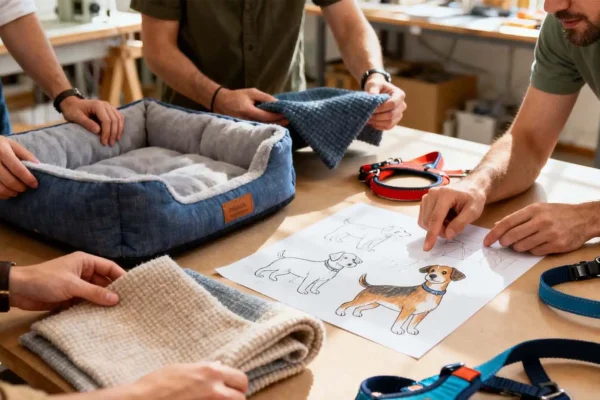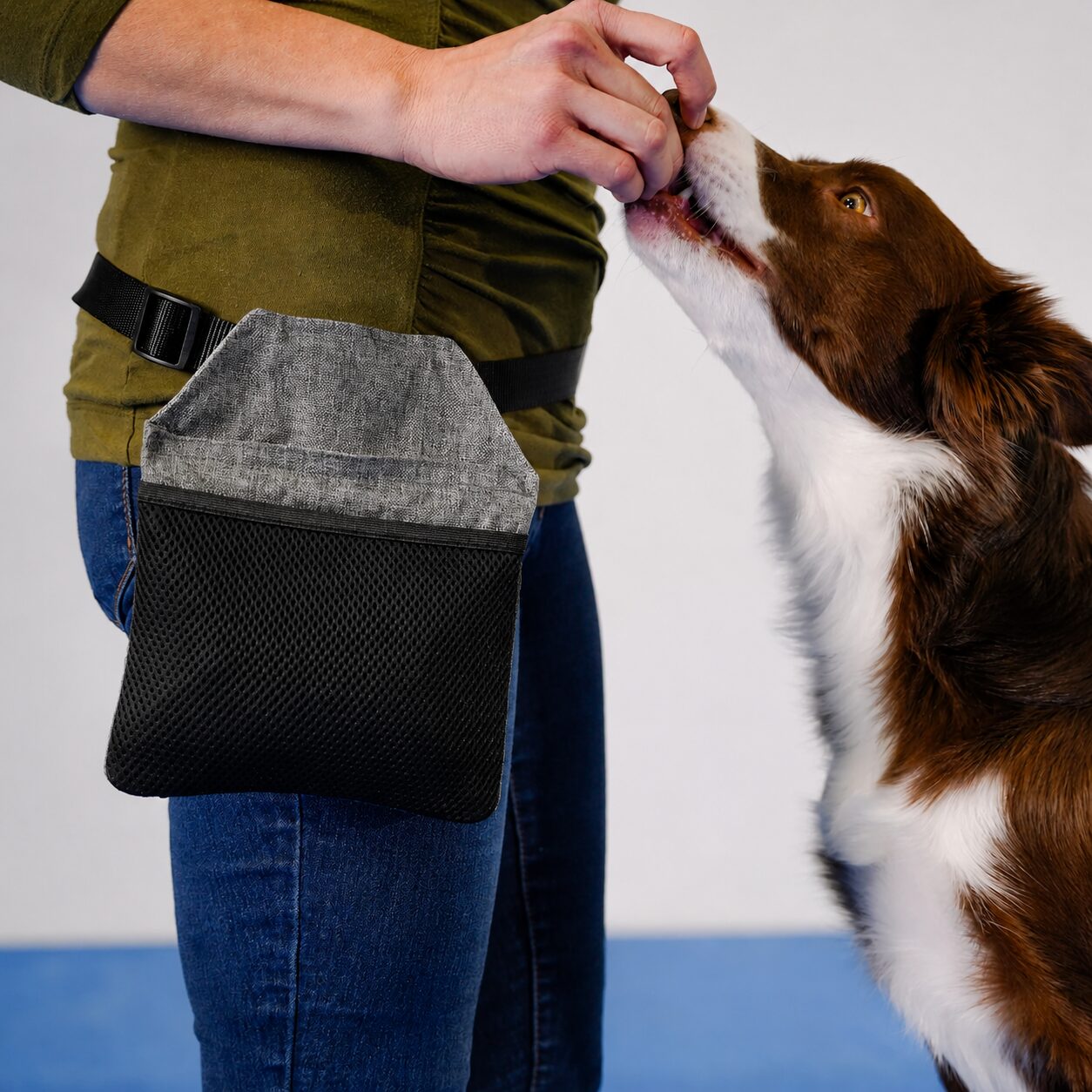
Developing bedding for puppies and small dogs calls for a different approach from designing a general-purpose dog bed. Young dogs are still growing, may be more likely to explore objects with their mouths, and often need frequent cleaning during early training. Small breeds also need cushioning that fits their compact sleeping space without taking up too much room.
For pet brands, wholesalers, and distributors, the opportunity is to create a focused product range with practical construction, clear use instructions, and consistent specifications. The strongest concepts begin with the real conditions in a crate—not just a soft surface or an attractive product photo.
1. Can a Crate Mat Really Be Puppy-Proof?
For brands developing a puppy proof crate mat, the first question should be what “puppy-proof” is expected to mean. Does the product need to withstand daily scratching, resist seam opening, simplify cleaning, or reduce the chance of puppies pulling out the filling? These are different performance goals and should be defined separately.
It is important not to treat “puppy-proof” as a promise that a product is indestructible. No fabric mat can be guaranteed to withstand every puppy’s chewing behavior. Cornell University’s canine health guidance notes that fabric or mesh crate structures may not be durable for puppies or dogs that chew. Buyers should therefore consider the individual dog’s behavior and provide supervision rather than rely on bedding as a chew-proof solution. Cornell University: Dog Crates—When to Use Them and How to Pick One.
From a product-development perspective, the goal is to reduce foreseeable weak points: exposed edges, loose threads, accessible filling, detachable trims, and seams that can be pulled apart. Product descriptions should explain the intended use and limitations clearly.
2. Which Materials Should Buyers Consider for Puppy Bedding?
Search demand for crate liner for puppy products often reflects a practical need: a cleanable, comfortable layer that fits a crate without adding unnecessary bulk.
The right combination depends on whether the product is positioned as an everyday indoor liner, a washable training accessory, or a more cushioned sleeping surface.
| Material or component | Potential advantages | Points to verify |
|---|---|---|
| High-density polyester or Oxford fabric | Practical for everyday use; available in different weights, textures, and colors | Abrasion behavior, coating quality, colorfastness, and hand feel |
| Nylon fabric | Lightweight and available in durable woven constructions | Surface noise, snagging, and comfort against the coat |
| Short-pile fleece | Soft hand feel for comfort-focused products | Pilling, lint retention, drying time, and loose fibers |
| Polyester fiberfill | Lightweight cushioning with flexible thickness options | Filling migration, flattening, and recovery after washing |
| PU foam or EPE foam | More defined support and a consistent cut shape | Firmness, thickness, edge protection, and whether the insert can be cleaned |
| Water-resistant backing | Helps manage minor spills and damp contact | Seam leakage, coating durability, breathability, and cleaning instructions |
Material selection should follow the intended product positioning. A premium indoor design may prioritize a soft top fabric and a removable cover, while a training-oriented model may put greater emphasis on quick cleaning and a simple construction.
Avoid making waterproof, antimicrobial, or chew-resistant claims unless the finished construction has been evaluated against clear test criteria.
For additional material and construction ideas, brands can compare the broader Kennel Mat Design Guide.
3. How Should Buyers Size a Mat for Puppies and Small Dogs?
A small crate pad should be sized from the crate’s usable internal floor area—not simply from the crate’s advertised external dimensions. Removable trays, rounded corners, and internal fittings can reduce the space available for bedding.
Ask the manufacturer to confirm:
- The actual internal width and length of the target crate.
- The finished mat dimensions and acceptable tolerance.
- Whether the corners should be square, rounded, or shaped to match the tray.
- The compressed thickness after the puppy lies on the mat.
- Whether the mat can lie flat without curling or bunching at the edges.
The mat should not reduce the space a puppy needs to stand, turn around, lie down, and stretch comfortably. The RSPCA recommends choosing a crate that allows these movements and introducing it as a positive, comfortable space. RSPCA: Crates and Dogs.
For brands, a practical range may include several compact dimensions for toy and small breeds, with each size mapped to compatible crate measurements. Do not assume that all dogs within the same weight band need the same sleeping area. Body length, sleeping posture, and the crate model all affect the final fit.
For more sizing considerations, see How to Design a Custom Dog Bed for Small Breeds.

4. Which Construction Details Can Reduce Chewing Damage?
A puppy resting mat should be developed with attention to the areas a curious puppy can reach first. Corners, binding, zipper pulls, labels, and exposed seams can become points of interest during chewing or pawing.
Useful design considerations include:
- Reinforced perimeter seams: Select a suitable stitch construction and seam allowance to reduce the risk of opening under pulling.
- Protected edges: Use neat binding or enclosed seams to minimize exposed raw edges and loose threads.
- Secure internal filling: Choose a construction that limits filling movement and prevents easy access to the insert.
- Minimal detachable trims: Avoid decorative buttons, cords, tassels, and small add-on parts that could loosen.
- Careful closure placement: If a removable cover is used, position and protect the zipper so it does not sit prominently on the main resting surface.
- Appropriate fabric selection: Compare woven density and abrasion performance, but do not describe a fabric as bite-proof without evidence.
These details can improve construction reliability, but they do not make a textile product suitable for unsupervised use with every puppy. If a dog persistently chews or damages bedding, the owner may need to remove the mat and consult a veterinarian or qualified behavior professional.
5. How Can Brands Balance Comfort, Washability, and Hygiene?
In a crate liner for puppy product range, cleaning convenience should be considered from the first design stage because accidents, muddy paws, and frequent washing are common during early training.
A removable cover can help protect foam or other inserts from repeated washing. However, it adds a zipper, seam, and assembly process that must be tested. A one-piece design is simpler, but the filling and outer fabric must both tolerate the specified cleaning method.
Before confirming a washability claim, evaluate:
- Dimensional change after the agreed wash cycles.
- Color transfer and fading.
- Fabric pilling or surface damage.
- Seam opening and edge distortion.
- Filling clumping, shifting, or loss of thickness.
- Drying time and any changes in odor or hand feel.
Water-resistant and waterproof are not interchangeable claims. A coated fabric may repel surface moisture, while needle holes and seams can still allow liquid to pass through. If liquid protection is a key selling point, test the complete finished product and define the conditions under which the claim applies.
6. What Product Variations Could Help Brands Build a Focused Range?
A puppy proof crate mat collection does not need to rely on one complicated design. Brands can create a small, coordinated assortment by changing dimensions, surface fabrics, thickness, and cleaning features while keeping core construction consistent.
Possible variations include:
- Basic flat mat: A lightweight option for everyday crate use, with a simple profile and easy-to-coordinate colors.
- Quilted cushion: A more structured surface with stitched channels or panels to help control filling distribution.
- Removable-cover model: A practical option for customers who prefer to wash the cover separately.
- Water-resistant-base model: A version designed for easier surface cleaning, subject to finished-product testing.
- Seasonal fabric options: Different top fabrics for warmer or cooler environments, without making unsupported temperature claims.
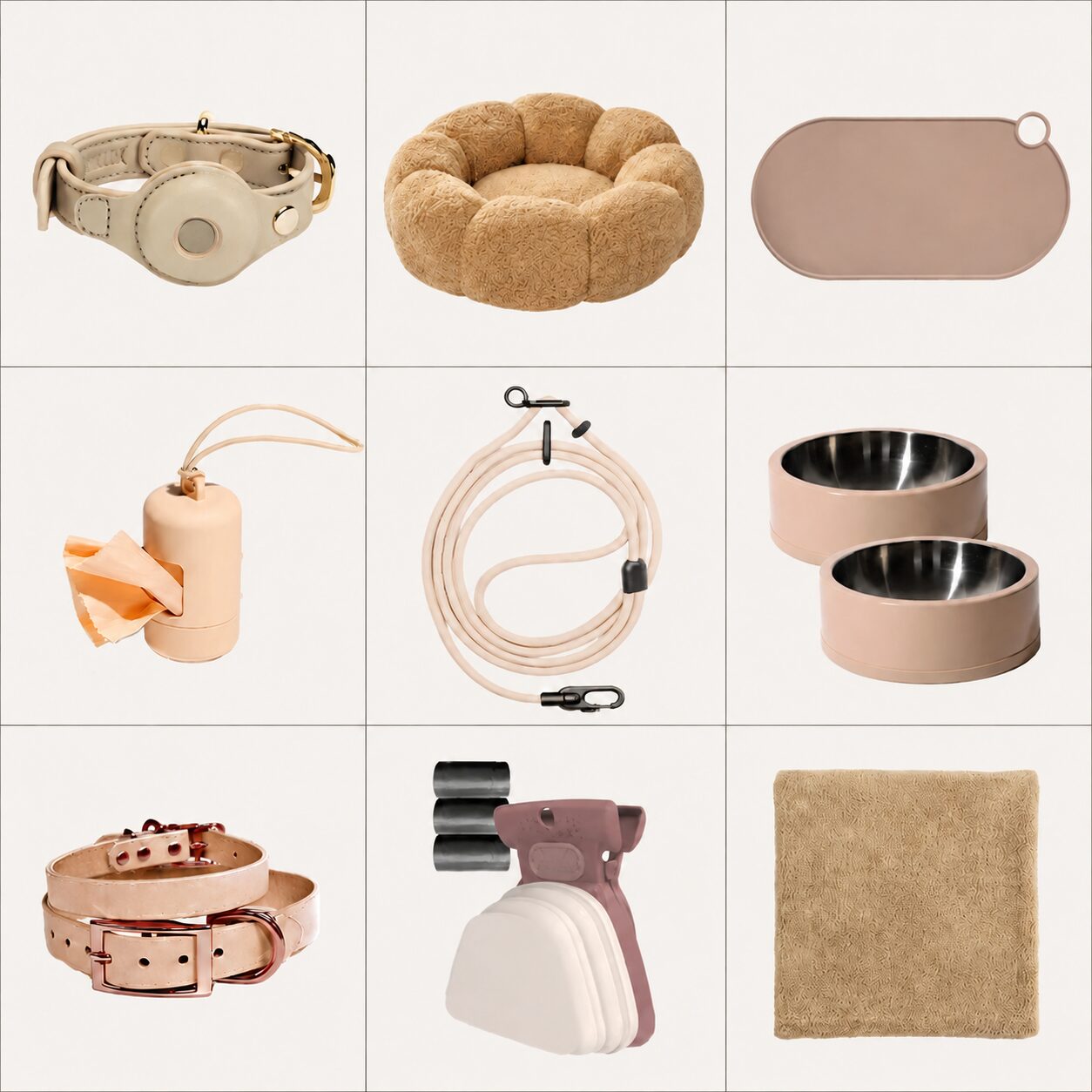
A small crate pad can also be offered in coordinated colors or private-label packaging to complement a wider pet bedding range. This gives retailers more ways to build a compact collection without introducing too many unrelated patterns or components.
A puppy resting mat may also be positioned as an entry-level bedding product for starter kits, puppy training bundles, or coordinated small-dog collections. Keep the product specification consistent across color options so that assortment expansion does not create unnecessary production complexity.
Brands exploring adjacent products can review Aimazing’s Pet Beds collection for examples of different bedding styles and construction directions.

7. Which Tests Should Be Agreed Before Bulk Production?
A sample that looks correct is only the starting point. Before approving bulk production, buyers and manufacturers should agree on measurable inspection criteria for the finished product.
| Evaluation area | What to check |
|---|---|
| Dimensions | Length, width, thickness, corner shape, and tolerance |
| Sewing construction | Seam consistency, skipped stitches, loose threads, and edge binding |
| Padding | Thickness, distribution, compression recovery, and movement after washing |
| Fabric performance | Abrasion, pilling, colorfastness, and surface changes |
| Cleaning | Dimensional stability, drying behavior, and seam condition after washing |
| Components | Zipper function, label attachment, and absence of loose or sharp parts |
| Packaging | Folding or compression recovery, carton protection, and product presentation |
Where appropriate, buyers can specify recognized textile test methods for fabric-level performance. However, a fabric test alone does not establish the safety or durability of the complete mat. The agreed sample, construction details, and finished-product checks should remain the reference for production.
The technical file should record the approved materials, fabric weights, filling type, dimensions, stitch details, label position, care instructions, packaging, and any permitted substitutions. This makes repeat orders easier to control.
8. How Can an OEM Manufacturer Turn Your Brief into a Market-Ready Product?
Before requesting a quotation, brands should prepare a brief that identifies the target puppy or small-dog segment, crate dimensions, expected retail position, preferred materials, cleaning requirements, colors, logo method, packaging, and estimated order quantity.
A useful development process can follow four steps:
- Review the concept: Confirm the intended use, size range, construction priorities, and target cost.
- Select materials: Compare surface fabrics, backing options, and filling structures against the product brief.
- Develop and evaluate a sample: Check fit, comfort, sewing details, cleaning performance, and the agreed construction requirements.
- Confirm bulk specifications: Approve the reference sample and document the bill of materials, tolerances, inspection points, and packaging.
Aimazing supports OEM/ODM development for pet brands, wholesalers, and distributors, including material sourcing, structural adjustments, sampling, logo customization, and bulk production. For suitable projects, the team can discuss sampling timelines and MOQ based on the design and material requirements.
Learn more about the custom product development process.
9. What Should Pet Brands Ask Before Placing a Bulk Order?
Before choosing a supplier, buyers should ask questions that reveal how the manufacturer handles product details—not just how quickly it can provide a price.
- Can the factory produce the required compact sizes and maintain dimensional consistency?
- Which fabric and filling combinations are available for the target price level?
- How are seams, edges, and internal padding constructed?
- Can the complete product or removable cover be tested after repeated washing?
- Which product claims can be supported by test results?
- How are material substitutions controlled between sample approval and bulk production?
- Can the supplier provide private-label labels, colors, and packaging?
- What are the MOQ, sample lead time, bulk lead time, and inspection arrangements?
A supplier that discusses these points before sampling can help identify design risks earlier and make quotations easier to compare. Buyers should also confirm that any “puppy-proof” wording used in marketing accurately reflects the product’s tested performance and intended use.
Conclusion: Can Better Design Create a More Reliable Puppy Bedding Range?
A successful puppy proof crate mat is not defined by softness alone. It depends on an appropriate fit, suitable materials, secure construction, manageable cleaning, and realistic performance claims. For puppies and small dogs, details such as exposed seams, loose trims, padding access, and excessive thickness deserve particular attention.
For pet brands and wholesale buyers, the best starting point is a clear product brief and a sample evaluated against real use requirements. Aimazing can support the process from material selection and design refinement to OEM sampling and bulk manufacturing.
Planning a new puppy bedding range? Share your target sizes, reference images, material preferences, and estimated order quantity with our team to discuss a suitable development direction.