Small dogs have unique sleeping habits that are easy to overlook during product development. Their compact bodies, sensitivity to temperature, and preference for different resting positions all influence how a bed should be constructed.
For pet brands and wholesale buyers, creating a comfortable sleeping space involves more than selecting soft fabric and an attractive shape. The internal dimensions, cushioning structure, entry height, and cleaning features must work together to support everyday use.
This guide explores the essential design decisions behind small-breed bedding, from choosing suitable materials to developing production-ready products that balance comfort, appearance, and manufacturing consistency.
1. Understanding the Sleeping Needs of Small Dog Breeds
Small breeds such as Chihuahuas, Yorkshire Terriers, Pomeranians, and Toy Poodles differ in body proportions, coat types, and sleeping preferences. Their bedding requirements cannot always be determined by weight alone.
Some dogs prefer curling into compact positions, while others stretch their legs or rest their heads against a cushioned edge. Puppies may need easy access and washable materials, whereas older animals may benefit from supportive surfaces and lower entrances.
According to the RSPCA’s guidance on choosing a dog bed, sleeping areas should provide enough space for dogs to rest comfortably in their natural positions.
When developing a custom dog bed, manufacturers and buyers should translate these everyday behaviors into practical product specifications.
Important considerations include:
- Body proportions: A long-bodied Dachshund may need more sleeping length than a similarly weighted Chihuahua.
- Sleeping position: Dogs that curl up may prefer rounded bolsters, while those that stretch out need unobstructed space.
- Temperature sensitivity: Fabric thickness, breathability, and insulation should suit the intended climate.
- Accessibility: Lower entry points can make beds easier to use for puppies and dogs with limited mobility.
- Cleaning frequency: Removable covers and moisture-resistant inner layers simplify maintenance.
Understanding these requirements before sampling helps buyers avoid unnecessary design changes later.
2. Choosing the Right Size for Small Dog Beds
Measure the Usable Sleeping Area, Not Just the Exterior
One common product development mistake is relying entirely on the external dimensions of a bed.
For example, a round bed measuring 60 cm across may provide substantially less usable sleeping space when its surrounding bolster occupies part of the diameter.
This distinction is particularly important for personalized dog beds for small dogs, because decorative raised edges and thick cushioning can reduce the area available for resting.
Buyers should specify both external dimensions and internal sleeping dimensions in technical drawings.
A practical measurement process includes:
- Measure the dog’s approximate body length while resting naturally.
- Observe whether the dog curls up or regularly stretches out.
- Allow additional space for comfortable repositioning.
- Account for the thickness of bolsters and surrounding walls.
- Verify the dimensions using physical samples rather than drawings alone.
Suggested Starting Dimensions
The following measurements are illustrative product development starting points, not universal breed-specific sizing standards.
| Bed style | Suggested external size | Potential application |
|---|---|---|
| Compact oval | 45 × 35 cm | Very small breeds |
| Small rectangular | 55 × 45 cm | Toy and small breeds |
| Small round bolster | 60 cm diameter | Dogs that prefer curling |
| Medium-small mattress | 70 × 50 cm | Small dogs that stretch out |
Actual suitability depends on the animal’s measurements and the bed’s internal construction.
For brands developing multiple sizes, maintaining proportional differences between the sleeping area, cushion thickness, and entry height is often more useful than simply enlarging the entire pattern.
3. Selecting the Best Bed Shape and Structure
Shape affects how a dog enters, occupies, and interacts with its sleeping area. It also influences material consumption, packaging volume, and manufacturing complexity.
Donut Beds for Curling and Nesting
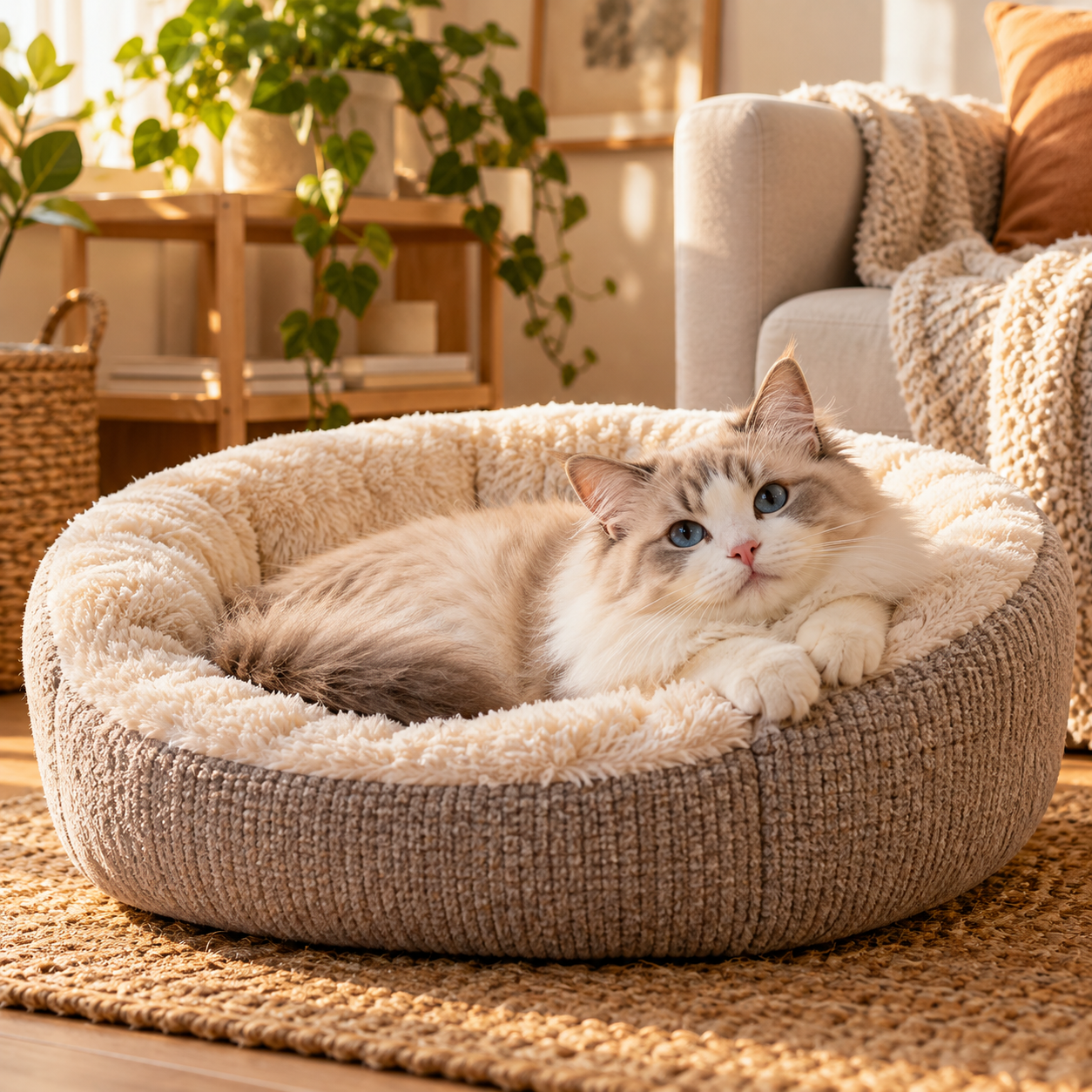
Round designs with cushioned borders can provide a comfortable resting surface for dogs that prefer enclosed sleeping positions.
The main challenge is balancing bolster softness with adequate central space. Excessively thick walls can make a compact bed appear spacious while leaving limited room inside.
Brands exploring this construction can reference our Donut Dog Bed for a relevant product style.
Sofa-Style Beds for Support and Appearance
Small sofa-style beds combine a defined sleeping platform with raised sides and a lower front entrance.
These designs can work well in home-focused pet collections where appearance and easy access are both important.
Our Corduroy Sofa Bed illustrates this product category.
During development, buyers should examine whether the side bolsters retain their shape and whether the front opening remains accessible after repeated use.
Flat and Rectangular Cushions
Flat cushions offer more flexibility for dogs that change positions frequently.
They also provide practical advantages for shipping, storage, and removable-cover construction.
The Green Interwoven Square Dog Bed is another useful reference for brands comparing rectangular bedding styles.
Choosing a structure should ultimately depend on the intended dog’s sleeping behavior rather than appearance alone.
4. Choosing Comfortable and Durable Materials
Material selection plays a major role in how a custom dog bed feels, performs, and maintains its appearance after regular use.
For small breeds, the softest possible filling is not necessarily the best solution. Excessively loose padding may compress unevenly, while overly firm foam may not provide the desired cushioning.
Common Filling Materials
| Material | Main characteristics | Suitable applications |
|---|---|---|
| Memory foam | Contouring support; firmness varies by formulation | Supportive mattresses |
| PU foam | Available in different densities and firmness levels | Structured sleeping platforms |
| PP cotton | Soft and flexible; compression recovery depends on grade | Donut and bolster filling |
| EPE foam | Lightweight and relatively firm | Selected structural support layers |
| Polyester fiberfill | Lightweight and economical | Soft cushions and raised sides |
For foam-based designs, buyers should define density, thickness, firmness, and compression recovery requirements.
For fiber-filled beds, consistent filling weight and distribution are essential for keeping the finished product uniform.
Outer Fabrics for Small-Breed Bedding
Fabric should be selected according to the target market and intended use.
Fleece and faux fur provide a soft surface that may appeal to owners of indoor toy breeds. However, pile shedding, matting, and cleaning performance should be evaluated.
Corduroy offers a distinctive texture suited to home-oriented bedding collections. Buyers should check abrasion resistance, seam performance, and appearance after washing.
Oxford polyester is commonly considered for travel-oriented or more durable pet products where ease of cleaning matters.
Interwoven textiles can create a more decorative appearance, but yarn snagging and surface wear require attention during development.
In addition to fabric appearance, manufacturers should consider colorfastness, shrinkage, odor, washability, and compatibility with the chosen filling material.

5. Designing Removable, Washable, and Waterproof Components
Easy maintenance is a practical selling point, particularly for puppy bedding and products intended for everyday home use.
The American Kennel Club’s dog bed guidance also emphasizes the importance of removable, washable covers.
For personalized small dog beds, maintenance features should be considered early in development because embroidery, decorative panels, and attached accessories may influence washing instructions.
Removable Covers
A removable cover allows owners to clean the textile surface without washing the entire filling structure.
Manufacturers should consider:
- Zippers positioned away from the main sleeping surface
- Secure zipper garages or concealed pullers
- Adequate seam allowances for repeated removal
- Fabrics tested for dimensional changes after laundering
- Clear washing and drying instructions
Waterproof Inner Protection
Waterproof protection is especially relevant for puppies, older dogs, and products positioned for travel.
A separate waterproof liner can help protect the foam core against accidental moisture exposure.
However, water-resistant outer fabric and a genuinely waterproof inner barrier are not interchangeable. Stitching, seams, and zipper openings can affect overall protection.
Product claims should therefore reflect the performance of the finished construction, not only the properties of an individual fabric.
Non-Slip Bases
A non-slip bottom can help reduce movement on smooth indoor flooring.
During sampling, buyers should assess the grip, abrasion resistance, and laundering durability of the chosen backing material.
These details influence everyday functionality even though they may be difficult to recognize in product photography.
6. Personalization Options for Small Dog Beds
Personalization allows pet brands to create recognizable products without necessarily changing the entire underlying structure.
For brands offering personalized dog beds for small dogs, the most practical approach is to separate standard construction features from optional decorative elements.
This helps maintain manufacturing consistency while supporting different branding requirements.
Embroidered Names and Logos
Embroidery can be applied to selected fabric panels before the bed is assembled.
Placement matters. A name embroidered directly onto the sleeping surface may introduce an uneven texture, while embroidery on the exterior bolster or side panel is less likely to interfere with comfort.
Thread density, backing material, and washing durability should be considered during development.
Custom Colors and Fabric Combinations
Neutral shades, coordinated piping, and contrasting textures can give small beds a distinctive appearance.
Buyers may also develop coordinated bedding collections using matching fabrics across multiple shapes.
Material consistency should be reviewed carefully because the same color can appear different on fleece, corduroy, woven polyester, and printed fabrics.
Personalized Labels and Packaging
Custom woven labels, printed care labels, branded packaging, and removable decorative panels can help distinguish products in retail environments.
For smaller product collections, standardized bed structures combined with different branding treatments may simplify development and inventory management.
7. Adding Matching Blankets to a Small-Dog Bedding Collection
Many pet brands expand beyond individual beds by offering coordinated blankets, cushions, and travel accessories.
For UK-focused product collections, the search phrase puppy blankets personalised often appears in discussions of name embroidery and gift-oriented bedding products.
From a manufacturing perspective, blankets provide an opportunity to coordinate materials, colors, and branding across multiple items.
Designing Matching Puppy Blankets
The most useful blanket specifications include:
- Fabric softness and surface texture
- Suitable dimensions for compact sleeping areas
- Washable and colorfast materials
- Secure edge binding or stitching
- Embroidery placement away from areas most likely to contact the dog’s face
- Avoidance of loose decorative components that could become chewing hazards
A lightweight fleece blanket may work well as a removable bedding accessory, while a thicker layered design can suit colder indoor environments.
Blanket dimensions should complement the bed without producing unnecessary fabric bunching.
For brands preparing seasonal collections, puppy blankets personalised can also be treated as a separate product variation, with distinct name-placement templates and packaging specifications.
The important point is to create coordinated products that are practical to manufacture and maintain, rather than adding personalization solely for decoration.
8. An Illustrative Small-Dog Bedding Development Project
Illustrative product development scenario — this example demonstrates a realistic OEM design process. It is not presented as a verified Aimazing customer order.
Consider a UK pet accessories brand planning a premium bedding collection for Yorkshire Terriers and similar small breeds.
The initial concept is a 60 × 45 cm rectangular sofa-style bed with a soft corduroy exterior, plush interior, embroidered branding, and a removable cushion.
The brand’s first priority is appearance. However, a factory design review identifies several areas that should be resolved before production.
Challenge 1: Exterior Size Does Not Equal Sleeping Space
The proposed side bolsters occupy part of the bed’s overall width.
To develop a custom dog bed with appropriate usable dimensions, the team recommends checking the internal sleeping platform before finalizing the pattern.
Instead of approving the exterior dimensions alone, the buyer receives a specification showing the platform size, bolster width, and front-entry height.
Challenge 2: Cushion Filling May Shift During Washing
The original concept uses a loose fiber-filled cushion without internal stabilization.
The recommended modification is a removable cushion with better-controlled filling distribution or a suitable foam insert, depending on the brand’s target price and desired feel.
This approach is intended to improve consistency rather than relying entirely on increased filling weight.
Challenge 3: Decorative Stitching Affects Cleaning
The brand requests an embroidered name on the main cushion.
The development recommendation is to relocate the embroidery to a removable or exterior-facing panel, preserving the comfort of the primary resting surface.
This adjustment also makes it easier to offer personalized small dog beds using standardized base components.
Challenge 4: Product Consistency During Bulk Production
Before proceeding with a production order, the buyer and factory establish approval criteria for finished dimensions, filling weight, cushion thickness, seam appearance, and fabric color.
The resulting specification becomes the reference for sampling and production inspections.
What makes this development approach different?
The value does not come from simply reproducing a reference picture. It comes from identifying potential usability and production issues before the design is finalized.
A factory acting as a development partner should explain the consequences of construction choices, offer practical alternatives, and help buyers balance product comfort, appearance, cost, and repeatability.

9. Working With a Dog Bed Manufacturer: From Design to Production
A successful OEM project depends on clear communication between the buyer, product development team, and production department.
Before contacting dog bed suppliers, buyers should prepare a brief describing the intended customer, bed style, target dimensions, expected materials, branding requirements, and target price range.
A structured development process typically includes four stages.
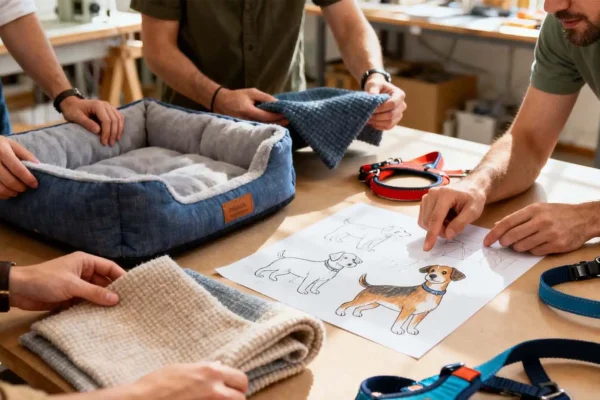
Step 1: Design and Specification Review
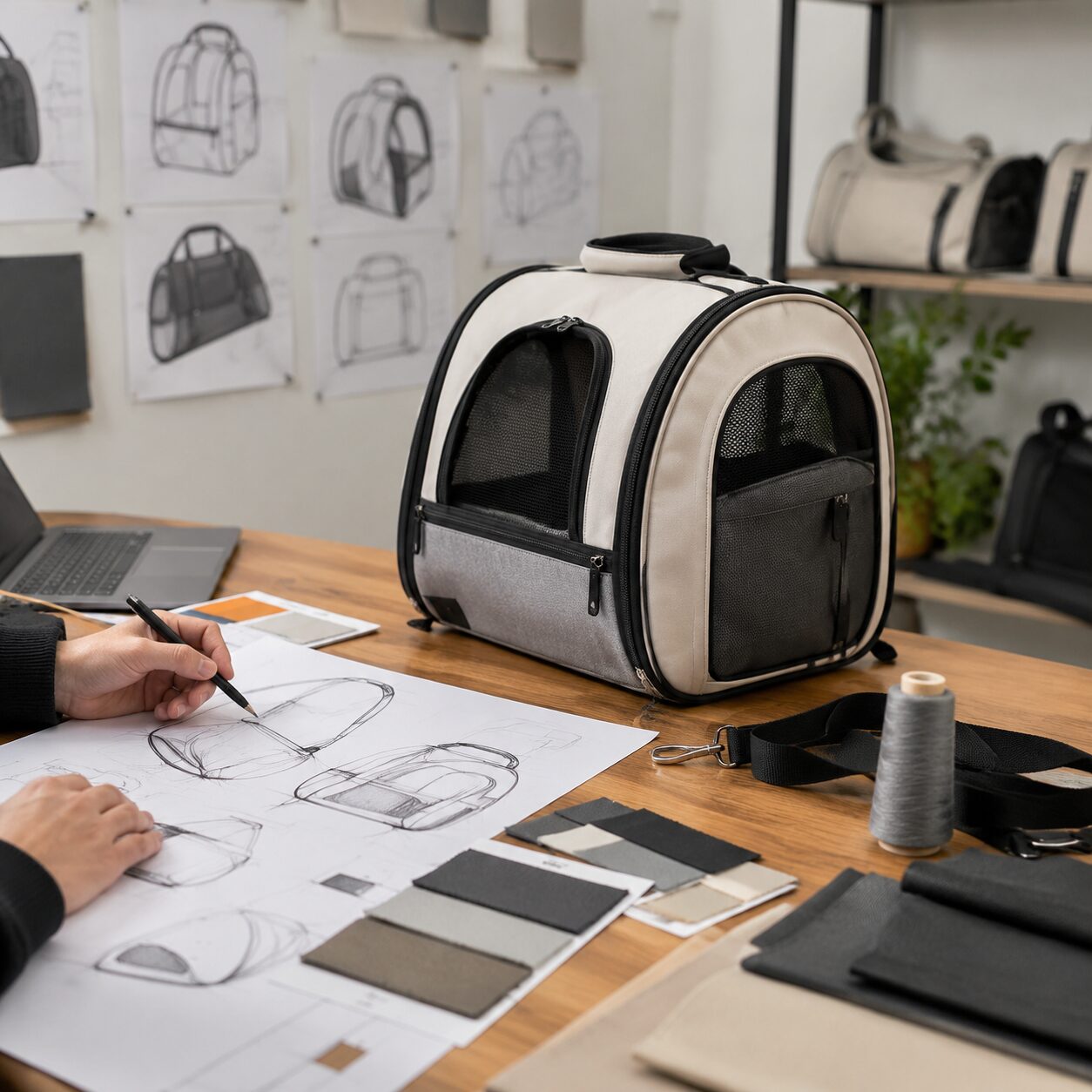
The buyer shares sketches, reference images, or an existing sample.
The development team reviews the structure, dimensions, fabric choices, foam or fiber specifications, and intended customization.
Potential production issues should be discussed before the first sample is made.
Step 2: Prototype Development
The factory prepares a physical sample for evaluation.
Important checks include filling distribution, entry height, removable-cover fit, stitching quality, and the relationship between external dimensions and usable sleeping space.
At Aimazing, our standard sampling target is 3–5 days, subject to the availability of selected materials and design complexity.
For a broader explanation of our workflow, visit our pet product customization process.
Step 3: Sample Testing and Approval
Before approving a design for bulk production, buyers should evaluate both appearance and practical performance.
Useful sample checks include:
- Finished dimensions and tolerances
- Cushion thickness and compression recovery
- Fabric appearance after washing
- Zipper function and attachment security
- Seam strength and finishing
- Cover removal and refitting
- Packaging dimensions and recovery after unpacking
Any changes should be documented in a revised specification or approved reference sample.
Step 4: Bulk Production Preparation
Once the design is approved, the factory confirms the material bill, production specifications, branding files, packaging requirements, and inspection criteria.
This stage is particularly important when multiple sizes or color combinations are included in the same collection.
The right dog bed manufacturer should help buyers understand which features can remain consistent across variants and which require separate patterns or manufacturing processes.
10. How to Compare Suppliers Beyond Price
Choosing a production partner based solely on the lowest quotation can introduce avoidable risks.
A lower unit price may reflect differences in foam density, fabric weight, filling quantity, zipper construction, or packaging specifications.
Buyers comparing dog bed suppliers should therefore request quotations based on identical technical requirements.
Questions Worth Asking
Can the factory adjust the internal structure?
A capable partner should be able to discuss bolster dimensions, filling methods, entry design, and removable components rather than offering only cosmetic changes.
How are materials specified?
Buyers should receive clear information about fabric composition, foam properties, filling quantities, and relevant testing requirements.
Can the approved sample be reproduced consistently?
Material substitutions, filling variation, and dimensional inconsistencies can affect products during repeat orders.
Can the factory support coordinated collections?
Brands may want matching beds, cushions, blankets, and other accessories with consistent colors, labels, and packaging.
What information is required before production?
Clear sample approvals, technical specifications, and inspection requirements reduce misunderstandings between purchasing and manufacturing teams.
At Aimazing’s pet accessories manufacturing division, we support OEM/ODM development for pet product collections, including customization of materials, dimensions, structures, colors, and branding.
Our focus is to help brands move from a product concept to a manufacturable design while considering the practical requirements of bulk production.
11. Common Design Mistakes to Avoid
Even attractive bedding concepts may require adjustments before they are suitable for commercial production.
Mistake 1: Choosing Excessively Thick Bolsters
Large bolsters can reduce usable sleeping space, especially in compact beds.
Designers should compare the internal area with the expected resting posture of the target dog.
Mistake 2: Selecting Filling Based Only on Softness
Soft filling may feel comfortable initially but can lose its intended shape through compression and washing.
Buyers should test the chosen material rather than relying on descriptive terms such as premium or extra soft.
Mistake 3: Ignoring Cleaning Requirements
Non-removable covers and poorly positioned zippers can make routine cleaning inconvenient.
Maintenance requirements should be incorporated before the pattern is finalized.
Mistake 4: Overcomplicating Decorative Features
Loose ornaments, exposed fasteners, or bulky embroidery may create unnecessary safety and durability concerns.
Simpler construction can support a refined appearance while reducing production complexity.
Mistake 5: Approving Samples Without Written Specifications
Photographs alone cannot reliably communicate foam density, filling weight, internal dimensions, or dimensional tolerances.
Written specifications and approved physical samples provide a stronger foundation for consistent production.
12. Final Thoughts: Designing Small-Breed Bedding for Long-Term Value
A well-designed custom dog bed should combine appropriate dimensions, comfortable materials, practical cleaning features, and reliable construction.
For small breeds, seemingly minor details such as entry height, bolster thickness, and cushion firmness can have a meaningful influence on everyday usability.
Pet brands developing new bedding collections should approach product design as a balance between the animal’s needs and the practical requirements of manufacturing.
Demand for personalized dog beds for small dogs also creates opportunities for coordinated colors, embroidery, removable covers, and complementary bedding accessories. However, personalization is most valuable when it is built upon a comfortable and well-constructed product.
Whether developing a single premium model or a complete wholesale collection, careful specification and sample evaluation can reduce avoidable problems before bulk production begins.
Planning a Small-Dog Bedding Collection?
Aimazing works with pet brands, wholesalers, and distributors on OEM/ODM product development, including materials, structures, branding, and manufacturing preparation.
Explore our custom pet accessories collection or contact our team to discuss your next pet bedding project.