1. Deciphering Global Transit Rules: Why Spatial Engineering Dictates Product Viability
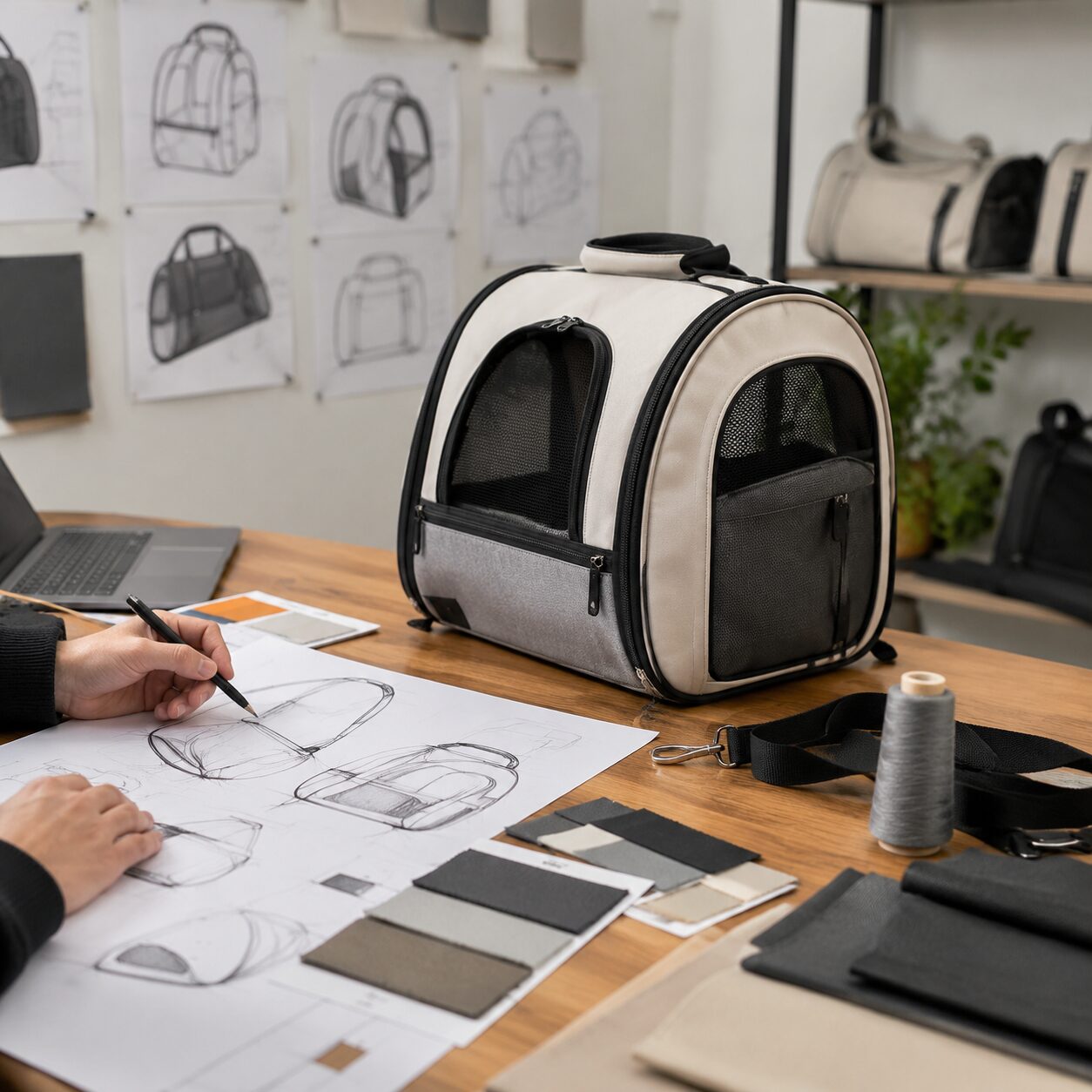
Fragmented carrier restrictions force brands to completely rethink structural compliance from the ground up during early-stage product development cycles. Sourcing or publishing an airline pet carrier size guide requires absolute technical precision because aviation regulatory bodies enforce strict dimensional thresholds across international flight routes governing in cabin pet bag dimensions. Commercial aviation operators maintain disparate cabin clearance rules that change without advanced warning based on specific aircraft fleet models, seating pitch angles, and regional safety layouts. Factory structural engineers must design highly adaptable soft-goods that satisfy conflicting regional mandates while preserving essential animal welfare standards during extended transit periods. Developing a universal footprint requires analyzing the under-seat geometry of dominant commercial aircraft families to calculate the maximum allowable geometric volume without risking passenger safety egress. Forward-thinking brand developers must prioritize strict dimensional limits before commissioning an airline pet carrier size guide portfolio for global retail distribution channels and wholesale markets.
- Primary Question: How do fragmented commercial aviation restrictions impact early-stage soft-goods product development?
- Direct Answer: Fragmented carrier rules force brands to completely rethink structural compliance and design highly adaptable soft-walled enclosures.
- Complementary Explanation: Varying fleet configurations require rigorous dimensional planning to prevent costly post-production redesigns and ensure cross-airline retail viability across global logistics networks.
2. Mastering the Vertical Clearance Gap: Optimizing Under-Seat Structural Physics
Integrating flexible upper skeletons and memory-polymer stays allows portable pet luggage to deflect low-profile seat compression without losing internal breathing room while referencing an airline pet carrier size guide. Sourcing compliant production batches requires mastering how under seat carrier dimensions dictate the elastic behavior of internal support components under heavy mechanical load. Aircraft passenger seats feature downward-slanting aluminum support bars that press heavily against cargo containers during unexpected turbulence, critical taxiing maneuvers, or ground braking. High-grade memory-polymer stays bend smoothly under direct downward weight and rebound instantly once physical pressure is lifted completely. Optimizing these resilient structural physics secures permanent interior headroom for traveling animals beneath restrictive cabin thresholds while absorbing destructive kinetic shockwaves.
- Primary Question: How do pliable top frames maintain internal pet headroom under restricted aircraft seating pressure?
- Direct Answer: Pliable frames utilize memory-resin stays that flex smoothly under seat compression and instantly spring back.
- Complementary Explanation: This dynamic elastic behavior prevents top-panel collapse during taxiing and turbulence while satisfying low-profile cabin height restrictions demanded by modern aviation safety protocols.
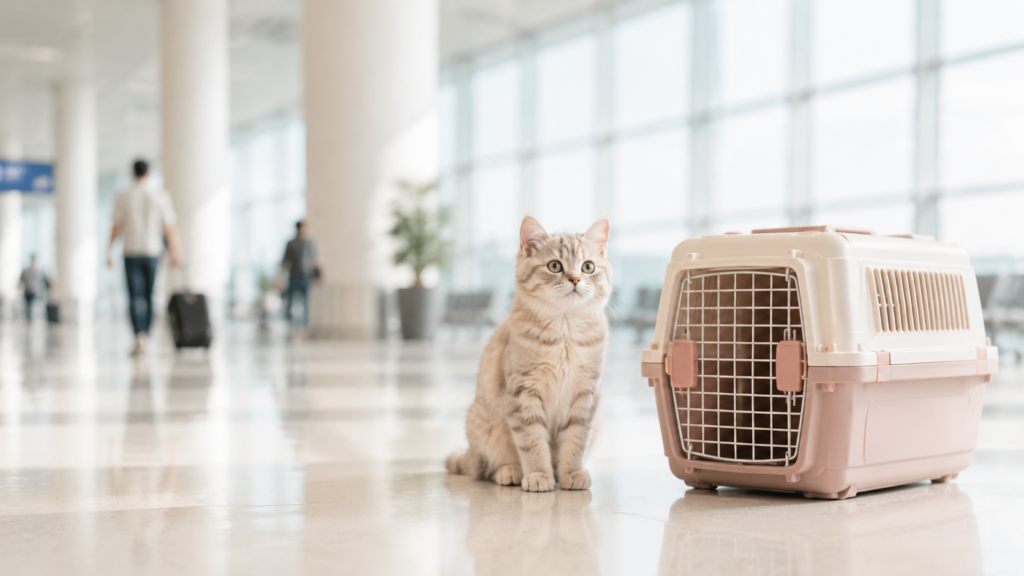
3. Zero-Failure Gate Compliance: Engineering to Universal Aviation Limits
Matching robust base footprints with lightweight internal skeletons guarantees that soft carriers respect the most unforgiving international carrier limits and severe safety mandates. Releasing merchandise built to an official airline approved pet carrier size protects corporate reputation from costly airport gate rejections and severe consumer dissatisfaction. Major airline networks enforce strict spatial perimeters that penalize bulky side attachments and rigid frame protrusions aggressively during boarding verification. Factory technical designers optimize bottom plate dimensions to maximize animal comfort volume while upholding flawless compliance profiles across global carriers monitoring pet carrier size limits. Achieving universal gate compliance eliminates operational friction and drives high-volume wholesale reorders worldwide across interconnected commercial retail platforms.
| Compliance Metric | Structural Engineering Solution | Aviation Operational Benefit |
| Base Surface Area | Beveled bottom edge geometries | Glides smoothly past life vest boxes |
| Height Flexibility | Memory-resin fiberglass canopy stays | Compresses safely during takeoff procedures |
| Exterior Profile | Flush-mounted zipper tracks and handles | Eliminates snagging inside sizing bins |
4. The Millimeter Margin: Overcoming Rigid Spatial Boundaries in Mass Production
Eliminating oversized exterior pockets and protruding grab handles prevents overall dimensions from expanding beyond authorized maximums during factory assembly. Controlling production tolerances guarantees that commercial output aligns perfectly with international pet carrier size limits without unexpected geometric creep. Industrial sewing facilities often introduce subtle dimensional variances through fluctuating thread tension or heavy fabric layering that ultimately distorts the intended under seat carrier dimensions. Implementing a strict zero-tolerance quality assurance program ensures complete harmonization between digital tech packs and physical factory shipments. Eradicating millimeter-level boundary expansion ensures seamless distribution through tight global shipping channels and rigorous airline inspection gateways.
- Primary Question: How do soft-trim management strategies prevent exterior size inflation during mass production?
- Direct Answer: Strategies involve stripping away bulky side pouches and applying zero-tolerance stitching controls to eliminate dimensional creep.
- Complementary Explanation: Strict pattern alignment ensures that physical factory outputs match digital tech packs precisely, preventing products from exceeding regulated limits enforced by strict gate agents.
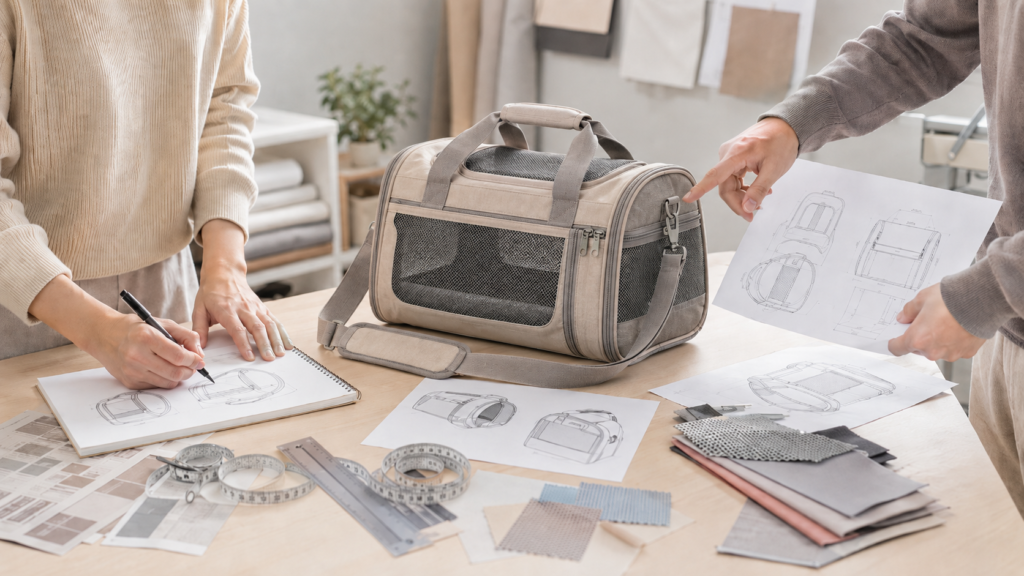
5. Cabin-Class Architecture: Sculpting Precision Internal Footprints
Deploying dual-layer reinforced base boards wrapped in plush, removable fleece preserves a flat floor foundation under live animal weight during turbulent flights. Maintaining exact in cabin pet bag dimensions during high-speed production runs prevents catastrophic sizing errors across commercial wholesale manufacturing batches. When a pet sits inside an unreinforced soft enclosure, the floor sags and pulls the exterior perimeter inward dangerously, ruining the intended airline pet carrier design. Integrating multi-ply composite base inserts neutralizes downward gravitational pulling forces and secures the intended rectangular cabin footprint perfectly. Precise interior structural planning guarantees predictable spatial performance under actual transit conditions across intercontinental flight schedules.
- Primary Question: How do rigid base inserts prevent exterior side-wall distortion under live animal weight?
- Direct Answer: Rigid multi-ply inserts neutralize gravitational pulling forces and preserve the intended rectangular cabin footprint.
- Complementary Explanation: Supporting the floor prevents fabric sagging that pulls exterior walls inward, ensuring that internal dimensions remain stable during transport and daily urban mobility.
6. The Ergonomic Flight Deck: Innovating Advanced Functional Carrier Geometry
Strategically positioning high-tenacity, vinyl-coated mesh panels maximizes cross-flow ventilation while securing a comforting, den-like atmosphere for nervous pets guided by an airline pet carrier size guide. Investing in advanced airline pet carrier design turns rigid regulatory restrictions into powerful market differentiators for retail brand partners worldwide. Modern pet owners demand architectural layouts that balance maximum interior air exchange with visual discretion in crowded airport terminals and chaotic security lines. Factory pattern engineering optimizes window surface ratios to satisfy strict airline mesh specifications without sacrificing structural tear strength. Innovative geometric planning redefines functional soft-goods styling for contemporary travel markets demanding absolute perfection.
| Carrier Geometry Feature | Material Engineering Specification | Biological Welfare Objective |
| Airflow Zoning | Vinyl-coated high-tenacity polyester mesh | Maximizes oxygen circulation without claw tears |
| Visual Privacy | Roll-down opaque technical canvas flaps | Reduces visual stimulation and travel anxiety |
| Entry Portals | Dual-axis U-shaped locking zipper doors | Facilitates low-stress loading in tight spaces |
7. Modern Production Infrastructure: Collaborating with Aimazing Bag for Commercial Soft-Goods Manufacturing
Employing advanced ultrasonic welding and high-frequency bonding eliminates needle-hole structural vulnerabilities across technical textile assemblies utilized in aviation gear. Sourcing eco-friendly face fabrics and certified internal framing materials guarantees verified batch compliance across complex global supply chains. Scaling production seamlessly from pilot engineering samples to full commercial shipping containers demands operational maturity and rigorous quality oversight to consistently deliver an airline approved pet carrier size. Aimazing Bag provides precision manufacturing solutions that empower global brands to execute high-volume soft-goods programs with absolute confidence. Expert industrial execution guarantees uncompromised wholesale excellence from initial prototype conceptualization to final intermodal container loading.