1. The Anatomy of Canine and Feline Comfort: Why Generic Sizing Fails Brand Portfolios
Extreme physiological differences between Dachshunds, Bulldogs, and Maine Coons render one-size-fits-all soft carriers obsolete in modern retail channels. Generic soft carriers fail because animal skeletal structures vary drastically across species and functional body types. Sourcing a custom size pet carrier solves this mismatch by engineering bespoke interior volumes tailored to specific animal proportions. Forward-thinking brand owners must abandon uniform dimensions to accommodate elongated spines or broad chest configurations comfortably. Technical soft-goods manufacturers analyze animal posture metrics to establish ergonomic baseline patterns before initiating industrial cutting.
- The Skeletal Disparity Hurdle: Extreme physiological differences between Dachshunds, Bulldogs, and Maine Coons render one-size-fits-all soft carriers obsolete.
- Brand Differentiation: Forward-thinking catalog builders must establish proprietary sizing structures when launching a custom size pet carrier collection.
- Ergonomic Baseline: Technical soft-goods manufacturers analyze animal posture metrics to establish ergonomic baseline patterns before initiating industrial cutting.
2. Decoding Retail Fit: Architecting an Intuitive Pet Carrier Size Chart
Converting animal length, shoulder height, and spinal posture requirements into clear, consumer-friendly matrix columns eliminates online shopping friction. A comprehensive pet carrier size chart bridges the gap between complex animal biometrics and straightforward customer purchasing decisions. Retail buyers and pet heads alike live and die by hard numbers to lock down the exact fit for their animals, which is why factory engineering squads partner directly with product designers to map out millimetric interior clearances for every custom size pet carrier SKU. No guesswork, no fluff—just crystal-clear sizing metrics that spell out exact weight tolerances and interior volume at a glance so customers never second-guess their buy.
| Physiological Metric | Dachshund Proportions | Bulldog Proportions | Maine Coon Proportions |
| Spinal Length Ratio | Extreme elongation requiring reinforced base boards | Compact trunk requiring balanced center weight | Long feline frame needing horizontal stability |
| Chest Clearance | Low ground clearance demanding low-profile entry | Broad chest width requiring expanded interior girth | Flexible frame requiring adaptable soft-walled panels |
| Postural Preference | Prone resting posture with extended front paws | Seated or prone posture with wide stance | Curled or stretched resting posture requiring soft boundaries |
3. Industrial Pattern Scaling: Mastering Dog Carrier Size Grading
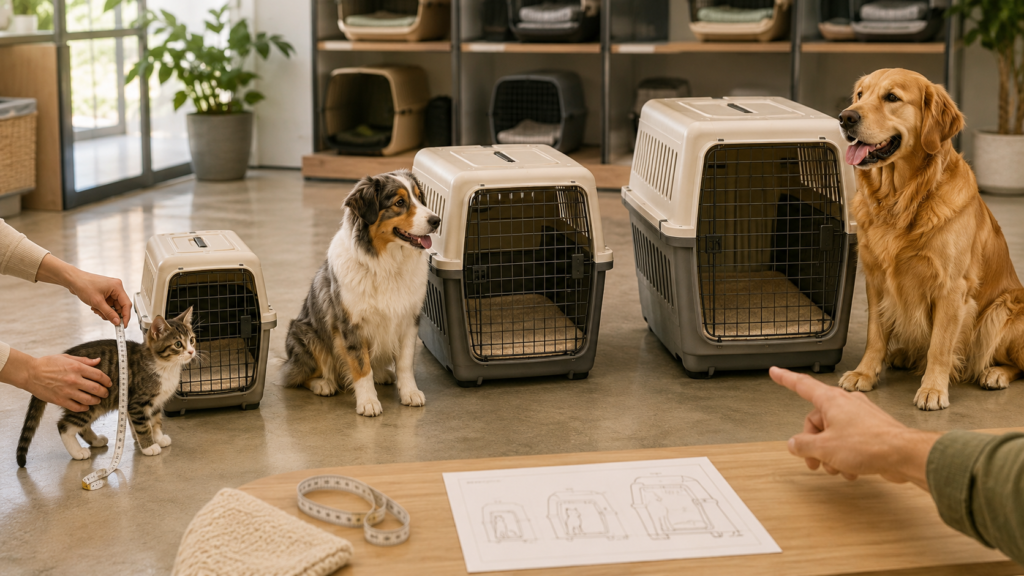
Scaling soft-walled side panels, curved mesh domes, and reinforced base boards across XS to XXL grading tiers requires rigorous mathematical precision. Professional dog carrier size grading ensures that proportional integrity remains constant as physical bag dimensions expand or shrink. Industrial pattern makers adjust gusset widths, curve radiuses, and structural reinforcement placements to maintain uniform aesthetic appeal. Inaccurate grading causes structural sagging or fabric distortion under load in larger product variants. Systematic size progression guarantees optimal weight distribution across the entire multi-tier collection.
- Multi-Tier Progression: Scaling soft-walled side panels and reinforced base boards across XS to XXL tiers requires rigorous mathematical precision.
- Aesthetic Consistency: Professional dog carrier size grading ensures that proportional integrity remains constant as physical dimensions expand.
- Weight Distribution: Systematic size progression guarantees optimal weight distribution across the entire multi-tier collection.
4. Spatial Psychology: Engineering Optimal Cat Carrier Dimensions
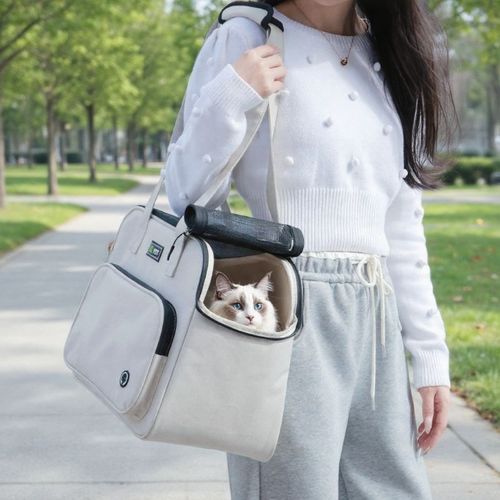
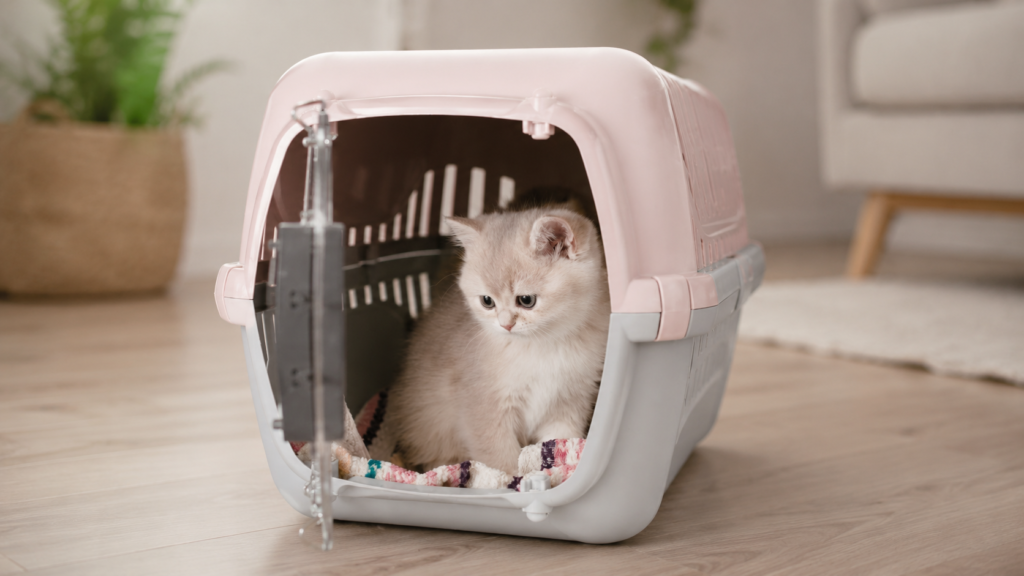
Designing enclosed, den-like floor footprints that soothe anxious felines during veterinary transit and air travel requires deep understanding of feline psychology. Optimizing internal cat carrier dimensions provides cats with secure visual boundaries that significantly lower stress hormone levels. Felines instinctively seek enclosed sanctuaries when exposed to unfamiliar environments, loud noises, or motion. Soft-sided carriers featuring dark, cocoon-like interiors create a calming psychological sanctuary for nervous travel companions. Thoughtful spatial planning transforms a stressful transit carrier into a secure temporary resting environment.
| Grading Tier | Base Board Dimensions | Mesh Window Radius | Reinforcement Specification |
| Extra Small (XS) | 35cm x 20cm | 12cm curvature | Single-layer PE board with EVA foam |
| Medium (M) | 48cm x 28cm | 18cm curvature | Dual-layer structural board with webbing spine |
| Extra Large (XL) | 65cm x 38cm | 26cm curvature | Rigid honeycomb composite plate with steel stays |
5. Bespoke Blueprint Execution: Translating Custom Pet Bag Dimensions into Prototypes
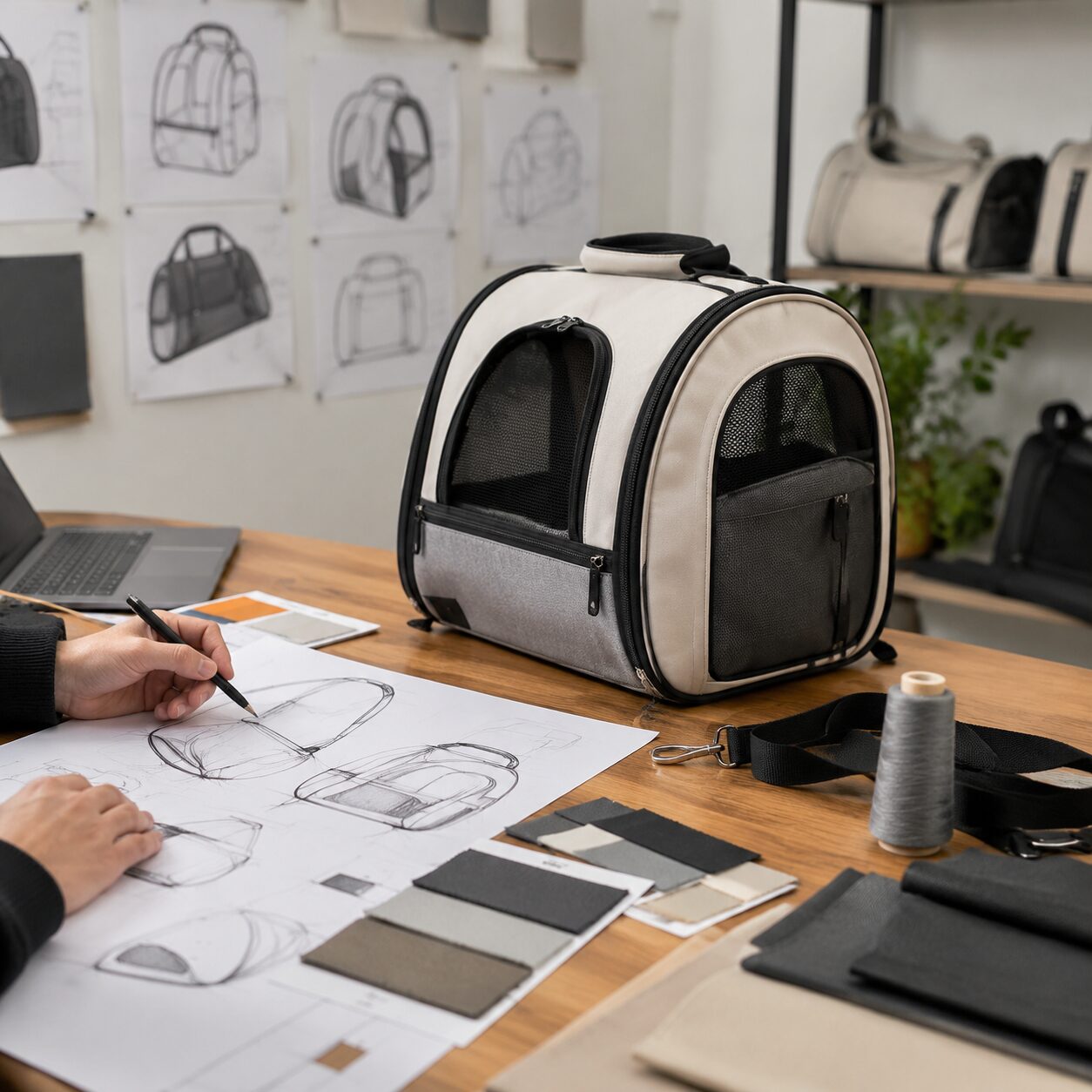
Converting non-standard retail specifications into precise vector cutting files and multi-layer sewing blueprints bridges the gap between digital design and physical manufacturing. Developing custom pet bag dimensions requires translating creative brand concepts into functional technical data packages for factory floors. CAD software maps out exact panel breakdowns, seam allowances, and hardware spots down to the micron. Master pattern makers double-check every multi-material build to crush tension mismatches and puckered seams before they happen, making sure your custom size pet carrier transitions from initial proto to full-scale production without missing a beat.
- CAD Translation: Converting non-standard retail specifications into precise vector cutting files bridges digital design and physical manufacturing.
- Technical Data Packages: Developing custom pet bag dimensions requires translating creative concepts into functional technical data packages.
- Assembly Precision: Technical pattern engineers verify that complex multi-material assemblies fit together without tension discrepancies.
6. Dynamic Load Engineering: Calibrating a Reliable Pet Weight Capacity Chart
Reinforcing corner webbing, bottom support boards, and strap attachment points handles shifting animal loads during active transit. Dynamic load engineering ensures that a verified pet weight capacity chart accurately reflects the physical limits of the soft-goods assembly. As animals move inside a carrier, shifting center-of-gravity forces place intense localized stress on specific seams and hardware anchors. Industrial manufacturing practices apply heavy bar-tack stitching and high-tensile nylon webbing to distribute mechanical stress evenly. Structural reinforcement prevents catastrophic strap tearing or bottom panel sagging under maximum load conditions.
- Stress Distribution: Reinforcing corner webbing and bottom support boards handles shifting animal loads during active transit.
- Capacity Verification: Dynamic load engineering ensures that a verified pet weight capacity chart accurately reflects structural limits.
- Structural Safety: Industrial manufacturing practices apply heavy bar-tack stitching and high-tensile nylon webbing to distribute stress.
7. Industrial Fabrication Mastery: Partnering with Aimazing Bag for Scalable Soft-Goods Production
RF welding and heavy-duty multi-needle stitching lock down industrial-grade load-bearing frames across every custom size pet carrier. Aimazing Bag fuses technical waterproof membranes with structural foam cores using advanced thermal lamination, completely cutting out adhesive failure while locking in hermetically sealed base bins that wipe clean in seconds. By running the full playbook from digital tech-pack translation straight through to bulk container loading, this direct manufacturing partnership hands pet brands the execution power to scale aggressively and profitably in cutthroat global markets.