1. The Featherweight Imperative: Why Sourcing Lightweight Pet Carrier Materials Drives Modern Travel Trends
Reducing empty carrier weight relieves physical strain for modern pet owners during transit. Travelers navigate crowded airport terminals and busy urban subway systems carrying heavy pet accessories daily. Sourcing high-performance lightweight pet carrier materials eliminates unnecessary physical exhaustion for consumers worldwide. Traditional pet travel bags incorporate thick structural boards and dense metallic frames that add excess dead weight. Modern pet owners demand ergonomic travel solutions that prioritize lightweight portability without sacrificing structural safety. Advanced textile engineering replaces heavy reinforcement components with high-tensile yarns and intelligent spatial geometry. Brand developers must prioritize weight reduction to capture high-growth market segments among frequent travelers.
| Material Evaluation Parameter | Engineering Specification & Compliance Requirement | Operational Impact on Soft-Goods Manufacturing |
| Areal Density Optimization | Reduces fabric weight below 250 grams per square meter. | Lowers total carrier dead weight for aviation commuters. |
| Tensile Strength Verification | Withstands minimum 150-pound linear breaking force loads. | Prevents structural failure under dynamic animal movement. |
| Abrasion Resistance Index | Exceeds 40,000 Martindale rub cycles without fiber damage. | Guarantees long-term durability in daily consumer use. |
2. High-Tenacity Textiles: Sourcing Durable Lightweight Dog Carrier Fabric Options
Balancing ultra-fine fiber diameters with exceptional tensile breaking points defines canine travel lines. Canine transportation accessories require superior tear resistance compared to standard feline or small animal carriers. Sourcing an optimized lightweight dog carrier fabric involves analyzing multi-filament yarn twist rates and weave densities. Engineered synthetic fibers undergo specialized extrusion to max out tensile strength in lightweight pet carrier materials. Mills weave ultra-fine yarns tight to create snag-free surfaces against claws. Brand buyers dial in 210D to 420D denier specs for the ideal weight-to-strength ratio.
- Balancing ultra-fine fiber diameters with exceptional tensile breaking points defines canine travel lines.
- Sourcing an optimized lightweight dog carrier fabric involves analyzing multi-filament yarn twist rates and weave densities.
- Reinforcing critical panel intersections using heavy-duty box-X stitching prevents seam tearing.
- Selecting compatible shell fabrics and sewing threads prevents differential stretching during active transit.
3. Tear-Resistant Grid Architecture: Engineering a Ripstop Nylon Pet Carrier
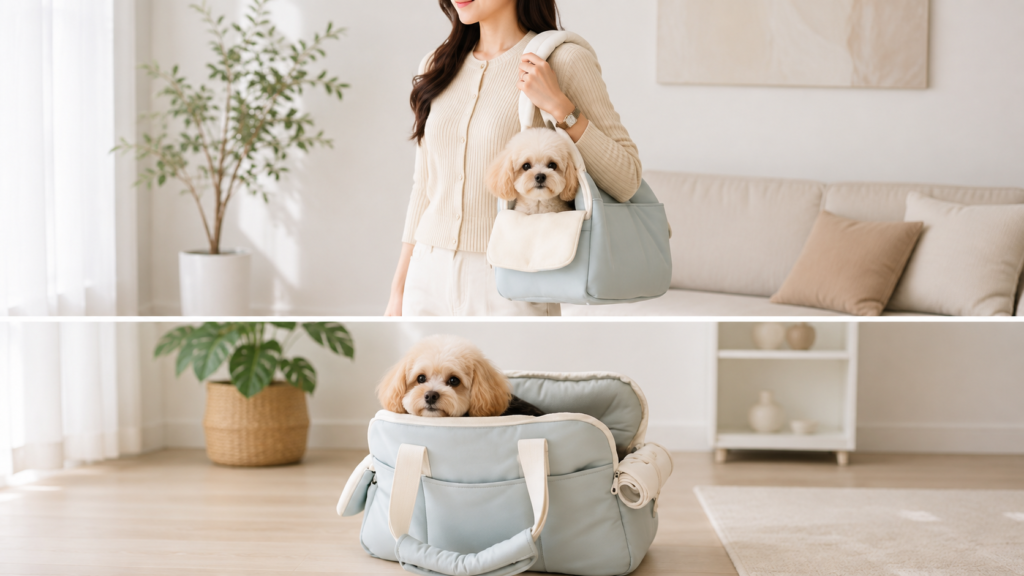
How high-tensile grid threads stop accidental claw punctures from propagating across the panel defines ripstop engineering. Domestic pets frequently scratch interior lining walls and mesh windows when experiencing travel anxiety. Deploying a heavy-duty ripstop nylon pet carrier utilizes a specialized box-weave grid pattern. Interspersed thicker reinforcement yarns interrupt microscopic tears before they can expand into structural failures. Sourcing teams select high-tenacity nylon filaments treated with durable water-repellent surface finishes. This grid architecture provides exceptional tear propagation resistance without adding unwanted ounces to the bag.
| Ripstop Architectural Feature | Material Sourcing Parameter | Structural Advantage for Pet Carriers |
| Grid Thread Density | 3mm by 3mm high-tenacity reinforcement box weave. | Stops accidental claw punctures from tearing panels. |
| Surface Coating Type | Dual-sided polyurethane backing with water repellency. | Blocks moisture penetration and resists outdoor abrasion. |
| Weight-to-Strength Ratio | Maximum durability achieved at under 200 GSM density. | Delivers rugged outdoor performance without heavy bulk. |
4. Cost-Effective Performance: Structuring a Durable Polyester Pet Carrier Bag
Utilizing treated polyester filaments to resist UV degradation and moisture absorption during outdoor adventures ensures longevity. Polyester polymers possess inherent hydrophobic chemical properties that prevent water retention and fiber swelling. Sourcing teams evaluate specialized UV-inhibitor masterbatches blended directly into the molten polymer melt. A well-engineered polyester pet carrier bag resists solar fading and structural embrittlement under direct sunlight. Unlike nylon variants, polyester maintains stable dimensions when exposed to fluctuating relative humidity levels. This dimensional stability prevents panel puckering and maintains pristine aesthetic silhouettes over time.
- Utilizing treated polyester filaments to resist UV degradation and moisture absorption ensures longevity.
- Structuring a durable polyester pet carrier bag balances featherlight comfort with attractive retail price points.
- Evaluating specialized UV-inhibitor masterbatches prevents solar fading and structural embrittlement.
- Processing polyester rolls cleanly through automated cutting lines minimizes fraying and edge distortion.
5. Breathable Structural Integrity: Sourcing an Advanced Lightweight Mesh Carrier
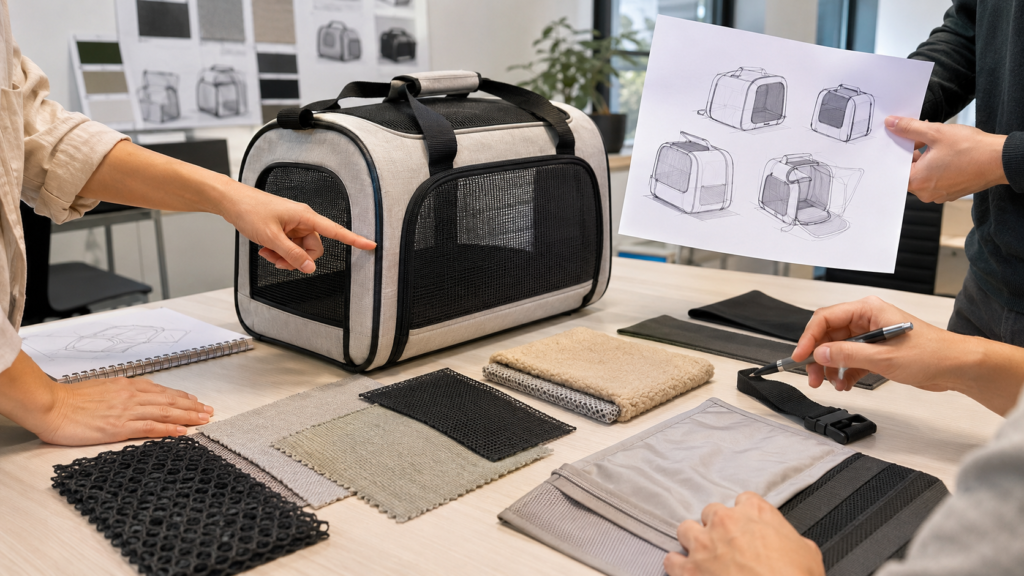
Maximizing cabin cross-breeze airflow without sacrificing claw resistance or frame rigidity dictates mesh selection. Enclosed pet carriers require expansive ventilation panels to prevent hyperthermia and reduce travel anxiety. Sourcing a specialized lightweight mesh carrier component involves calculating exact open-area ratios. Top-tier mills pump out vinyl-coated polyester warp-knit meshes dialed specifically for maximum airflow in lightweight pet carrier materials. These custom mesh windows let oxygen flow freely while standing up tough against sharp claws. Our engineering team carefully balances open-area ventilation with heavy-duty burst strength so you never have to sacrifice safety for breathability.
| Mesh Engineering Parameter | Technical Sourcing Specification | Performance Impact on Pet Travel |
| Open-Area Ventilation Ratio | Achieves 45 to 55 percent total surface breathability. | Maximizes cabin cross-breeze airflow for pet safety. |
| Claw Resistance Threshold | Withstands 30-pound feline or canine scratch tests. | Prevents mesh puncture and escape incidents in transit. |
| Coated Core Tenacity | High-flex vinyl coating over multi-filament core yarns. | Provides tactile softness under continuous animal paw pressure. |
6. Gram-Level Optimization: Executing Holistic Pet Carrier Weight Reduction
Replacing heavy metal components and dense straps with high-strength tactical aluminum and hollow-weave webbing drives weight reduction. Traditional pet carriers utilize heavy steel D-rings, thick alloy buckles, and dense solid-webbing straps. Executing comprehensive pet carrier weight reduction requires evaluating every individual sub-component on the bill of materials. Sourcing teams substitute heavy steel hardware with anodized aerospace-grade aluminum carabiners and side-release buckles. Hollow-weave tubular webbing delivers identical linear breaking strength to solid straps while cutting weight by forty percent. These gram-level savings compound across thousands of units to slash international freight shipping costs.
- Replacing heavy metal components and dense straps with tactical aluminum and hollow-weave webbing drives weight reduction.
- Executing comprehensive pet carrier weight reduction slashes shipping costs without compromising safety benchmarks.
- Substituting heavy steel hardware with anodized aerospace-grade aluminum reduces hardware weight significantly.
- Trimming fabric panels with absolute precision using laser cutting eliminates excess salvage margins.
7. OEM Partnership Execution: Vetting a Lightweight Soft-Goods Manufacturing Partner
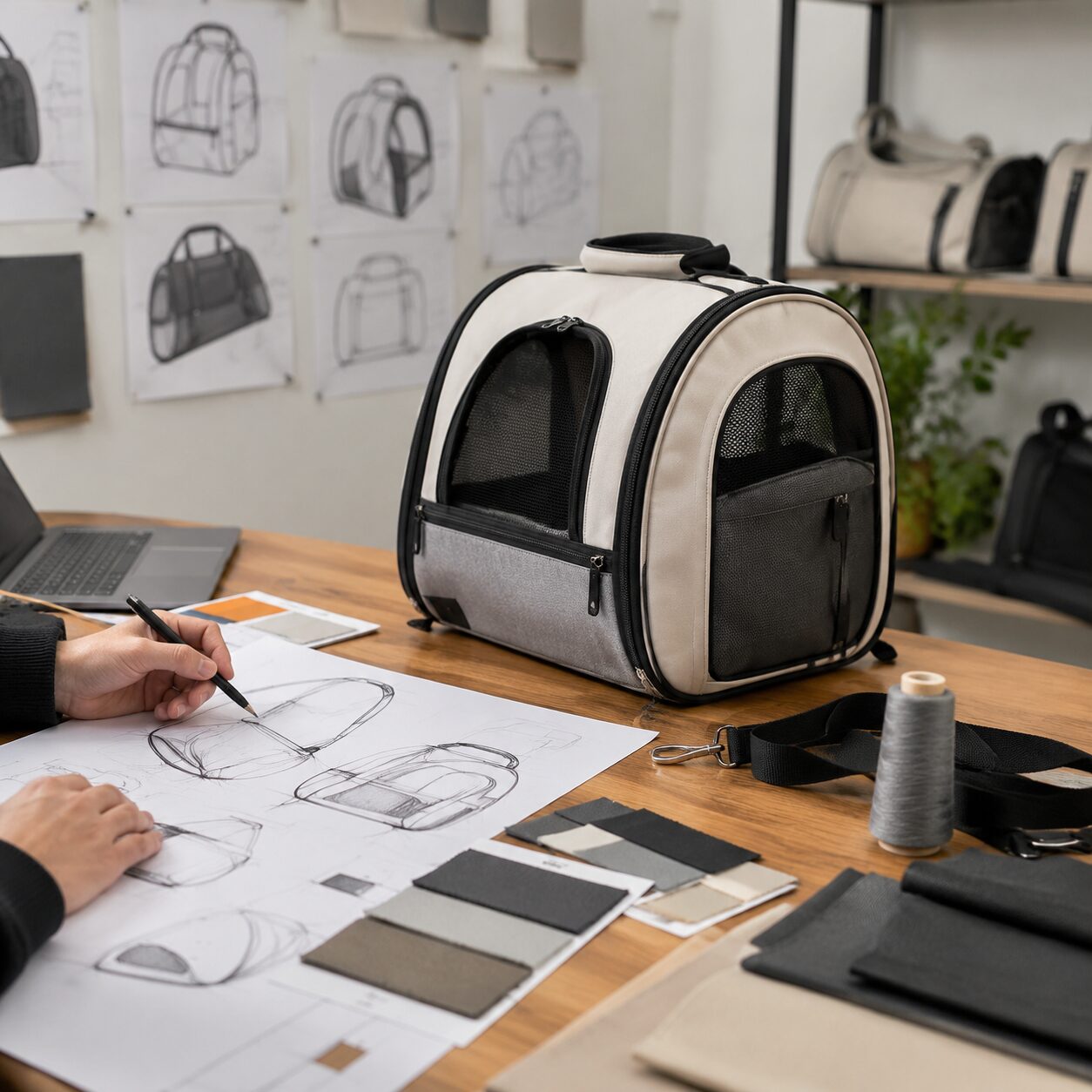
Automated CNC cutting precision, ultrasonic edge-sealing, and multi-needle stitch controls drive world-class output when sourcing lightweight pet carrier materials. Vet your soft-goods manufacturing partner by digging into their internal quality control systems, automated laser cutting lines, and precision edge-bonding protocols. Laser cutting stops fraying cold during high-speed runs, while ultrasonic sealing melts synthetic fibers together to lock down panel intersections and eliminate loose threads. Grab our “Lightweight Soft-Goods Manufacturing & Sourcing Blueprint” to audit your factory pipeline right now, or hit our OEM quotation page to lock in bulk pricing, low-MOQ pilot runs, and expert specs.