Building a successful harness collection for muscular, broad-chested dogs requires more than adding thicker straps or offering an extra-large size. For pet brands and retailers, the real challenge is developing a product that combines comfortable movement, dependable construction, and clear market differentiation.
Pitbull-type dogs are often associated with powerful builds, but their body proportions vary considerably. Chest depth, shoulder width, neck circumference, and activity levels all influence how a harness performs. Understanding these differences helps businesses create better-fitting products, reduce avoidable returns, and establish a stronger position in the competitive pet accessories market.
1. Why Can a Standard Large-Dog Harness Still Fit Poorly?
Many brands assume that increasing the dimensions of an existing harness will make it suitable for broader, muscular dogs. However, proportion matters just as much as size.
A custom dog harness pitbull development project should begin with the relationship between chest circumference, shoulder movement, and strap placement. Simply enlarging a standard pattern can leave excessive space around the neck while creating pressure behind the front legs.
For buyers developing a wide chest dog harness, three common fit challenges deserve attention:
- Chest-to-neck proportions: A broader torso may require a different balance between the front chest panel and neck opening.
- Underarm clearance: Incorrectly positioned straps may rub against the front legs during walking.
- Shoulder mobility: Wide or poorly placed panels can interfere with natural movement.
According to PetMD’s guide to harness safety, barrel-chested breeds can be more difficult to fit because some harnesses create excessive pressure around the shoulders or chest.
For retailers, these are not merely design concerns. Poor fit can generate negative reviews, exchanges, and customer dissatisfaction, even when the fabric and stitching appear durable.
2. Which Measurements Matter More Than Breed Labels?
When developing a specialized product, breed names can communicate the intended market, but they should not replace accurate measurements.
A successful pitbull harness custom fit strategy starts with collecting real body measurements from different dogs rather than relying exclusively on weight-based size charts.
Building a Better Sizing System
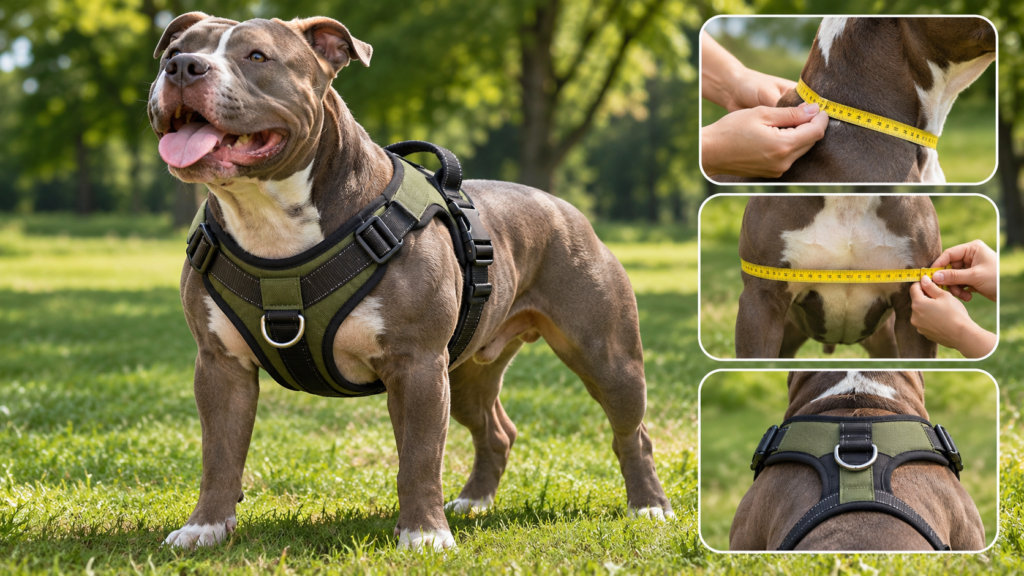
Important measurements include chest girth behind the front legs, lower neck circumference, chest width, and the distance between major strap attachment points.
For a wide chest dog harness, adjustable neck and girth straps provide flexibility, while properly graded chest panels help maintain the intended position of the harness across different sizes.
The American Kennel Club’s harness-fitting guidance emphasizes checking security, movement, and areas where the equipment may rub.
Brands investing in a custom dog harness pitbull collection should therefore validate multiple physical samples on dogs with different proportions before approving bulk production.
Why Adjustment Range Is Not Enough
More adjustment points do not automatically solve an unsuitable pattern.
If a chest panel is too narrow, tightening the straps may increase discomfort. If the neck opening is too large, the harness may shift or become easier to escape.
A better development approach combines appropriate pattern grading with adjustable components. This creates a more reliable fit system and provides customers with clearer sizing guidance.
3. Does Heavy-Duty Construction Automatically Mean Safer?
Strength is a major purchasing consideration for active dogs, but heavier materials do not necessarily produce a better harness.
A heavy duty pitbull harness should be engineered around its complete load-bearing structure, including the webbing, stitching, buckles, and leash attachment points.
For brands developing a strong dog harness for pullers, it is important to distinguish between visible durability and actual structural performance.
Materials and Components That Matter
| Component | Design consideration | Value for the buyer |
|---|---|---|
| Nylon or polyester webbing | Tensile strength and low slippage | Reliable load-bearing structure |
| Reinforced stitching | Secure construction at stress points | Reduced risk of seam failure |
| Metal D-rings | Appropriate strength and corrosion resistance | Dependable leash attachment |
| Padded chest panels | Pressure distribution and comfort | Better everyday wearability |
| Adjustable buckles | Secure locking and stable adjustment | More consistent fit |
| Breathable lining | Ventilation and friction reduction | Improved wearing comfort |
Material selection should reflect the intended retail positioning rather than simply increasing product weight.
For additional comparisons, explore our guide to custom dog harness materials for daily wear.
A lightweight walking harness and an outdoor training harness may require different component specifications. Both can be well designed when their materials match their intended use.
4. Can a No-Pull Feature Replace Proper Leash Training?
Front-clip attachment points have become common in products marketed to owners of strong dogs. However, it is important to separate walking-control features from behavioral training.
A strong dog harness for pullers may include both front and back leash attachment points, giving the owner different handling options.
Front attachment designs can help redirect a dog’s movement when pulling occurs. Back attachment points may suit regular walking when the dog already walks comfortably on a loose leash.
However, these functions do not guarantee that pulling behavior will disappear.
As PetMD explains in its no-pull harness guide, harnesses can help manage pulling, but they do not replace appropriate leash training.
Turning Functionality Into Responsible Marketing
For pet brands, accurate product descriptions create stronger long-term credibility than exaggerated claims.
Instead of promising to eliminate pulling completely, highlight practical features such as adjustable fit, dual attachment options, reinforced leash connections, and comfortable pressure distribution.
This approach also supports a more professional positioning for products intended for active dogs.
5. What Tests Should Brands Require Before Bulk Production?
A visually impressive sample does not automatically prove that a product will perform consistently during everyday use.
Before approving a heavy duty pitbull harness for mass production, buyers should establish measurable acceptance requirements for materials, hardware, construction, and fit.
These should include tensile testing of load-bearing connections, buckle retention checks, webbing slippage assessment, stitching inspection, and repeated-use evaluations.
Evaluate the Complete Product, Not Individual Components
A strong D-ring cannot compensate for weak stitching. Similarly, durable webbing provides limited protection if an adjuster slips during use.
A manufacturer should assess the complete load path from the leash attachment point through the harness structure.
For a custom dog harness pitbull project, sample testing should also include practical walking trials with appropriately sized dogs, checking whether the harness shifts, rubs, restricts movement, or becomes loose.
Brands should agree on test methods, acceptance thresholds, and documentation before production. There is no single universal pull-strength figure that can accurately represent every design and dog size.
The objective is to establish repeatable product requirements that can be checked against approved samples throughout manufacturing.
6. Should Your Brand Compete on Price, Comfort, or Specialization?
Competing solely on price can make it difficult for pet brands to differentiate themselves from generic marketplace products.
Developing a custom dog harness pitbull collection creates an opportunity to build a more recognizable product identity around fit, comfort, and use-specific features.
However, specialization should be based on genuine product differences, not simply changing the product name.
Three Practical Market Positions
Comfort-focused everyday collection
This range can emphasize a wide chest dog harness structure, softer lining, adjustable straps, and a clean lifestyle appearance. It may appeal to owners seeking comfortable equipment for regular neighborhood walks.
Outdoor and active walking collection
A heavy duty pitbull harness can be positioned around reinforced construction, reflective details, secure hardware, and practical handling features.
Premium personalized collection
Brands can combine distinctive fabrics, coordinated colors, customizable patches, and matching leash accessories to create a recognizable collection.
For more ideas on building a coordinated product identity, read our article on personalized dog harness designs for pet brands.
The most effective market position is one that connects a defined customer problem with a visible and verifiable product advantage.

7. B2B Development Scenario: What Happens When a Retailer Challenges a Standard Size Chart?
We once launched a series of specialized collars specifically designed for pit bulls for a British pet products brand.
The brand initially considers purchasing an existing large-dog harness from a general supplier. The product looks durable and its wholesale price is attractive, but early fitting trials reveal inconsistent results.
Some dogs have sufficient chest clearance but excessive space around the neck. Others fit around the torso yet experience rubbing near the front legs.
A Different Approach to Product Development
Rather than continuing with the original pattern, the brand asks its manufacturing partner to help improve the fit.
The project team develops a pitbull harness custom fit plan using measurements from several dogs with different body proportions.
The development process focuses on revising chest-panel geometry, adjusting the position of the girth strap, and evaluating stronger attachment construction.
Instead of merely producing a strong dog harness for pullers with thicker materials, the team evaluates whether the design remains comfortable and secure during movement.
The buyer also requests consistent component specifications and separate size identification for retail packaging.
What Makes This Approach Different?
A basic production-only supplier might offer changes to fabric color, logo placement, or strap width while retaining the existing pattern.
A development-oriented partner can help the buyer identify structural problems before they become mass-production issues.
In this example, the brand chooses to approve revised samples before committing to its planned 300-unit pilot order.
The important outcome is not an invented sales increase or return-rate reduction. It is a better-informed production decision based on fit evaluation, documented specifications, and a clearer market proposition.
For B2B buyers, this process illustrates how supplier development support can create value beyond the initial unit price.
8. What Should a Manufacturing Partner Contribute Beyond Adding Your Logo?
Choosing a pitbull harness manufacturer should involve more than comparing quotations and sample photographs.
An experienced OEM/ODM partner can support product development through material recommendations, pattern adjustments, sample revisions, branding options, and production specifications.
At Aimazing Bag, we support international pet brands, wholesalers, and retailers with customized pet product development and manufacturing.
Our custom pet harness manufacturing solutions include material, structure, hardware, color, logo, and packaging customization.
For a custom dog harness pitbull project, this means working with the buyer to translate target-market requirements into a manufacturable product specification.
Why Production Consistency Matters
An approved sample is only useful when bulk products maintain the agreed design.
Buyers should confirm critical measurements, sewing construction, component specifications, color references, and packaging details before mass production begins.
Our article on why approved samples can fail during bulk production explores why consistency between development and manufacturing deserves particular attention.
A good manufacturing relationship should provide clear communication and realistic technical feedback, including identifying when a requested design change could affect comfort, strength, or production cost.
9. What Should Buyers Include in Their RFQ?
A detailed request for quotation helps suppliers understand the intended product and reduces misunderstandings during sampling.
When requesting a pitbull harness custom fit design, brands should provide target body measurements, expected adjustment ranges, intended walking activities, preferred materials, and reference images.
The RFQ should also clarify whether the product requires front and back leash attachments, reflective elements, reinforced handles, custom logos, matching accessories, or retail-ready packaging.
Before selecting a pitbull harness manufacturer, buyers should request information about sampling procedures, material options, testing methods, order quantities, lead times, and how revisions are handled.
For businesses testing a new collection, smaller initial production quantities may help validate sizing and customer preferences before expanding into additional colors or variations.
The Aimazing customization process provides an overview of how design concepts can move toward samples and production.
10. Conclusion: Are You Building Another Harness or a Better Product Category?
The opportunity in specialized dog walking equipment is not simply to make products larger or heavier. It is to solve specific fit and usability problems while creating a clear reason for customers to choose one brand over another.
A thoughtfully developed custom dog harness pitbull collection can connect ergonomic design, dependable construction, recognizable styling, and coordinated retail presentation.
For brands, wholesalers, and distributors, the right pitbull harness manufacturer should contribute to this process through technical development, sample validation, and consistent production practices.
At Aimazing Bag, we help businesses turn product concepts into custom pet harness and walking accessory collections suited to their target markets.
What matters most to your customers: comfortable fit, stronger construction, or distinctive styling?
Contact Aimazing Bag to discuss your next OEM/ODM pet harness project and explore suitable development options.