For pet brands, a harness can look well finished in a product photo and still prove awkward during everyday use. A strap may rub behind the front legs, a chest panel may shift when the dog turns, or an adjuster may loosen after repeated wear. These issues are rarely solved by adding more padding alone. They usually come down to pattern geometry, the position of each strap, and how the finished product behaves on a moving dog.
1. Start with Consistent Measurements
A custom fit dog harness should begin with a clear measurement protocol rather than a broad label such as small, medium, or large. Record neck circumference, chest circumference at the widest point, chest circumference just behind the front legs, body weight, and the dog’s general body shape. Make sure the dog is standing naturally, and repeat each measurement instead of relying on a single reading.
A 2025 study published in Frontiers in Veterinary Science examined neck, chest, and abdominal girth measurements in 16 dogs. The researchers used defined anatomical locations and repeated measurements, finding high consistency within and between observers. For product teams, the useful lesson is straightforward: standardize where and how measurements are taken before building a size chart. Read the study.
To evaluate ergonomic dog harness fit, show the exact tape position in the measurement guide and specify whether the dog should be standing. This makes size charts easier to follow and reduces inconsistencies between measurements supplied by different customers.
2. Adjust the Panels Around Movement
When developing a tailor made dog harness, the pattern needs to accommodate movement as well as circumference. The front panel should sit securely without pressing into the throat, while the openings behind the front legs need enough clearance to reduce rubbing. If the chest piece is too long, it may interfere with the legs; if it is too short or too narrow, the straps may shift under tension.
During sample review, check the dog standing, walking, turning, sitting, and taking a few steps in different directions. Watch for gaps near the neck, pressure behind the elbows, twisted webbing, and straps that migrate toward the throat.
A Y-shaped front can be a useful option for some designs, but its benefit depends on the individual pattern, panel width, and strap position—not the shape alone.
3. Grade Patterns by Body Shape, Not Just Size
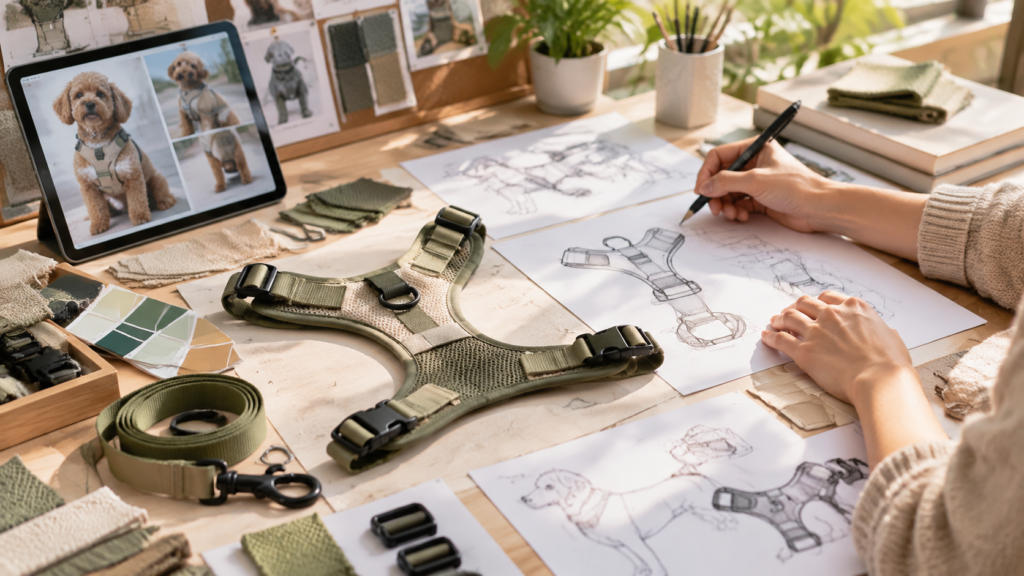
A custom made dog harness should not be created by enlarging every panel and strap by the same percentage. Dogs with the same chest measurement can have very different proportions. Breed labels may help define the target market, but body measurements and fit trials are more useful for setting the actual pattern.
| Body shape | Pattern detail to review | What to check on the sample |
|---|---|---|
| Deep chest with a narrower waist | Chest depth and rear strap angle | The harness stays in position without pinching behind the front legs |
| Broad, rounded ribcage | Girth adjustment range and side-panel shape | The chest strap sits evenly without excessive compression |
| Slim, narrow body | Front-panel width and strap placement | The harness does not rotate easily during turns |
| Small dog | Webbing width, hardware size, and total weight | The product feels proportionate and does not become bulky |
When developing a custom fit dog harness range, grade each size around stable reference points and suitable adjustment ranges. Do not assume that a larger version of the same pattern will automatically fit a different body type.
4. Choose Materials to Support the Pattern
A bespoke dog harness combines fabric, lining, webbing, hardware, and stitching. Breathable mesh can help with airflow, while soft padding may improve contact comfort; neither can compensate for a panel that sits in the wrong place. Webbing width and stiffness also affect how the harness feels and how loads travel through the structure.
Specify materials according to the product’s intended use, target price, and test requirements. For example, a lightweight everyday design may need a different balance of flexibility and hardware weight from an outdoor training model. Our guide to material options for daily-wear harnesses explains the trade-offs among common fabrics and components.
An adjustable custom harness should provide enough usable strap length for the intended size range without leaving long, loose tails. Check that sliders hold their position, buckles are easy to operate, and adjustment points do not sit directly on bulky seams or uncomfortable edges. Test the complete assembly rather than approving each component in isolation.
5. Real Industry Case: Test the Complete System
A useful example comes from the Center for Pet Safety’s 2013 testing of automotive restraint harnesses. In its documented Allsafe harness case study, the initial setup allowed the crash-test dog to move off the seat. Follow-up tests explored different tether lengths; the final configuration removed the extension tether and routed the vehicle’s lap-and-shoulder belt through the back of the harness, which kept the test dog restrained during the reported test. The organization used crash-test models, not live dogs.
This was a car-restraint test, not a walking-harness fit trial, so its results should not be treated as proof about everyday walking products. The broader product-development lesson is still relevant: performance depends on the whole setup—including connection points, strap geometry, adjustment hardware, and intended use—not simply on whether one piece of webbing is strong.
An ergonomic dog harness fit should therefore be checked under the conditions for which the product is designed. A tensile test can help assess strength, but it cannot replace a fit review or a test of the complete product configuration.
6. Turn Sample Feedback into Measurable Changes
For a tailor made dog harness, avoid vague feedback such as “make it more comfortable.” Record the issue and the adjustment needed: move the chest strap back by a defined amount, widen the clearance behind the elbow, shorten the front panel, or extend the usable adjustment range. Specific notes help the pattern maker make controlled revisions and make it easier for the buyer to approve the next sample.
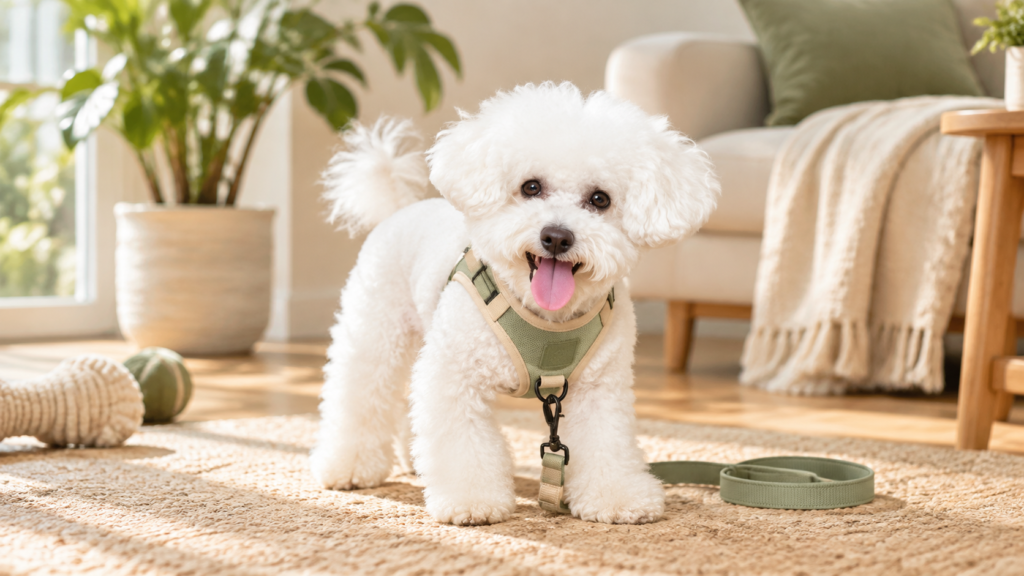
When reviewing a custom fit dog harness sample, compare the fit on the dog and check whether the straps stay in position through normal movement. An adjustable custom harness should be checked at both ends of its adjustment range, not only at the setting that fits the first test dog. Confirm that the buckle remains secure, the strap does not slip, and excess webbing can be managed neatly.
Where possible, test more than one dog within each intended size range and include different body shapes, not just different weights.
Before bulk production, record the approved sample, measurements, material specifications, stitch details, reinforcement points, and acceptable tolerances in the tech pack. A dated, signed-off sample and clear revision notes reduce the risk of an approved prototype drifting during production. See our guide on why an approved sample can still differ from a bulk order.
7. Prepare a Production-Ready Brief
A custom made dog harness project is easier to quote and develop when the brief includes the target dog profiles, intended use, size range, preferred materials, leash attachment position, wash requirements, target retail price, packaging, and any required performance tests. Reference photos are useful, but measurements and functional notes give the factory something concrete to work from.
For a bespoke dog harness collection, ask the manufacturer to explain which dimensions will stay fixed, which will change between sizes, and which features need physical testing. This makes sample feedback more objective and helps the team balance comfort, durability, production cost, and consistency.
Every custom fit dog harness should be approved against a clear specification—not appearance alone. Aimazing supports OEM/ODM development from structure and material selection through sampling and bulk production. Explore our custom pet harness development page or review the customization process before preparing your next project brief.