1. The Breach Crisis: Why Standard Netting Fails and How Scratch-Resistant Mesh Protects Brand Reputation
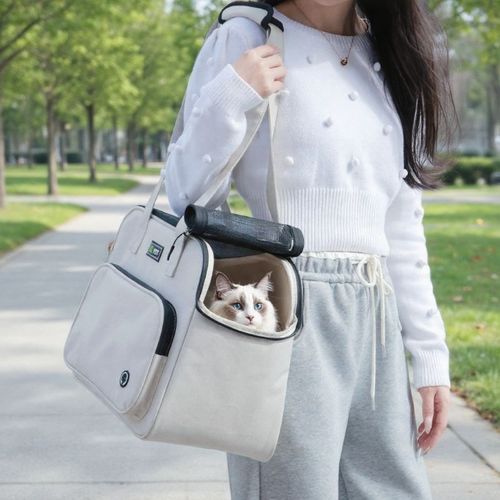
Pets exploit gaps in nylon netting by digging. Commercial netting shreds under claws, causing escapes. Sourcing scratch resistant pet carrier mesh eliminates vulnerabilities using synthetic matrices. Standards require claw-puncture tests to verify endurance. Protecting reputation requires industrial barriers. Buyers must mandate high-performance netting for transport lines to guarantee structural integrity. Weak windows cause recalls and liability issues. Strict procurement ensures manufactured carriers withstand physical contact without displacement. Original equipment manufacturers enforce raw material testing to secure consumer trust. Maintaining an effective anti scratch mesh for pet bags strategy prevents accidental escapes during transit.
| Performance Parameter | Low-Grade Nylon Netting | Engineered Scratch-Resistant Mesh |
| Claw Abrasion Resistance | Shreds under repetitive scratching | Withstands aggressive feline and canine digging |
| Structural Integrity | Prone to thread shifting and gaps | Locked warp and weft nodes prevent escape |
| Retail Application Standard | Fragile decorative accessory | Industrial-grade protective safety barrier |
2. Core Polymer Science: Engineering Anti-Scratch Mesh for Maximum Durability
Polyester substrates allow structural netting to withstand scratching and tearing. Integrating scratch resistant pet carrier mesh ensures superior claw resistance during transit. Extrusion aligns molecular chains to maximize tensile strength. Polymer bases prevent claw penetration by distributing friction forces across webbing zones. Industrial standards guarantee filaments maintain shape under mechanical abuse. This polymer engineering forms the bedrock of pet transport gear. Specialized anti scratch mesh for pet bags prevents thread shifting and claw entrapment. Traditional plain weaves allow strands to separate under pressure. Interlocking geometries lock warp and weft threads into rigid intersections resisting displacement. Heat-setting treatments fuse crossing points into a stable grid, protecting animals while preserving airflow. Sourcing reliable supplies through a certified pet carrier mesh supplier ensures consistent high-tenacity yarn performance.
- High-Tenacity Extrusion: Aligning molecular chains to maximize tensile strength and mechanical resistance against animal claws.
- Point-Source Force Distribution: Spreading friction forces across wider webbing zones to prevent localized fabric penetration.
- Interlocking Weave Geometries: Locking warp and weft threads into rigid nodal intersections that resist displacement under pressure.
- Heat-Setting Treatments: Permanently fusing crossing points into a stable grid to prevent claw entrapment and panic.
3. Thermal Physics: Optimizing Airflow Without Compromising Pet Carrier Ventilation Mesh Standards
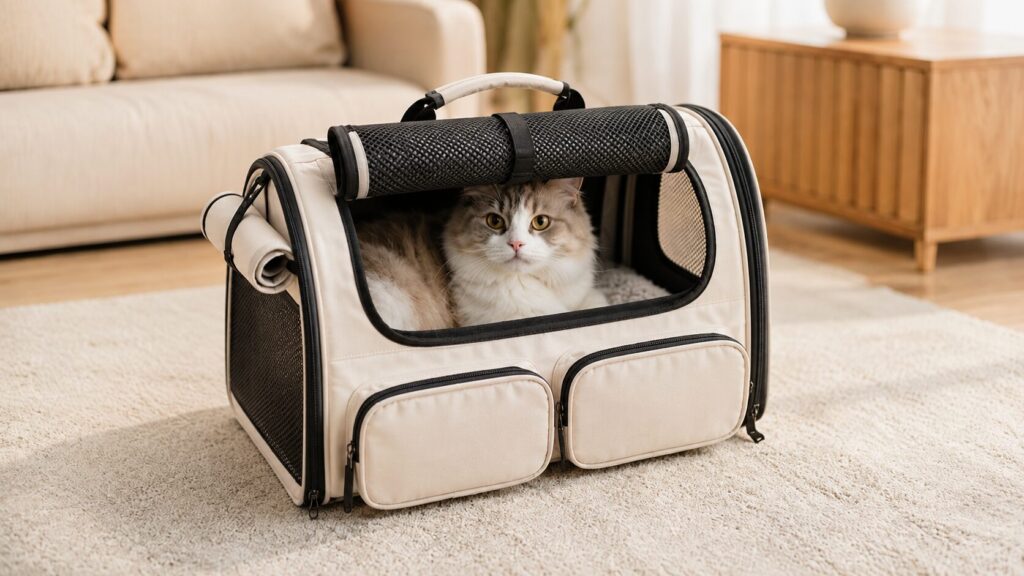
Balancing ventilation with claw barriers requires precise calculations. Selecting scratch resistant pet carrier mesh panels maintains structural safety without restricting necessary airflow. Excessive sizing increases airflow but reduces tear resistance. Engineering airflow parameters involves maintaining a precise ratio between strands and voids. Sourcing calibrated materials ensures carbon dioxide levels remain regulated. Guidelines specify exact aperture dimensions to harmonize thermal comfort with security. Ensuring pet carrier ventilation mesh prevents heat buildup protects animals from heatstroke. High-humidity environments make rapid convective cooling a biological necessity. Hydrophobic treatments prevent moisture accumulation while maintaining air channels. Thermal chamber tests verify mesh structures facilitate temperature dissipation. Integrating premium pet carrier ventilation mesh guarantees safety in tropical markets.
| Thermal Performance Metric | Dense Non-Ventilated Material | Optimized Ventilation Mesh |
| Internal Heat Retention | Accumulates dangerous thermal levels | Facilitates rapid convective cooling |
| Humidity Management | Traps moisture and condensation | Utilizes hydrophobic surface treatments |
| Carbon Dioxide Regulation | Restricts necessary airflow exchange | Maintains safe and regulated gas levels |
4. Stress Benchmarks: Evaluating High Tensile Pet Mesh Under Heavy Animal Impact
Measuring breaking points under pushing forces establishes durability benchmarks. Applying scratch resistant pet carrier mesh standards across production guarantees high-impact durability. Burst pressure testing applies hydraulic force until failure occurs. Sourcing strong textiles requires exceeding tear thresholds by wide safety margins to account for animal panic. Data logs track elongation and force distributions to identify weak points. Burst pressure audits guarantee finished windows withstand impacts. Deploying high tensile pet mesh eliminates structural distortion and prevents enclosure failure at seams. Robust edge integration requires wrapping multi-layer reinforcement bindings before sewing. Lockstitch machinery distributes pulling tension evenly across anchor points, ensuring impacts dissipate across the chassis. Utilizing high tensile pet mesh across heavy-duty SKUs protects brand equity during extreme travel conditions.
- Burst Pressure Testing: Applying progressive mechanical force against fixed netting samples until ultimate material failure occurs.
- Safety Margin Thresholds: Exceeding standard industry tear metrics to account for unexpected and violent animal panic episodes.
- Edge Integration Reinforcement: Wrapping multi-layer bindings around the perimeter before high-speed sewing to prevent tearing.
- Lockstitch Distribution: Utilizing heavy-duty stitching machinery to spread pulling tension evenly across all structural anchor points.
5. Polymer Armor: The Advantage of PVC Coated Pet Mesh in Outdoor Gear
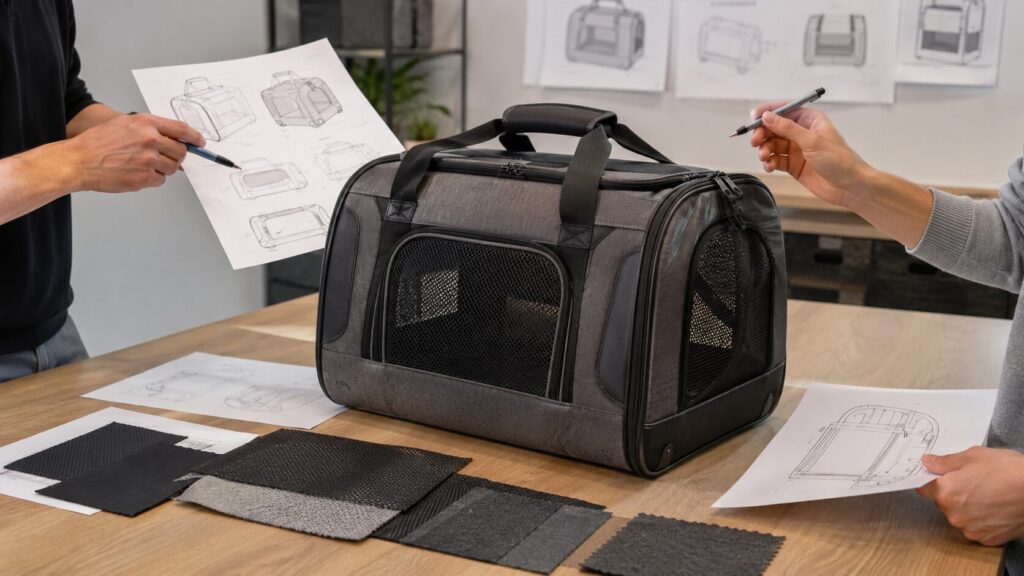
A PVC coated pet mesh layer protects polyester fibers from moisture and UV degradation. Utilizing scratch resistant pet carrier mesh panels alongside polymer armor ensures multi-year product resilience. Unprotected yarns suffer polymer breakdown when exposed to sunlight. A polyvinyl chloride armor sheath encapsulates each individual strand, sealing out water and ultraviolet rays. Weather-resistant polymers ensure windows maintain mechanical strength across lifespans. Chemical shielding prevents premature aging and guarantees durability. Clean edge-sealing during machine stitching streamlines factory workflows. Uncoated netting unravels instantly, creating bottlenecks. The thermoplastic nature of PVC allows heat-sealing blades to melt edges instantly, locking strand ends securely during preparation. Deploying PVC coated pet mesh guarantees long-term product viability in harsh outdoor environments.
| Material Property | Uncoated Synthetic Netting | PVC Coated Polymer Armor |
| UV Solar Degradation | Suffers rapid polymer breakdown | Encapsulated armor sheath blocks rays |
| Moisture Resistance | Absorbs water and weakens over time | Seals out humidity and liquid saturation |
| Edge Fray Control | Unravels instantly upon cutting | Thermoplastic edges seal cleanly on contact |
6. Factory Direct Control: Vetting a Certified Pet Carrier Mesh Supplier
Inspecting raw material batches ensures quality control when evaluating a pet carrier mesh supplier. Integrating premium scratch resistant pet carrier mesh requires strict factory vetting procedures. Secondary suppliers substitute low-grade recycled polymers. Professional managers require independent laboratory certificates verifying denier thickness and coating weight. Strict incoming quality control protocols prevent defective textiles from entering production lines. Factory auditing protects brand equity by maintaining uncompromising material standards. Certified roll specifications guarantee zero quality drift and prevent delivery delays. Partnering with established sources ensures standardized roll lengths and predictable behavior. Reliable management enables accurate timeline forecasting and inventory velocity. Collaborating directly with an authorized pet carrier mesh supplier eliminates intermediary communication barriers.
- Independent Lab Certificates: Verifying denier thickness and coating weight for every incoming material shipment.
- Incoming Quality Protocols: Establishing strict inspection rules on the factory floor to prevent defective textiles.
- Standardized Roll Sourcing: Ensuring consistent roll widths and flawless surface finishes to eliminate cutting errors.
- Supply Chain Transparency: Eliminating intermediary communication barriers to forecast production timelines and maintain inventory velocity.
7. From Raw Spec to Bulk Containers: The Manufacturing Blueprint with Aimazing Bag
Eliminating intermediary markups with certified OEM production floors protects profit margins. Aimazing Bag operates integrated facilities uniting inspection, cutting, and assembly under strict protocols. Working with factory engineers ensures precise specification translation from tech packs. Internal oversight guarantees every production run meets international safety standards. Direct OEM collaboration accelerates product cycles and provides cost transparency. Executing claw puncture trials and tensile checks prior to dispatch ensures retail performance. Quality assurance technicians subject carrier batches to mechanical stress evaluations. Aimazing Bag issues comprehensive inspection reports detailing burst resistance for every export container.