Launching a pet carrier under your own brand involves much more than adding a logo to an existing bag. The product needs to suit your target customers, meet practical safety requirements, arrive in suitable retail packaging, and remain consistent when you reorder.
For pet brands, wholesalers, and online retailers, developing private label pet carrier bags means making these decisions before investing in bulk inventory.
At Aimazing Bag, we work with overseas buyers to develop pet travel products through OEM and ODM manufacturing. This guide explains the key decisions involved, from selecting a carrier structure to approving samples and preparing products for retail distribution.
1. Understanding the Market Before Developing Your Product
The pet industry continues to expand, but rising expenditure does not automatically mean every new carrier design will sell.
According to the American Pet Products Association’s 2026 State of the Industry Report, U.S. pet industry expenditure reached $158 billion in 2025, representing 3.7% annual growth. The association projects spending will reach $165 billion in 2026.
The same report found that 95 million U.S. households owned at least one pet in 2025, while dog ownership reached 53% of households.
These figures describe the overall pet industry, not pet carrier sales specifically. Nevertheless, they provide useful context for brands evaluating new pet product categories.
The more important question for buyers is: Which problem will our product solve better than the existing alternatives?
A carrier for urban commuters might prioritize lightweight construction and comfortable shoulder straps. A travel-focused collection may need compact dimensions, reinforced handles, and a luggage sleeve. A fashion-oriented brand might choose more distinctive materials and discreet branding.
Each direction involves different manufacturing costs and product expectations. Identifying the right one early makes subsequent development more efficient.
2. Choosing Between Private Label, OEM, and ODM Manufacturing
Not every brand needs to develop a completely new bag structure.
For buyers introducing custom branded pet carriers, there are three common development approaches:
| Approach | What the Factory Provides | Suitable Buyers |
|---|---|---|
| Private Label | An existing carrier design customized with branding, colors, or selected details | Retailers testing a new product category |
| OEM | Production according to the buyer’s design, dimensions, and specifications | Brands with an established product concept |
| ODM | Factory-supported design development based on the buyer’s requirements | Brands needing engineering and design assistance |
The boundaries between these approaches can overlap. For example, a retailer may start with an existing model, then request a different mesh layout, improved base support, or additional storage pockets.
At Aimazing, buyers can explore existing models through our custom pet travel bag manufacturing collection before deciding how much development their project requires.
Starting from an existing design may reduce development work, but custom components, colors, and materials still need to be reviewed for minimum quantities and cost.
3. Building a Product Specification Around Real Use
A useful product brief should describe more than color, dimensions, and appearance. It should explain who will use the carrier, what size of animal it is intended for, and how it will be transported.
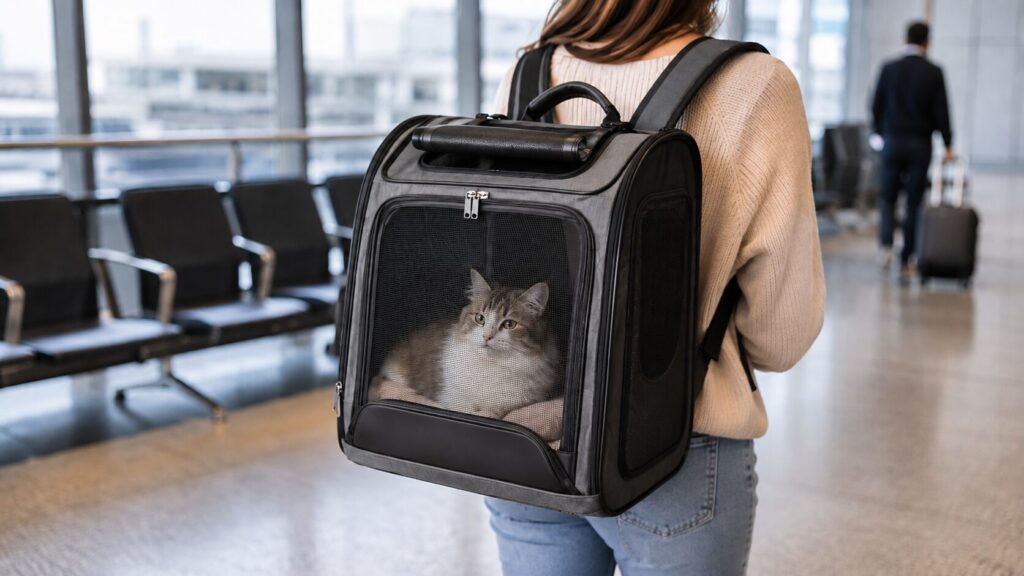
Structure, ventilation, and carrying comfort
For a private label dog carrier, buyers should pay particular attention to the following specifications:
- Base support: A removable reinforced board can help limit sagging when the bag is lifted.
- Ventilation: Mesh panels should provide airflow without compromising enclosure security.
- Closures: Zippers, openings, and internal tethers need to be evaluated for escape risks.
- Carrying comfort: Shoulder straps, handles, and weight distribution should suit the intended carrying load.
- Maintenance: Removable pads and wipe-clean linings can make everyday care easier.
These details can be combined differently according to the target retail category.
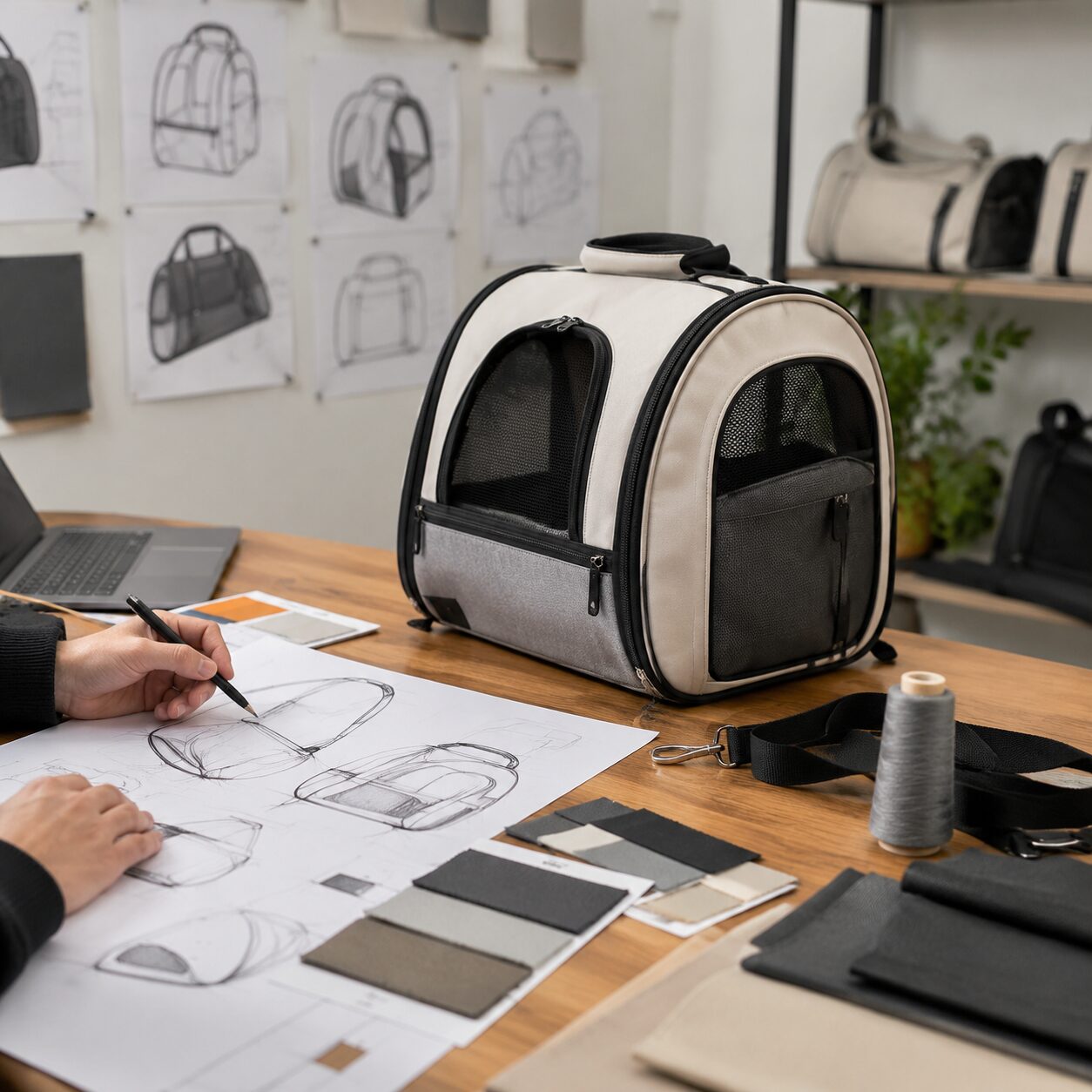
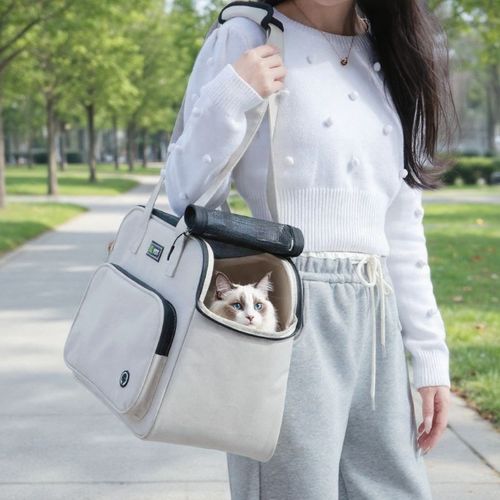
For example, our Airflow Mesh Pet Carrier with Side Viewing Pocket illustrates how a mesh-focused design can incorporate reinforced shoulder straps, a side viewing area, and an accessory pouch.
It is one possible product configuration, rather than a universal solution for every pet or travel scenario.
What about airline travel?
Brands should be careful when using terms such as “airline approved.”
The International Air Transport Association (IATA) explains that individual airlines and countries can impose additional animal transport requirements.
A carrier designed for in-cabin travel therefore needs to be evaluated against the intended airline’s current size and transport policies. No single set of dimensions guarantees acceptance across all airlines.
For wholesale buyers, clearly stating the intended use and verified limitations can help prevent misleading product descriptions and avoidable customer complaints.
4. Turning Branding Ideas into Production Specifications
Brand identity should be considered during product engineering, not added only after the carrier has been completed.
For a pet carrier with logo OEM project, buyers should specify the logo artwork, dimensions, placement, color requirements, and application method.
Common options include embroidered logos, woven labels, rubber patches, metal plates, and customized zipper pulls.
The appropriate technique depends on the material and desired appearance.
An embroidered design may work well on a structured fabric panel but can distort thin or heavily padded material. A woven label may suit a minimalist collection, while a rubber patch can provide a more visible branding element.
Brands developing custom branded pet carriers should also consider whether the same identity will appear on the inner label, hangtag, instruction card, and retail box.
Consistency matters, but adding branding to every component is not always necessary. Sometimes one well-positioned logo delivers a cleaner result at a lower manufacturing cost.
Before sampling, request a digital mockup showing the logo’s actual dimensions and placement. Then review the physical application on the sample rather than approving it from a rendering alone.
5. A Real Customer Example: Refining a Pet Handbag Through Sampling
The value of a development partner often becomes clearer during sampling, when an attractive initial design has to work as a physical product.
One example comes from the Aimi project documented in our customer case studies.
Aimi approached our team with a concept for a lightweight, stylish pet handbag intended for everyday urban use. She provided a rough sketch and reference images, but had concerns about carrying comfort, ventilation, and structural durability.
Rather than treating the project as a simple appearance-based customization, our team worked on three practical areas.
First, shoulder strap weight distribution. The carrying structure was adjusted to improve comfort during longer walks.
Second, base stability. Reinforcement was introduced to help the bag maintain its shape while supporting the pet.
Third, ventilation and security. Breathable mesh panels and a discreet internal safety tether were incorporated into the design.
After two sampling rounds, Aimi approved the final version, and the project moved into production.
This case illustrates an important principle in developing private label pet carrier bags: a successful sample is not simply one that matches the reference image. It must also address the actual carrying experience and construction requirements.
It does not, by itself, establish a particular sales result or return rate. Its value is in showing how practical design feedback can shape a product before bulk production begins.
6. Reviewing Materials and Quality Before Bulk Approval
Even a well-designed private label dog carrier can create problems if material quality or assembly varies between the approved sample and finished production.
Buyers should therefore request a specification sheet covering fabric composition, mesh type, lining, reinforcement materials, hardware, and construction details.
A 600D polyester exterior, for example, describes fabric yarn density but does not establish the finished material’s abrasion resistance, tear strength, or suitability for a particular carrying load. Those properties depend on the material specification and testing.
Quality checks should focus on the areas most likely to affect product performance:
- Load-bearing points: Inspect reinforced handle attachments, shoulder strap connections, and base construction.
- Closure performance: Evaluate zipper operation, stitching, and the security of accessible openings.
- Material consistency: Compare incoming fabrics, mesh, colors, and hardware against approved specifications.
- Finished dimensions: Check completed carriers against agreed tolerances.
- Branding accuracy: Review logo placement, color matching, and label attachment.
Our pet bag quality control process includes incoming material checks, inspections during assembly, finished-product assessment, and shipping audits.
For brand owners, the key is to agree on measurable acceptance criteria before production begins. A signed pre-production sample, written specifications, and inspection requirements provide a more reliable reference than photographs alone.
7. Planning Pet Carrier Packaging for Retail and E-Commerce
Packaging is often one of the last details discussed during product development. For online retailers and distributors, that can be an expensive oversight.
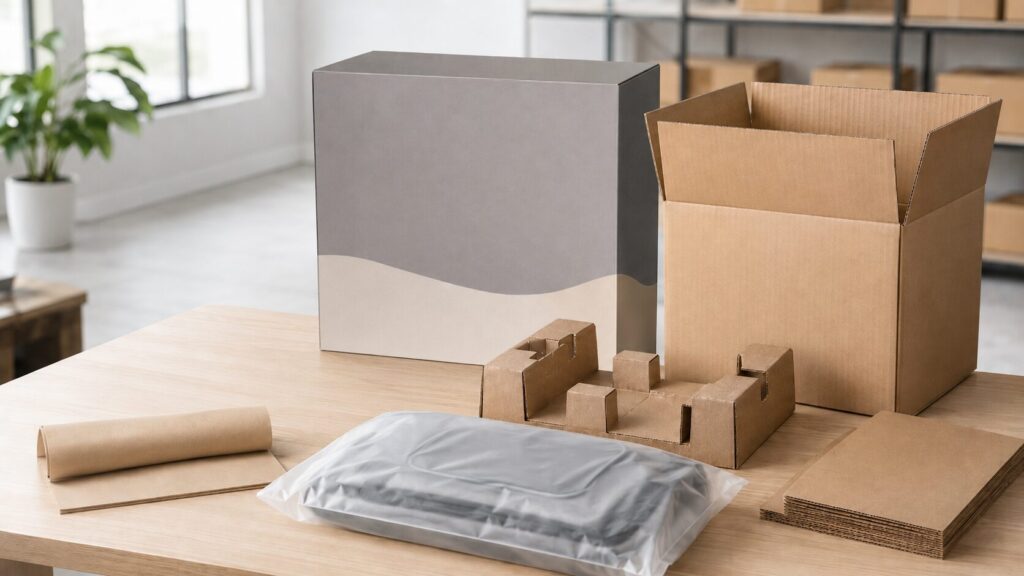
Effective pet carrier packaging should protect the product, present the brand clearly, and fit the intended fulfillment process.
The right solution depends on where the product will be sold.
| Packaging Option | Typical Application | Purchasing Consideration |
|---|---|---|
| Protective OPP bag | Standard wholesale and warehouse storage | Low-cost protection from dust and handling |
| Branded hangtag and insert | Boutique retail or online fulfillment | Communicates product features and brand identity |
| Printed retail box | Shelf display and premium presentation | Requires additional packaging and shipping cost |
| Protective carton insert | Structure-sensitive carrier designs | Helps limit deformation during transport |
A premium printed box may improve retail presentation, but it also occupies space and adds material costs. A protective bag with a branded insert may be more appropriate for an e-commerce business that does not need shelf display packaging.
Why folded dimensions matter
A soft-sided carrier can sometimes be folded for shipment, provided the design allows it without permanent deformation.
That decision may affect shipping economics.
According to FedEx, dimensional weight for relevant U.S. shipments is calculated using package length × width × height in inches, divided by 139.
This means buyers should evaluate both actual package weight and carton dimensions when comparing fulfillment options.
Before approving retail packaging, confirm the folded product dimensions, protective materials, barcode placement, carton quantity, and any destination-specific labeling requirements.
Packaging should be tested together with the finished carrier rather than treated as a separate design exercise.
8. Purchasing Custom Pet Carrier Bags Wholesale: MOQ and Cost Control
When sourcing custom pet carrier bags wholesale, the lowest quoted unit price is not necessarily the lowest overall procurement cost.
A buyer should compare the complete landed cost, including manufacturing, custom branding, packaging, freight, duties, and any destination handling charges.
It also helps to distinguish between the costs of initial development and repeat production.
| Cost Factor | Questions to Ask the Manufacturer |
|---|---|
| Sample development | Is the sampling fee refundable after reaching an agreed order quantity? |
| Logo customization | Does the design require a new mold, embroidery program, or special tooling? |
| Materials | Are selected colors and components available at the required MOQ? |
| Retail packaging | Are printed boxes, labels, and inserts included in the quotation? |
| Production | Is the quoted lead time based on final sample approval and material availability? |
| Shipping | Is the quotation EXW, FOB, DDP, or another agreed Incoterm? |
At Aimazing Bag, the standard starting MOQ is 100 pieces, with OEM/ODM options for materials, logos, colors, and construction.
Initial sampling can typically be arranged in 3–5 days, depending on design complexity and material availability. Revisions, special tooling, and pre-production approvals may require additional time.
For first-time buyers, a smaller initial order can provide an opportunity to evaluate product quality and customer feedback before increasing inventory commitments.
However, splitting an order across numerous colors or complex variations may raise material and production costs. Confirm the quotation for each proposed SKU rather than assuming one MOQ or unit price applies to every variation.
9. From Approved Sample to Retail Launch
Developing private label pet carrier bags requires coordination between product development, purchasing, quality control, and logistics.
A practical sourcing workflow includes:
Step 1 — Define the market and product brief. Identify target customers, intended pet size, retail positioning, expected order volume, and key functions.
Step 2 — Confirm technical requirements. Agree on dimensions, materials, load-bearing expectations, ventilation, branding, and any destination-market requirements.
Step 3 — Review the physical sample. Test carrying comfort, assembly details, product access, and intended usage. Record requested changes clearly.
Step 4 — Approve the production reference. Finalize the pre-production sample, artwork, tolerances, packaging, and inspection criteria.
Step 5 — Confirm the purchase order. Review the price, deposit terms, production schedule, shipping conditions, and delivery arrangements.
Step 6 — Complete inspection and dispatch. Check the finished order against the approved specifications, then confirm carton labels and shipping documents.
Buyers can review our OEM/ODM customization process for more information about how these stages are coordinated.
Before placing a repeat order, revisit pet carrier packaging, customer feedback, and any quality concerns recorded from the first shipment. Small corrections made at this stage can be more valuable than introducing another decorative feature.
Frequently Asked Questions
Can I start with an existing carrier design?
Yes. Many brands begin with an existing model and customize its colors, materials, logo, or selected construction features. The scope of changes will determine whether additional sampling or tooling is required.
Can I request a pet carrier with logo OEM service without technical drawings?
Yes. Reference photographs, sketches, dimensions, and a description of the intended customer can provide a starting point. However, the final specifications still need to be confirmed before mass production.
How should wholesale buyers evaluate an initial order?
Look beyond unit price. Evaluate the approved sample, material consistency, branding accuracy, packaging cost, inspection arrangements, and the factory’s ability to reproduce the same specifications during future orders.
Work With a Manufacturing and Development Partner
The right production partner should help you make practical decisions before manufacturing begins, not simply reproduce a design without reviewing how it will function.
Aimazing Bag supports brands, retailers, and distributors with product development, sampling, customization, production, and export coordination.
Whether you are introducing your first carrier collection or expanding into custom pet carrier bags wholesale, our team can help review your design brief, material options, branding requirements, and order specifications.
Planning a new product line? Contact Aimazing Bag to discuss your project and request a quotation.