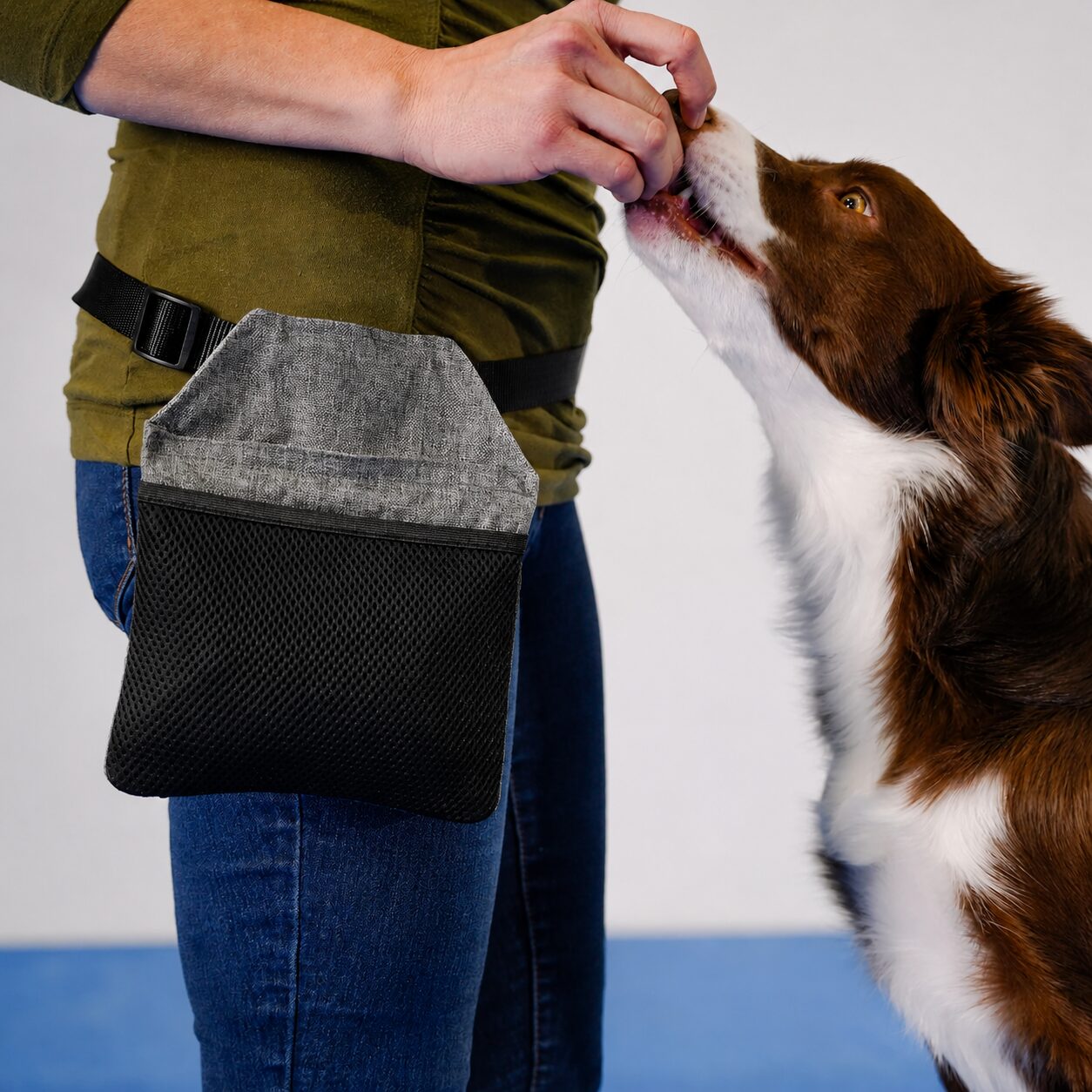
Launching a dog training accessory under your own brand involves more than selecting a fabric color and placing a logo on an existing design. Buyers must consider how the product performs during training, how it appears in retail packaging, and whether the same specifications can be reproduced when demand increases.
For pet brands, distributors, and wholesale buyers, the first production run is only the beginning. A successful product also needs a reliable supply plan, controlled manufacturing costs, and consistent details across future orders. Understanding these requirements early can prevent expensive changes after the product reaches the market.
1. Are You Buying a Generic Product or Building a Reorder-Ready Brand?
Two training pouches may look nearly identical in photographs, but their commercial value can be very different.
One may be a standard catalog product with a newly printed logo. Another may feature a distinctive opening mechanism, coordinated hardware, a customized lining, and packaging designed specifically for a brand’s retail channels.
For buyers developing a private label dog treat pouch, the distinction matters because branding decisions affect production complexity, pricing, customer expectations, and future replenishment.
A custom branded treat pouch should therefore be evaluated as a repeatable retail product rather than a one-time promotional accessory. Its appearance and functionality need to remain recognizable across successive batches.
What Should Buyers Decide Before Requesting a Quotation?
| Planning area | Questions for the buyer | Commercial importance |
|---|---|---|
| Target customers | Are you selling to professional trainers, everyday dog owners, or outdoor enthusiasts? | Determines functional requirements |
| Sales channels | Will the product be sold online, in pet stores, or through distributors? | Influences packaging and pricing |
| Brand positioning | Is the collection entry-level, mid-range, or premium? | Guides material and hardware selection |
| Product differentiation | Which features distinguish your design from competing products? | Supports retail value |
| Initial assortment | How many styles and colors should launch together? | Affects minimum orders and inventory |
| Reorder strategy | Which components must remain unchanged? | Protects product consistency |
The strongest starting point is a clear product brief that connects the intended customer, price positioning, and manufacturing requirements.
Without this foundation, adding extra features can increase costs without improving the product’s relevance to the target market.
2. Who Is Your Training Pouch Really Designed For?
Not every dog owner uses a reward pouch in the same way.
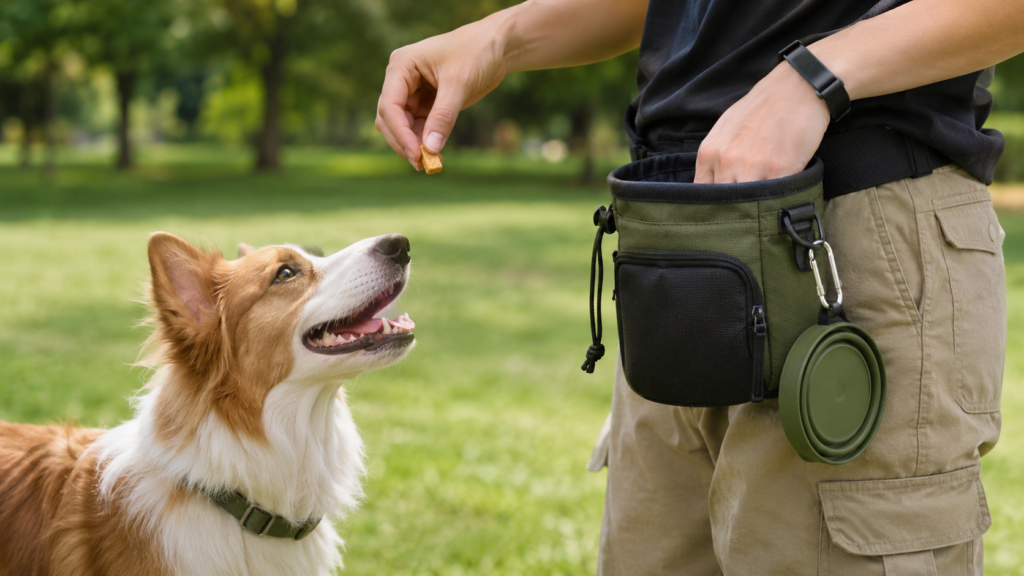
Professional trainers may repeatedly access small treats throughout a session. Everyday owners may prioritize portability during walks, while outdoor enthusiasts might want additional storage for a phone, waste bags, and other essentials.
A pet brand treat bag designed for professional use may consequently need a different opening, carrying system, and internal structure from a compact lifestyle model.
How Do Different Customer Groups Influence Product Design?
| Customer segment | Primary needs | Recommended design priorities |
|---|---|---|
| Professional dog trainers | Frequent, one-handed treat access | Wide opening, secure attachment, easy-clean lining |
| Everyday dog owners | Comfortable walking and convenient storage | Lightweight body, compact compartments, adjustable carrying |
| Outdoor and hiking customers | Durability and practical organization | Abrasion-resistant fabric, secure pockets, weather-resistant construction |
| Puppy training customers | Simple handling and fast access | Accessible opening, minimal weight, uncomplicated structure |
| Premium lifestyle buyers | Attractive design and coordinated accessories | Refined materials, color consistency, subtle branding |
These distinctions can help buyers avoid developing a single product that attempts to serve every customer.
For example, adding a large phone compartment may benefit outdoor users but make a small training pouch unnecessarily bulky.
Brands should prioritize features that solve identifiable customer problems rather than adding accessories simply because competitors offer them.
For product development references, explore our Custom Pet Training Bag Collection, which includes multiple carrying structures and treat-storage designs.
3. Is Your Logo Enough to Make the Product Recognizable?
A logo is often the first customization requested by buyers, but brand recognition depends on more than a printed mark.
The position, size, material, and durability of the logo should complement the pouch’s overall design.
An OEM dog treat pouch with logo can use several decoration techniques, but each has different implications for appearance, production cost, and long-term use.
Which Branding Technique Fits Your Product?
| Branding method | Visual characteristics | Suitable applications | Considerations |
|---|---|---|---|
| Screen printing | Clean, flat graphics | Polyester and canvas pouches | Ink adhesion and repeated abrasion |
| Heat transfer | Detailed artwork and smooth finish | Synthetic fabrics | Heat compatibility and bonding |
| Embroidery | Textured, stitched appearance | Lifestyle and premium collections | Fabric distortion and stitch density |
| Woven label | Subtle, integrated brand identity | Minimalist designs | Label size and stitching placement |
| Rubber patch | Raised, three-dimensional finish | Sport and outdoor collections | Patch tooling and attachment strength |
| Metal logo plate | Structured premium appearance | Selected high-end designs | Added weight, fixing method, and cost |
Before approving a custom branded treat pouch, buyers should request a physical sample showing the actual logo technique on the intended production fabric.
Digital mockups are useful for confirming layout but cannot fully demonstrate surface texture, stitching tension, or color reproduction.
What Branding Details Should Be Approved?
The artwork approval should document:
- Logo dimensions and exact placement.
- Artwork version and color references.
- Decoration method and applicable materials.
- Position relative to pockets, seams, and closures.
- Orientation when the pouch is worn.
- Acceptable visual tolerances.
If a collection includes several colorways, buyers should also examine whether the logo remains readable against each background.
A single logo treatment does not necessarily work equally well on black nylon, light canvas, and textured outdoor fabrics.
4. Could One Design Decision Make Your Entire Product Line Harder to Manufacture?
Product differentiation is important, but excessive variation can create unnecessary sourcing complications.
A private label training bag may use different outer fabrics, linings, and carrying systems. However, changing every component between colorways can increase material purchasing requirements and complicate repeat production.
Buyers should separate features that genuinely create customer value from those that merely add manufacturing complexity.
Which Components Should Be Standardized?
| Component | Recommended approach | Benefit |
|---|---|---|
| Main pouch dimensions | Keep consistent across core colorways | Simplifies patterns and cutting |
| Internal lining | Use one approved specification where practical | Easier material replenishment |
| Buckles and clips | Standardize sizes and performance requirements | Reduces component variation |
| Strap webbing | Maintain consistent width and construction | Simplifies assembly |
| Closure mechanism | Choose one reliable system per product model | Improves repeatability |
| Logo dimensions | Standardize artwork size where appropriate | Supports brand consistency |
| External colors | Offer selected variations | Creates assortment diversity |
Standardization does not require every product to look identical.
A brand can maintain a recognizable construction while changing exterior colors, decorative panels, or selected accessories.
For example, a collection might offer black, olive, and beige versions using the same main compartment dimensions, buckle model, and lining specification.
This approach can reduce development work while maintaining a coordinated retail assortment.
Which Features Deserve More Engineering Attention?
Training pouches experience repeated handling, so the most important components are often those customers touch or operate frequently.
These include the treat opening, drawstring or magnetic closure, strap attachment points, and inner compartment.
For example, a magnetic opening may provide convenient one-handed access, but the closure must also hold securely during movement.
Likewise, a removable lining can simplify cleaning, although its attachment method should not obstruct the opening.
Buyers comparing different product structures can review our Magnetic Dog Training Treat Pouch and Dog Treat Training Pouch with Built-in Poop Bag Dispenser.
These examples illustrate different ways of organizing treats, carrying accessories, and managing access during daily use.
5. Is Your Packaging Helping Sales or Increasing Costs?
Packaging affects far more than a product’s appearance on a retail shelf.
It influences shipping volume, warehouse handling, product protection, barcode accessibility, and the experience customers have when opening an order.
Dog treat pouch packaging should therefore be selected according to the distribution channel and expected retail presentation rather than appearance alone.
Which Packaging Option Is Suitable for Your Sales Channel?
| Packaging option | Best suited for | Advantages | Possible limitations |
|---|---|---|---|
| Individual protective bag | Wholesale and bulk distribution | Lightweight, economical, compact | Limited branding space |
| Branded hangtag | Pet stores and general retail | Displays essential information without a large box | Requires suitable attachment |
| Printed paper sleeve | Online and selected retail channels | Compact branded presentation | Limited protection on its own |
| Custom printed box | Premium retail and gift collections | Large branding area and structured presentation | Higher packaging and freight costs |
| Reusable fabric pouch | Premium or gift-oriented products | Additional perceived value | Additional material and production expense |
| Retail display packaging | Physical pet stores | Supports merchandising | Requires retailer-specific planning |
The most appropriate format depends on where the product will be sold.
An online-only brand may prefer compact protective packaging to control fulfillment costs. A retail distributor may need hangtags, visible product information, and scannable barcodes.
What Information Should Appear on the Packaging?
Depending on the destination market and sales channel, brands may need:
- Product name and model identification.
- Brand name and contact or website details.
- Barcode and SKU information.
- Material and care instructions.
- Country-of-origin information where required.
- Product dimensions or carrying details.
- Relevant warnings or usage instructions.
Retailers and marketplaces may impose additional requirements.
For internationally recognized product identification, buyers can consult GS1 US Barcode Guidance when planning GTINs and scannable retail packaging.
Why Should Packaging Be Approved Before Mass Production?
Packaging dimensions should be confirmed using the fully assembled product, including straps, clips, and other accessories.
If a box is designed around an empty or compressed sample, the finished pouch may not fit properly.
For repeat orders, dog treat pouch packaging specifications should also include:
- Approved artwork files and version numbers.
- Finished packaging dimensions.
- Paper, film, or other material specifications.
- Barcode placement and scan verification.
- Folding, sealing, and attachment instructions.
- Units per master carton and carton markings.
For a private label dog treat pouch, packaging approval should form part of the overall product approval process, not a separate decision made immediately before shipment.
Consistent packaging protects brand presentation and helps warehouses, distributors, and retail partners identify products correctly.
6. Are You Comparing Unit Prices or the Actual Cost of Selling?
The lowest factory quotation does not always produce the lowest total cost.
Buyers must account for packaging, shipping, import charges, inventory handling, and the effect of product defects or late deliveries.
What Should Be Included in a Product Cost Comparison?
| Cost category | Example | Potential impact |
|---|---|---|
| Factory unit cost | Main pouch, straps, hardware, labor | Base product cost |
| Branding cost | Printing, embroidery, labels, or patches | Varies by decoration method |
| Packaging cost | Hangtags, sleeves, cartons | Affects unit cost and shipping volume |
| Development cost | Sampling, artwork, tooling | Often concentrated in initial orders |
| Freight and import cost | Shipping, customs, duties | Depends on destination and shipment method |
| Receiving and fulfillment | Warehousing, labeling, order processing | Depends on distribution channel |
| Quality-related cost | Rework, claims, replacements | Can reduce actual margin |
A useful purchasing model is:
Estimated Landed Cost = Factory Cost + Packaging + Freight + Import Charges + Other Applicable Receiving Costs
The final commercial margin should then account for fulfillment expenses, selling fees, returns, and marketing costs.
Illustrative Cost Comparison
Consider two sourcing options:
| Cost item | Supplier A | Supplier B |
|---|---|---|
| Product cost | $3.80 | $4.20 |
| Logo and packaging | $0.45 | $0.35 |
| Allocated freight and import costs | $1.10 | $0.85 |
| Estimated landed cost per unit | $5.35 | $5.40 |
Although Supplier A offers the lower landed cost in this illustration, the difference is only $0.05 per unit.
If Supplier B provides a better-approved product specification or more reliable replenishment, the additional cost may be commercially justified.
Buyers should evaluate total cost alongside product performance, delivery reliability, and the supplier’s ability to reproduce approved specifications.

7. Should You Launch Five Colors or Start With One Best-Selling Style?
Launching a large assortment may create an attractive catalog, but it can also divide inventory across too many slow-moving SKUs.
For brands entering a new market, a smaller initial collection may provide clearer sales data and reduce working-capital exposure.
A private label dog treat pouch launch can be structured around a core design with a limited selection of commercially relevant colors.
What Does Minimum Order Quantity Mean for Your Assortment?
At Aimazing, the standard minimum order quantity for custom-branded pet bags starts at 100 pieces per style and color, subject to project requirements.
For buyers, the distinction between total order quantity and quantity per SKU is important.
| Launch plan | Styles | Colors per style | Units per color | Total units |
|---|---|---|---|---|
| Small market test | 1 | 1 | 100 | 100 |
| Focused collection | 1 | 2 | 100 | 200 |
| Expanded color collection | 1 | 3 | 100 | 300 |
| Two-model collection | 2 | 3 | 100 | 600 |
These examples assume each combination meets the applicable minimum quantity.
Custom-dyed fabrics, specialized hardware, or unique printed packaging may have their own supplier minimums. Buyers should confirm these requirements before finalizing the assortment.
How Can Brands Choose Their First Colors?
Rather than selecting colors solely from design preferences, buyers can consider:
- Existing sales evidence: Colors already performing well across related accessories.
- Brand identity: Shades that fit the established visual language.
- Customer usage: Neutral or outdoor-oriented colors for practical training products.
- Retail compatibility: Colors that photograph well and remain recognizable online.
- Material availability: Standard fabric colors that may simplify future replenishment.
Testing a smaller assortment first can help brands decide which colors deserve higher reorder quantities.
8. Could Your Best-Selling Product Run Out Before the Next Shipment Arrives?
A successful first launch creates a new challenge: deciding when to reorder.
Waiting until stock becomes visibly low may be too late, especially when manufacturing and international transportation are involved.
A private label training bag should have an inventory plan based on expected sales velocity, supplier lead time, freight requirements, and a reasonable stock buffer.
How Do You Calculate a Reorder Point?
A basic planning formula is:
Reorder Point = Average Demand During Replenishment Lead Time + Safety Stock
For example, assume:
| Planning variable | Illustrative value |
|---|---|
| Average weekly sales | 40 units |
| Manufacturing time | 5 weeks |
| Freight, customs, and receiving | 4 weeks |
| Internal purchasing buffer | 1 week |
| Total planning lead time | 10 weeks |
| Safety stock | 80 units |
The calculation would be:
40 units × 10 weeks + 80 units = 480 units
Under these assumptions, the brand should consider placing a replenishment order when inventory position reaches approximately 480 units.
Inventory position should include available stock and confirmed incoming orders, less outstanding allocations or backorders.
This calculation is an illustrative starting point, not a guaranteed stockout-prevention method. Actual reorder points should reflect demand variability, lead-time reliability, and the service level required by the business.
What Should Buyers Monitor After Their First Launch?
Review sales and inventory data regularly, especially during the first few months.
Useful indicators include:
- Weekly sales by SKU and color.
- Inventory available for sale.
- Confirmed incoming quantities.
- Returns and defect reasons.
- Supplier production lead time.
- Freight and customs delays.
- Promotions or seasonal demand changes.
A color that sells quickly may justify a larger second order, while a slow-moving variation may be discontinued.
For more insight into supplier capacity and replenishment stability, read our article on Why Pet Brands Fail with Small Factories: Supply Chain Stability Explained.
9. Will Your Second Order Match the Sample You Approved?
One of the most overlooked risks in private-label manufacturing is the difference between sample approval and repeat production.
A first batch may meet customer expectations, but later production can vary if fabrics, components, or manufacturing instructions are changed without authorization.
For an OEM dog treat pouch with logo, the approved branding details should be recorded together with construction and material specifications.
What Should Be Included in a Reorder Specification?
| Specification | Information to retain | Risk if uncontrolled |
|---|---|---|
| Main fabric | Supplier reference, composition, color, finish | Visible color or texture differences |
| Inner lining | Material, thickness, color, coating | Changes in cleaning performance |
| Pouch dimensions | Finished measurements and tolerances | Inconsistent fit or capacity |
| Closure | Component model, dimensions, installation | Different opening performance |
| Strap system | Webbing width, length, buckle specifications | Fit and durability variations |
| Logo | Artwork version, position, dimensions, application | Branding inconsistencies |
| Packaging | Approved files, materials, labels, carton quantities | Retail presentation differences |
| Inspection requirements | Agreed checkpoints and acceptance criteria | Inconsistent shipment decisions |
Why Does a Golden Sample Matter?
A golden sample is an approved physical reference that represents the agreed production specification.
It should be supported by written documentation rather than replacing it.
For repeat orders, buyers and manufacturers can compare new production samples against the approved reference before proceeding.
Important checkpoints include material appearance, finished dimensions, closure operation, stitching, logo placement, and packaging accuracy.
If a component becomes unavailable, any proposed substitution should be documented and approved before use.
This prevents seemingly minor manufacturing changes from producing noticeable differences in the finished product.
For a closer look at our development workflow, see From Idea to Sample in 3–5 Days: How We Develop Custom Pet Bags.
10. Is Your Supplier Prepared to Support Your Brand After the First Shipment?
A supplier relationship should not end when the first order is delivered.
Growing pet brands need clear communication, reliable documentation, and a manufacturing partner capable of helping them expand their product assortment.
A pet brand treat bag may begin as a standalone training accessory but later become part of a coordinated walking and training collection.
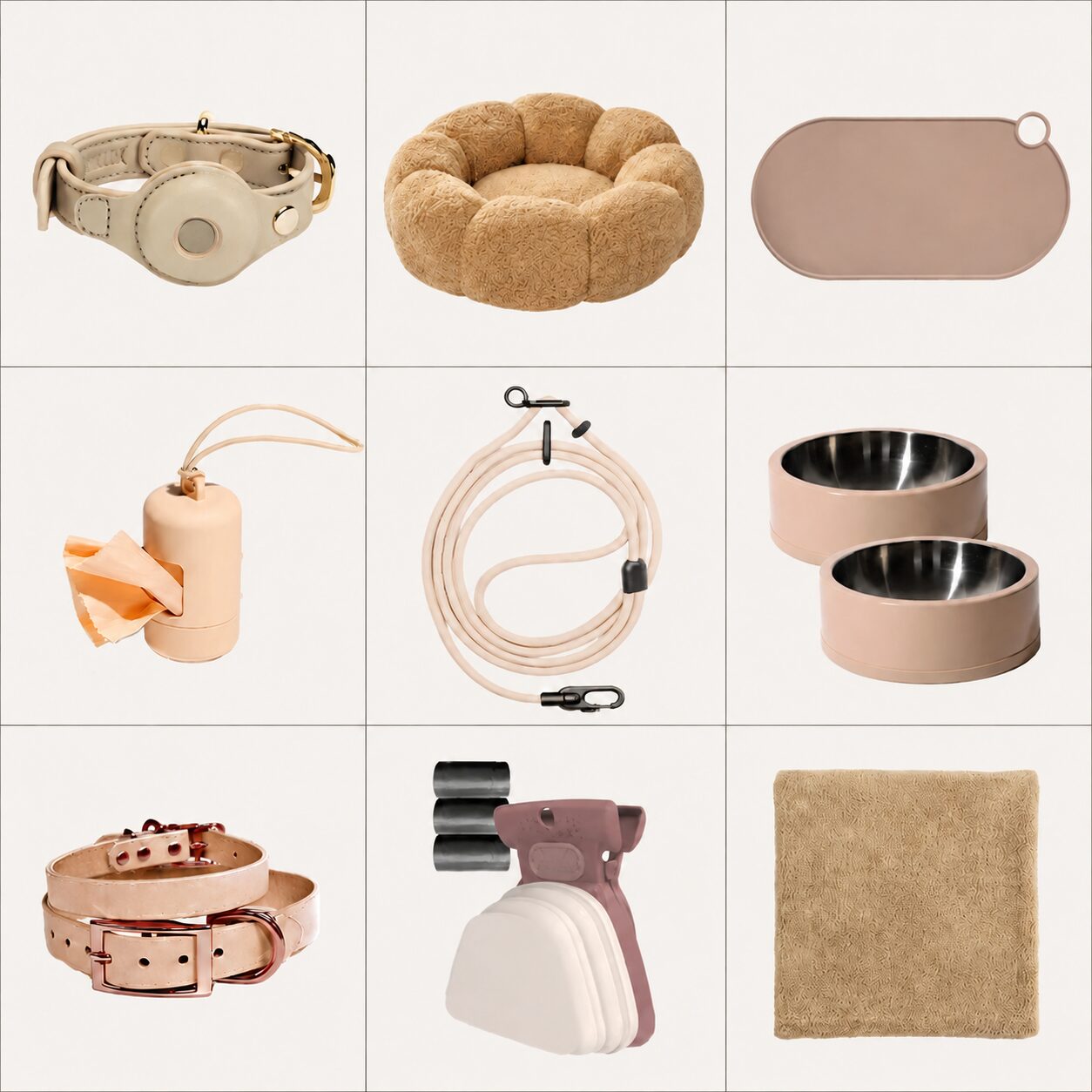
Related products might include matching leash sets, waste-bag holders, small accessory pouches, or other practical walking equipment.
What Should Buyers Ask a Potential Manufacturing Partner?
| Buyer question | What a useful supplier response should explain |
|---|---|
| Can you work from our existing product design? | How technical drawings and samples are evaluated |
| Can you modify a catalog model? | Which components can be changed and how they affect cost |
| What is your minimum order quantity? | MOQ by style, color, material, and decoration method |
| How do you manage sample approvals? | Development steps, revisions, and written confirmation |
| Can you maintain specifications between orders? | Reference samples, material records, and change approvals |
| How are packaging requirements handled? | Artwork, barcode, labeling, and carton documentation |
| What information is needed for a reorder? | SKU references, quantities, component changes, and delivery targets |
Suppliers should be evaluated on the clarity and usefulness of their responses, not simply how quickly they provide a quotation.
How Can Aimazing Support Private-Label Development?
At Aimazing, we manufacture customizable pet bags and accessories for overseas brands, wholesalers, and distributors.
Our OEM/ODM services cover product development, fabric selection, structure adjustments, logo application, packaging, and bulk production.
Our manufacturing support includes:
- Custom development: Working from buyer specifications or modifying existing product designs.
- Flexible order quantities: Standard custom-branding MOQ starting from 100 pieces per style and color, subject to specifications.
- Sample development: Typically 3–5 working days for standard projects, depending on design complexity and material availability.
- Brand customization: Multiple logo, material, color, and packaging options.
- Production coordination: Supporting approved specifications and planned replenishment orders.
- Collection development: Helping buyers coordinate related pet training and walking accessories.
Our objective is to support the development of products that are practical to manufacture, commercially relevant, and suitable for long-term brand growth.
Buyers can also explore our Custom Pet Accessories Collection when planning coordinated product lines.
11. Frequently Asked Questions From Pet Brands and Wholesale Buyers
Can I customize an existing dog training pouch rather than develop a new design?
Yes. Existing models can often be modified through fabric selection, color changes, logo decoration, pocket adjustments, or packaging customization.
The scope of modifications should be agreed upon before sampling because structural changes may affect patterns, materials, and production costs.
How many units should I order for my first launch?
The appropriate quantity depends on your expected sales, available budget, and product assortment.
For Aimazing projects, the standard custom-branding MOQ starts at 100 units per style and color. New brands can consider a focused initial assortment before expanding into additional variations.
Can I customize both the pouch and its retail packaging?
Yes. Product and packaging development can be coordinated within the same OEM/ODM project.
Provide your branding files, preferred packaging format, target sales channels, barcode requirements, and any destination-specific labeling instructions.
How long does it take to develop a sample?
Standard sample development at Aimazing typically takes 3–5 working days, depending on material availability, design complexity, and customization requirements.
More complex structures or specially sourced components may require additional time.
Do I need to approve another sample for every reorder?
Not necessarily. If the approved specifications and components remain unchanged, the manufacturer may be able to proceed using established production records.
However, buyers should confirm whether a new pre-production sample is necessary when materials, hardware, artwork, or construction methods change.
How can I reduce the risk of delayed replenishment?
Establish reorder points, track sales by SKU, confirm current lead times with the supplier, and maintain a reasonable inventory buffer.
For important sales periods, discuss production capacity and material availability before inventory reaches the reorder threshold.
Conclusion: Build for the Second Order, Not Just the First Sale
Launching a private label dog treat pouch requires decisions that connect product design with commercial planning.
Brand recognition depends on consistent materials, functional details, and appropriate logo applications. Packaging must suit the intended sales channel without creating unnecessary costs. Inventory planning must account for production, shipping, and demand variability.
Most importantly, the product should be designed and documented so the next order can be manufactured consistently.
For pet brands and wholesale buyers, that repeatability can be just as valuable as a successful initial launch.
If you are developing a custom dog training pouch collection, contact Aimazing to discuss your product specifications, branding requirements, packaging options, and future purchasing plans.