1. The Startup Capital Dilemma: Why Launching with a Low MOQ Pet Carrier Supplier Changes Everything
Traditional high minimum order quantities trap e-commerce startups by demanding massive upfront capital investments that drain financial resources before market validation occurs. Sourcing agility allows emerging brands to test product-market fit without sinking capital into excess inventory by partnering with a flexible low MOQ pet carrier supplier. New e-commerce founders face severe cash flow hurdles when traditional factories enforce large production thresholds of one thousand units per SKU. This rigid requirement forces startups to allocate critical funds toward warehouse storage instead of marketing. Bypassing massive minimum order constraints preserves operating capital and provides the operational flexibility needed to pivot product designs based on consumer feedback. Securing a manufacturing partner who accommodates small initial batches transforms a high-risk retail venture into a manageable business model. Direct factory collaboration ensures that emerging brands maintain healthy cash reserves while establishing a reliable foothold in the pet supply industry.
| Financial Dimension | High MOQ Traditional Model | Low MOQ Flexible Model |
| Upfront Capital Allocation | Heavy financial drain on bulk inventory | Minimal capital tied up in initial stock |
| Warehouse Storage Costs | High monthly overhead for surplus goods | Zero excess storage burden for startups |
| Market Validation Risk | High financial exposure on untested designs | Low risk via small batch market testing |
2. Finding the Right Partner: What to Look for in a Small Order Pet Carrier Manufacturer
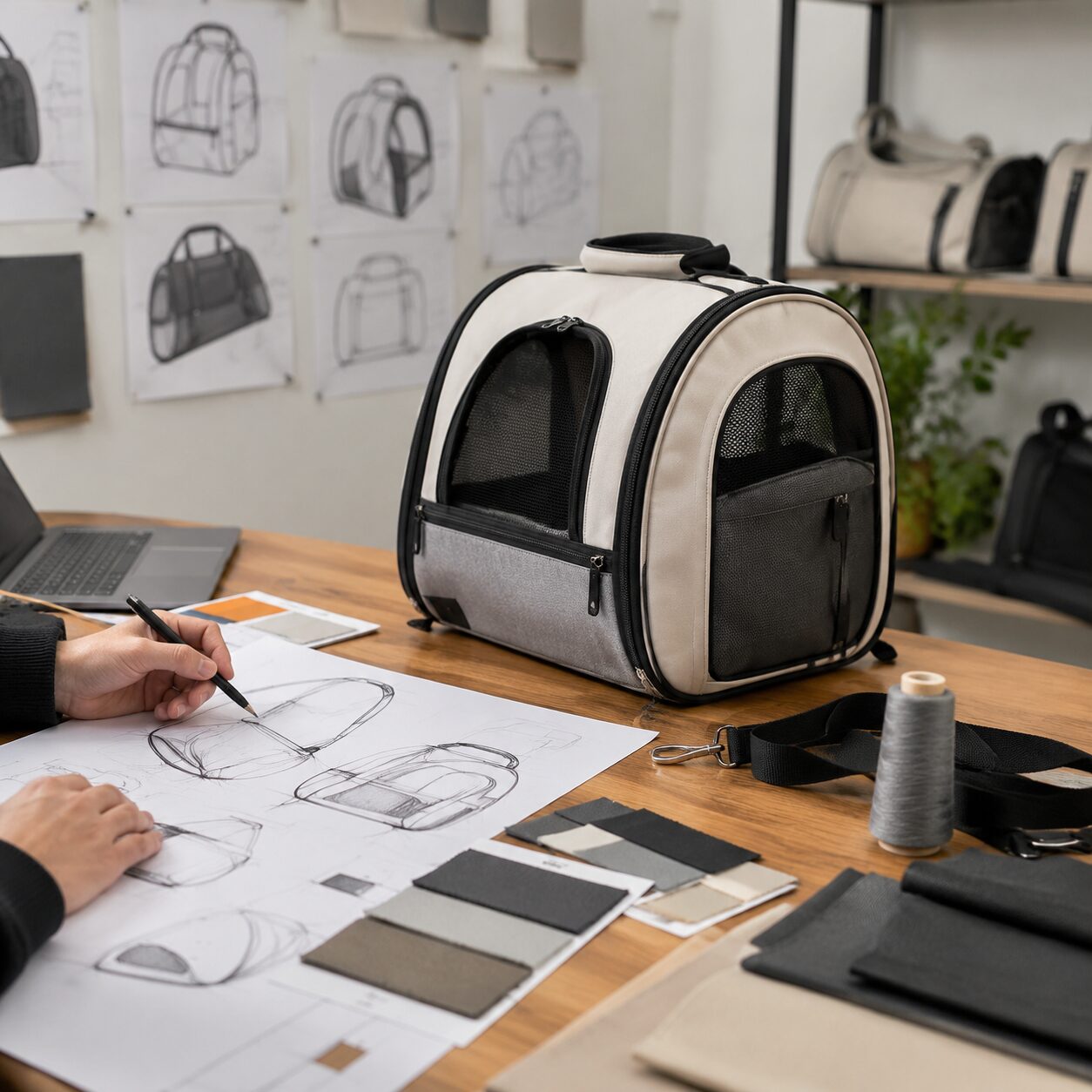
Balancing low volume with high craftsmanship ensures that a small order pet carrier manufacturer maintains strict quality control over mesh and stitching. Emerging brand buyers verify that compact manufacturing facilities apply rigorous standards. Collaborative prototyping through direct partnerships helps brands refine technical tech packs before production. Small-batch production demands oversight to ensure materials meet safety regulations. Finding a solid low MOQ pet carrier supplier comes down to working with manufacturers who actually set up their lines to handle smaller runs without cutting corners. Teaming up with a partner who really knows their craft is the best way to protect your brand’s reputation from day one.
- Craftsmanship Standards: Maintenance of heavy-duty stitching and claw-proof mesh across compact production runs.
- Prototyping Collaboration: Direct factory engineering support to refine technical tech packs prior to manufacturing.
- Regulatory Compliance: Strict adherence to international pet safety regulations regardless of order volume.
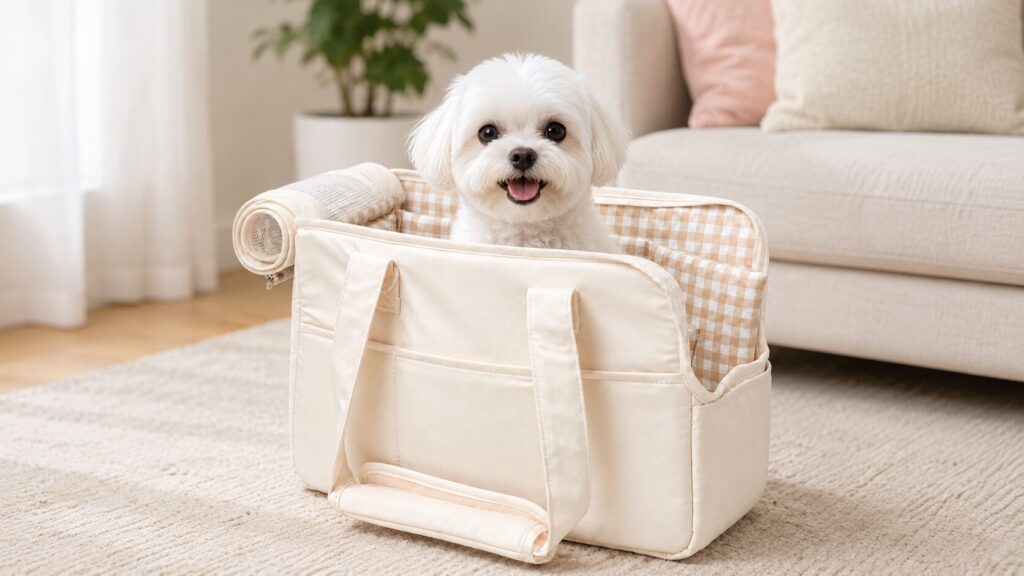
3. The Numbers Game: Evaluating a 100 Piece Pet Carrier MOQ Strategy
Calculating unit acquisition costs and warehouse storage savings when utilizing a 100 piece pet carrier MOQ reveals immediate financial advantages for startup e-commerce brands entering the pet accessories market. Lowering initial production volumes reduces per-unit holding costs and eliminates the necessity of renting expensive commercial storage facilities during the early launch phase. Starting off lean with a trusted low MOQ pet carrier supplier is just smart risk management—it protects your cash flow while you test the waters and see what shoppers actually want online.
Sure, smaller production runs mean a slightly higher per-unit cost, but the peace of mind and cash flexibility you gain are totally worth it. Savvy founders use that saved capital to push harder into digital marketing and influencer collabs instead of watching dead inventory sit in a warehouse. Keeping things tight at the start limits your financial exposure and gives you a solid footing to scale up naturally over time.
- Cost Efficiency: Optimization of unit acquisition expenses and elimination of commercial storage overhead.
- Risk Mitigation: Protection of initial cash flow through controlled production batch sizes.
- Capital Reallocation: Shifting financial resources from excess inventory toward targeted digital marketing.
4. Strategic Execution: Navigating Startup Pet Product Sourcing Successfully
Eliminating middleman traps involves avoiding trading intermediaries to secure direct factory relationships and protect profit margins. Trading companies often obscure true production costs and delay critical engineering feedback during prototyping. Managing sample approvals and shipping timelines for your startup pet product sourcing ensures seamless execution from factory floor to fulfillment centers. Direct communication allows brand buyers to resolve technical specifications rapidly and monitor milestones. Establishing direct supply chain connections prevents miscommunication errors regarding material quality and labor standards.
- Middleman Elimination: Avoiding trading intermediaries to secure direct factory pricing and transparency.
- Communication Directness: Real-time technical coordination with manufacturing engineers during prototyping.
- Logistics Streamlining: Efficient management of sample approvals and international shipping timelines.
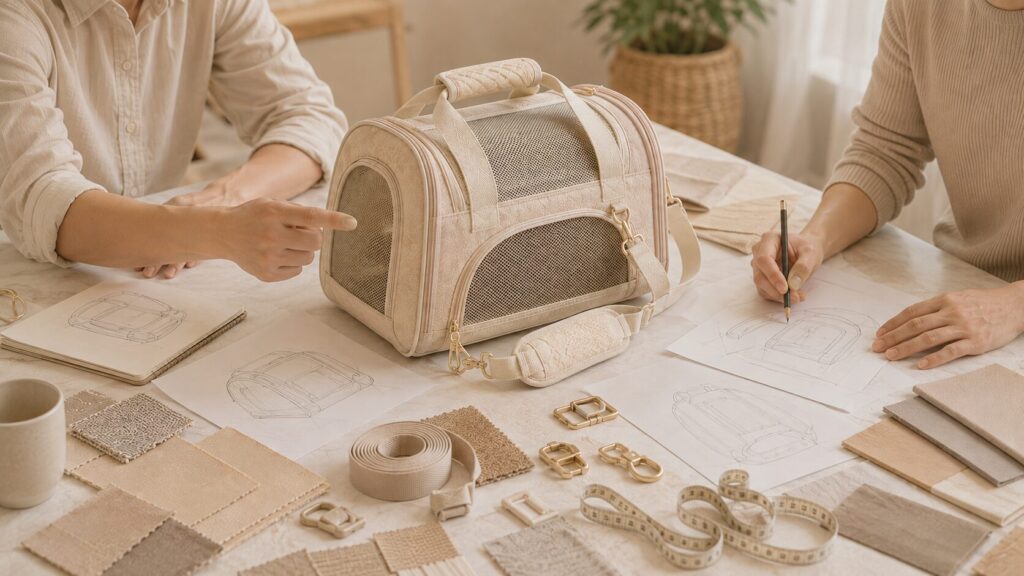
5. Expanding Collections: Sourcing Low MOQ Pet Travel Bags for Modern Brands
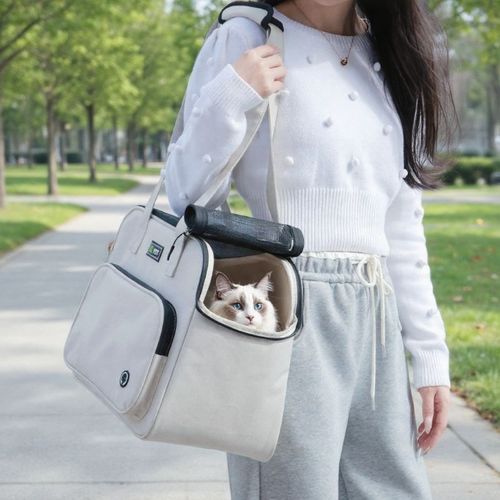
Form-factor diversification allows growing brands to expand from basic backpacks into expandable airline-approved carriers without overwhelming initial budgets. Integrating private label woven tags and custom rubber logo patches into low MOQ pet travel bags establishes a distinct market identity. Modern pet owners actively seek versatile travel gear combining ergonomic comfort with sophisticated aesthetic appeal. Sourcing diverse product formats under flexible terms enables brands to test variations simultaneously across digital platforms. Collaborating with an agile production partner ensures flawless execution across all manufactured units.
- Form-Factor Growth: Diversification from basic backpacks into expandable airline-approved carriers.
- Custom Branding: Integration of private label woven tags and custom colorways into small batches.
- Catalog Expansion: Strategic addition of multi-functional totes to attract diverse consumer demographics.
6. Validating Demand: Best Practices for Placing a Test Order Pet Carrier Run
Pre-launch testing utilizes limited-batch pilot runs to gather real consumer feedback, user reviews, and performance metrics before committing capital to full container manufacturing. Scaling up smoothly from an initial test order pet carrier batch to full container scale occurs naturally as your brand gains proven retail traction and customer validation. Keeping tabs on early sales speed and return rates gives your product team the exact feedback they need to tweak designs and beef up durability where it counts. Pulling off a smart test run with a reliable low MOQ pet carrier supplier hands you hard data so you’re never just guessing when it’s time to reorder. Smart founders use that real-world customer feedback to lock in better volume pricing tiers once they are ready to scale with their manufacturing partners. Leaning on hard numbers instead of hunches is the safest way to grow a brand profitably without burning through cash.
- Pilot Run Testing: Deployment of limited batches to gather authentic consumer feedback and reviews.
- Data-Driven Scaling: Transitioning from test orders to full container loads based on sales velocity.
- Design Refinement: Implementing continuous product improvements derived from initial market performance metrics.
7. The Aimazing Advantage: Engineering Excellence in Functional Pet Gear Manufacturing
Through our fully integrated OEM production lines, we eliminate hidden middleman markups and establish a direct factory partnership model for emerging brands. Our rigorous multi-stage tensile audits and pre-shipment inspections guarantee uncompromising product excellence across every batch. Scalable agility allows us to transition seamlessly from low-MOQ pilot runs to full container loads while translating your design specifications into market-ready realities. Partnering with a dedicated manufacturer secures your supply chain against volatility and unexpected delivery delays.