Choosing the right transportation product for cats and dogs involves more than attractive styling or competitive pricing. For pet brands, wholesalers, and distributors, product structure, ventilation, durability, and manufacturing consistency directly influence customer satisfaction and long-term business performance.
A poorly designed travel solution can lead to damaged zippers, unstable bases, uncomfortable pets, and costly returns. Meanwhile, sourcing teams must balance product safety, customization opportunities, production costs, and delivery schedules.
So, how can your brand identify a manufacturing partner capable of developing reliable car travel products for both cats and dogs?
1. Are You Sourcing a Real Pet Carrier or Simply a Car Bed?
Before choosing a pet car carrier manufacturer, buyers should establish exactly what the product is designed to do. Not every product marketed for vehicle travel provides the same level of containment or protection.
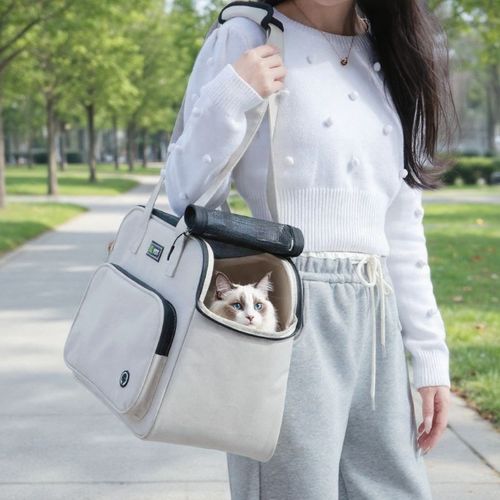
For example, enclosed travel carriers usually feature secure openings, ventilation panels, supportive bottoms, and carrying handles. Their purpose is to accommodate cats or dogs within a defined compartment during transportation.
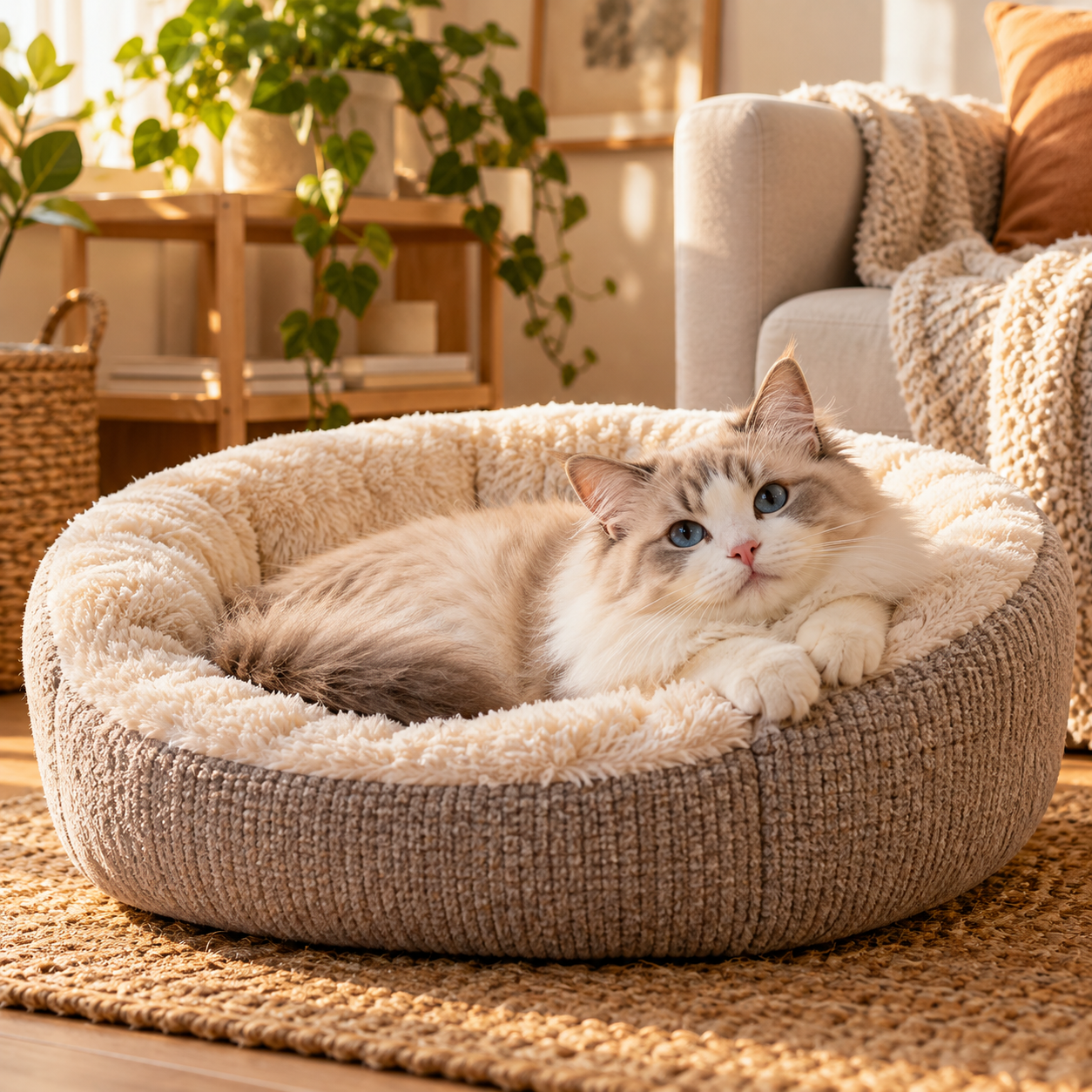
Open-top car beds, on the other hand, primarily provide a padded resting space. They may include carrying handles and straps for positioning, but these features do not automatically make them protective vehicle restraints.
Consider these two product directions from Aimazing:
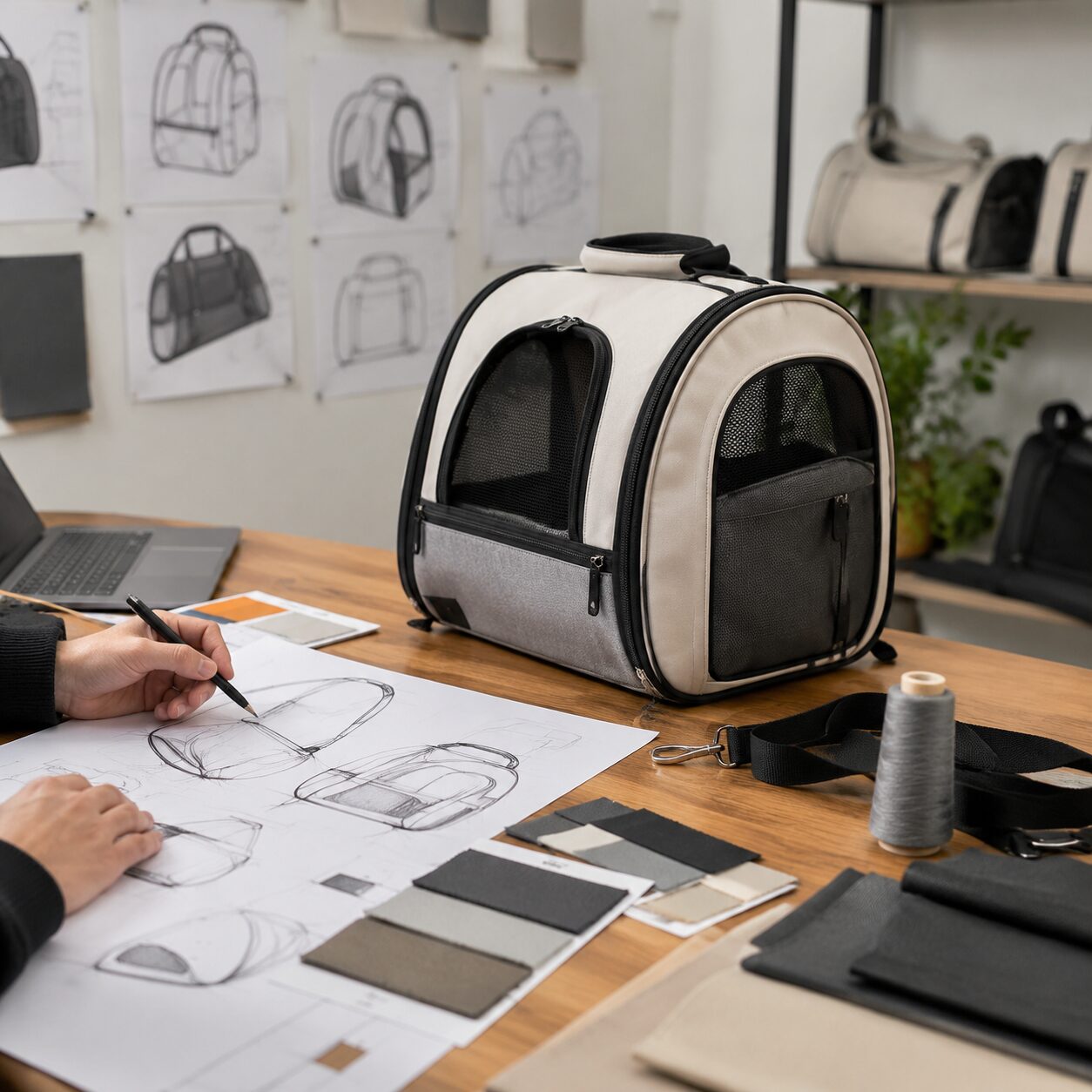
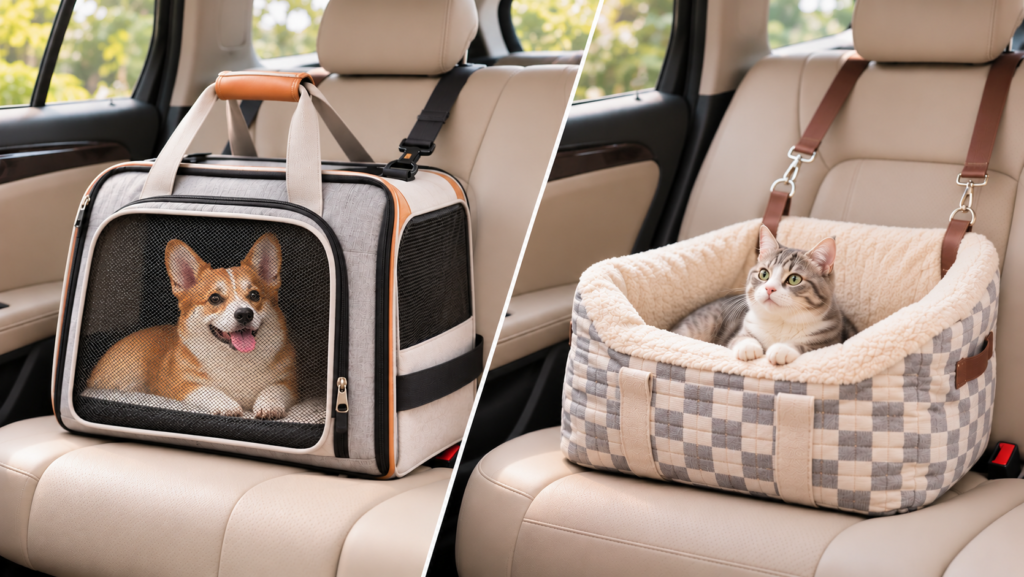
- Fashionable and Eco-Friendly Pet Travel Bag — a structured travel carrier featuring mesh ventilation, carrying handles, and a portable design.
- Checkered Hand-Held Car Carrier — an open-top, padded travel bed designed for comfortable resting and convenient handling.
These products serve different purposes and should be evaluated accordingly.
For your brand, the first sourcing question should be: are your customers purchasing a secure transport compartment, a comfortable car resting product, or a product designed and independently tested for crash protection?
Defining the intended use early prevents misleading product positioning and unnecessary development costs.
2. Can One Carrier Design Really Work for Both Cats and Dogs?
Cats and dogs may travel in similar vehicles, but their behavior, movement patterns, and comfort requirements can differ significantly.
For cats, enclosure security is particularly important. Many cats seek a sheltered environment when exposed to unfamiliar sounds and movement. Designs should consider escape-resistant closures, secure mesh panels, sufficient ventilation, and a stable interior.
For dogs, size and body proportions require equally careful attention. A carrier intended for a small dog should provide adequate room for comfortable positioning without excessive internal movement during transportation.
A custom pet car carrier allows brands to adapt essential design elements according to their target animals and customers.
Potential customization options include:
- Size and proportions: Different internal dimensions for cats, puppies, and small dog breeds.
- Ventilation: Breathable mesh positioned to support airflow and visibility.
- Entry design: Top-loading or side-loading openings with secure closures.
- Bottom structure: Reinforced support panels and removable cushions.
- Interior materials: Comfortable, low-maintenance fabrics suitable for routine cleaning.
- Carrying features: Reinforced handles and adjustable shoulder straps for transport outside the vehicle.
Brands should also consider whether their collection requires separate cat-focused and dog-focused models rather than relying on a single universal design.
For additional product development options, explore Aimazing’s Pet Carrier Bags Collection.
3. Are Your Products Designed for Actual Vehicle Travel?
A product may look excellent in photographs but perform differently inside a moving vehicle.
For a wholesale pet car carrier collection, buyers should evaluate the practical conditions in which the finished products will be used.
Important considerations include vehicle seat compatibility, placement stability, closure reliability, interior comfort, and ease of loading and unloading.
Your pet car carrier supplier should also distinguish between general product features and verified safety performance.
According to research published by the Center for Pet Safety, carrier structure and vehicle attachment performance are important factors in crashworthiness.
A seat-belt opening, attachment strap, or reinforced-looking exterior does not automatically establish that a carrier has passed crash testing.
If your brand intends to advertise crash protection, request appropriate independent test evidence for the exact product configuration and intended use.
Would your customers trust a product labeled as vehicle-safe if your brand could not provide supporting test documentation?
For responsible manufacturers and buyers, safety claims should be supported by evidence rather than appearance alone.
4. Which Materials and Structural Features Should Your Brand Prioritize?
Material selection affects manufacturing cost, cleaning performance, durability, appearance, and the experience of cats and dogs during travel.
Common exterior materials include polyester, Oxford fabric, nylon, and selected coated textiles. The appropriate choice depends on the product’s intended use and retail positioning.
For example, polyester can provide a practical balance between weight and cost, while durable nylon may be preferable for collections emphasizing frequent travel and handling.
When developing a custom pet car carrier, brands should pay particular attention to the following construction details.
Reinforced Bottom Panels
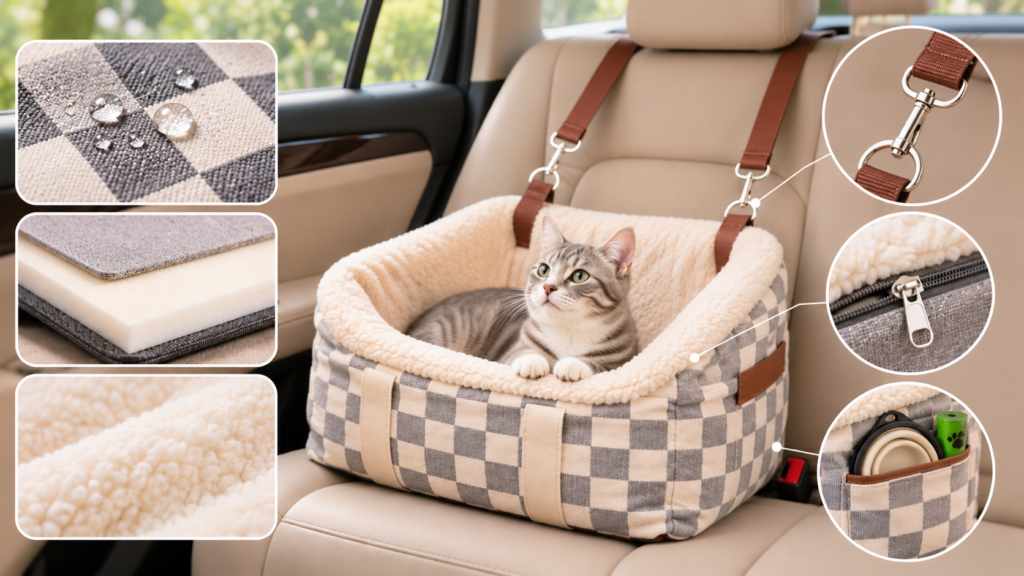
A supportive bottom helps maintain the carrier’s shape when lifted. Depending on the design, PE boards, EVA components, or other reinforcement materials may be used.
Breathable Mesh Panels
Mesh placement should support ventilation without unnecessarily weakening the structure. Buyers should review both airflow and resistance to scratching or pulling.
Removable and Easy-Clean Linings
Washable or wipe-clean components can make travel products easier for owners to maintain. However, cleaning instructions should be based on the actual materials and construction.
Durable Zippers and Reinforced Seams
Closures, handle attachments, and high-stress sewing areas should be evaluated during sampling and production inspections.
An experienced pet car travel bag manufacturer should help buyers balance these details with their target retail price and desired product appearance.
Selecting more expensive materials does not automatically create a better product. The goal is to choose construction methods that support the intended function and customer expectations.
5. How Can You Identify Manufacturing Problems Before Bulk Production?
A product sample may look professional, but how can your brand know whether the factory can reproduce it consistently across hundreds or thousands of units?
When evaluating a pet car carrier manufacturer, request a clear explanation of the development process, inspection methods, and production controls.
A practical quality review should cover:
| Inspection Area | What Buyers Should Check |
|---|---|
| Dimensions | Consistent measurements and usable interior space |
| Fabric and mesh | Material specifications, abrasion resistance, and panel integrity |
| Zippers | Smooth operation, repeated-use durability, and secure closure |
| Handles and straps | Reinforcement quality and load-bearing performance |
| Bottom support | Stability and resistance to unwanted deformation |
| Stitching | Seam consistency and reinforcement at stress points |
| Packaging | Protection against compression, moisture, and transport damage |
Before production, buyers should approve a pre-production sample that reflects the agreed materials, dimensions, construction, and branding.
A mutually approved golden sample can then serve as the physical reference for workmanship and appearance during manufacturing.
For a more detailed evaluation process, read How to Audit a Pet Travel Bag Factory Before Placing a Bulk Order.
If a factory cannot explain how it controls differences between samples and finished goods, is the lowest quotation really worth the sourcing risk?
6. Is the Cheapest Wholesale Quotation Actually the Best Deal?
Price is an important factor in sourcing, but a lower unit cost does not necessarily result in a more profitable product.
When comparing quotations for a wholesale pet car carrier project, purchasing teams should examine what is included in each offer.
Two products with similar appearances may have different specifications for outer fabrics, internal reinforcement, zipper quality, padding, and packaging.
These differences can affect product durability and customer satisfaction.
Before approving a quotation, request clarification on material specifications, customization charges, sample costs, packaging, shipping terms, and lead times.
A reliable pet car carrier supplier should provide transparent quotations and clearly communicate which modifications may affect production cost.
For private-label brands, this transparency is particularly important when planning multiple sizes, color variations, or coordinated travel collections.
Would you rather save a small amount per unit or reduce the risk of product returns, inconsistent specifications, and delayed launches?
Evaluating total sourcing value helps protect both your margins and your brand reputation.
7. Can Your Manufacturing Partner Support Future Product Development?
Successful sourcing relationships should extend beyond the first order.
As your brand expands, you may need additional carrier sizes, new materials, updated colors, or complementary products for cats and dogs.
A capable pet car travel bag manufacturer should support this development process through material recommendations, pattern making, sampling, structural adjustments, and coordinated production.
At Aimazing Bag, we provide OEM and ODM manufacturing solutions for global pet brands, wholesalers, and distributors.
Our development team helps translate product ideas, reference pictures, and technical specifications into workable prototypes.
Our services include:
- OEM/ODM development: Custom dimensions, structures, materials, and functional details.
- Brand customization: Logos, colors, labels, and retail packaging.
- Sampling support: Samples typically developed within 3–5 days, depending on design complexity and material availability.
- Manufacturing coordination: Material selection, pattern making, sewing, inspection, and bulk production.
- Long-term product development: Support for new designs and expanding pet travel collections.
We also help buyers evaluate production feasibility before committing to large orders.
Whether your business is launching its first transport product or expanding an established collection, our goal is to provide practical manufacturing support rather than simply deliver finished bags.
8. What Should You Confirm Before Choosing Your Manufacturing Partner?
Before making a final sourcing decision, ask yourself these questions:
- Does the factory understand the different transport requirements of cats and dogs?
- Can it explain the intended function and limitations of each product design?
- Are the materials, dimensions, and construction methods clearly documented?
- Can it provide a sample that accurately reflects the planned production specifications?
- Does it have a practical system for maintaining quality across bulk orders?
- Can it support future customization, product upgrades, and repeat orders?
A suitable manufacturing partner should be able to answer these questions clearly and support its claims with relevant samples, specifications, or test documentation.
Choosing the right factory is not simply about finding the lowest price. It is about developing products that meet customer expectations while supporting sustainable business growth.
Conclusion: Build a Better Pet Travel Collection with the Right Partner
Finding a reliable pet car carrier manufacturer requires careful evaluation of product design, cat and dog comfort, vehicle-use requirements, material quality, and manufacturing consistency.
For brands entering this category, defining the product’s intended function is the starting point. From there, thoughtful customization, transparent communication, and realistic quality standards can help reduce sourcing risks.
At Aimazing Bag, we work with international brands and wholesale buyers to develop practical, customizable pet travel products through OEM and ODM manufacturing.
Planning a new cat or dog car carrier collection?
Contact the Aimazing Team to discuss your product ideas, reference designs, customization requirements, and sourcing plans.
Let’s turn your next pet travel product idea into a market-ready design.