For pet brands and wholesale buyers, developing a product for households with multiple cats creates an interesting opportunity. However, increasing a carrier’s capacity is not simply a matter of making the bag larger. Interior space, weight distribution, ventilation, and structural stability all become more important when two animals share one enclosure.
A product that looks spacious in promotional photographs may perform very differently when both cats are inside. This presents a challenge for brands: how can they develop a practical product that meets customer expectations while controlling manufacturing costs and maintaining consistent quality?
Understanding these considerations before sampling can help wholesalers, distributors, and private-label brands make better sourcing decisions and develop more competitive pet travel collections.
1. Why Is a Two-Cat Carrier More Than Just a Larger Backpack?
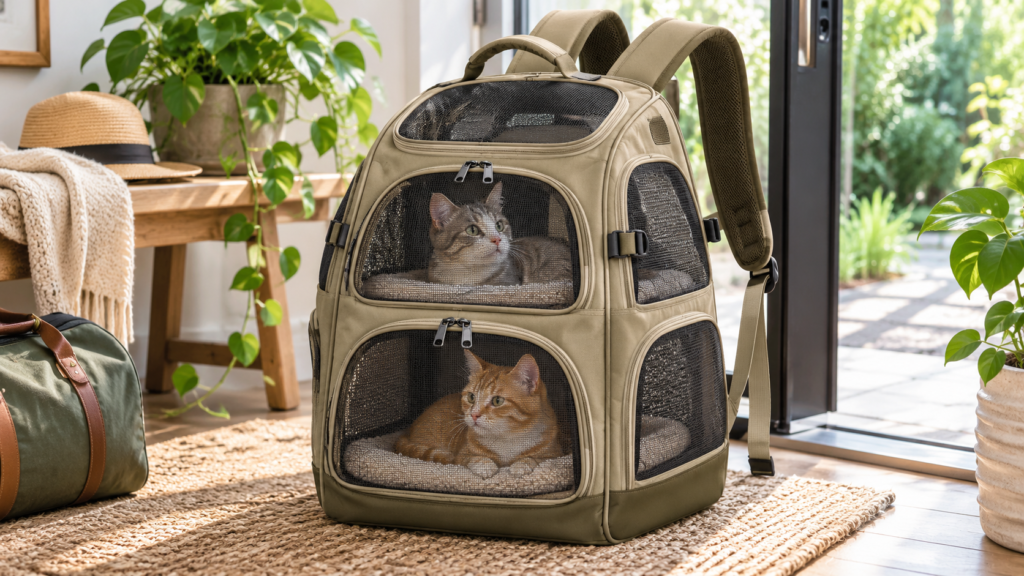
The main advantage of a double cat carrier backpack is its ability to accommodate two cats simultaneously, rather than requiring two separate carriers. This creates a distinct product option for multi-cat households, particularly when the animals are compatible, appropriately sized, and accustomed to sharing space.
However, a larger capacity alone does not guarantee a better product. Buyers must consider whether the carrier provides sufficient usable interior space and whether its construction remains stable under the intended combined weight.
For brands researching a cat backpack carrier for 2 cats, the opportunity lies in addressing a specific customer requirement rather than simply introducing another oversized pet bag.
Potential retail applications include households with two small companion cats, customers seeking coordinated pet travel equipment, and pet accessory retailers expanding their carrier collections.
Before selecting a design, buyers should establish three product requirements:
- Target animal size: Define the intended weight and body dimensions of each cat.
- Intended usage: Determine whether the carrier is designed for brief transfers, occasional outings, or another clearly defined purpose.
- Transport limitations: Identify situations where separate, rigid carriers would be more appropriate.
These decisions help establish a practical product development direction before materials, dimensions, and manufacturing costs are finalized.
2. Can Two Cats Actually Fit Comfortably Inside the Same Carrier?
One of the biggest mistakes in multi-pet carrier development is focusing on external dimensions instead of usable interior space.
A 2 cat carrier backpack needs enough internal room for the intended pair of cats, but its usable dimensions can be reduced by thick padding, structural supports, interior pockets, and compartment dividers.
For example, a design may appear large enough in product photographs while offering limited floor space once the removable cushion and side supports are installed.
Manufacturers should therefore evaluate internal length, width, height, and available resting areas using the finished sample rather than relying only on the cutting pattern.
Why Individual Space Matters
Two cats may have different body sizes, preferred resting positions, and reactions to movement. Sharing a carrier should not force either animal into an uncomfortable position or prevent it from adjusting its posture.
For this reason, buyers should consider the following design details:
- Sufficient usable floor space for the intended animals.
- Stable interior support without excessive bending.
- Smooth lining without exposed hardware or uncomfortable seams.
- Secure access openings that reduce accidental escape risks.
- Removable interior padding that can be cleaned or replaced.
Some importers use backpack carrier cat as a general sourcing search phrase. However, a technical product specification should go beyond the search term and define measurable dimensions, intended load, and usage conditions.
For related construction considerations, our Custom Cat Tote Bag Design Guide explains how ventilation, bottom support, and closures influence carrier functionality.
3. Does More Mesh Automatically Mean Better Ventilation?
Ventilation is particularly important when designing an enclosure intended to hold two animals.
A breathable pet carrier backpack should provide appropriately positioned airflow openings rather than relying on a large decorative mesh panel. Air circulation can be affected by the carrier’s shape, the wearer’s body, external pockets, and the cats’ positions inside.
For example, placing all the mesh on the rear panel may create a problem if that panel is partially covered when the carrier is worn.
A more practical design approach is to evaluate ventilation from multiple directions while maintaining adequate structural support.
Choosing the Right Mesh Material
Different mesh constructions offer different properties.
Polyester mesh: A versatile option that can provide visibility and airflow while supporting lightweight product designs.
Reinforced mesh: Suitable for areas requiring additional resistance to scratching and repeated contact.
Multi-layer mesh: May provide greater structural support, although buyers must consider how additional layers affect airflow.
Material selection should be based on the required performance rather than appearance alone.
According to Cats Protection’s guidance on choosing a cat carrier, ventilation openings should be available on at least two sides. The organization also cautions that many backpack-style carriers are too small or unstable for comfortable cat transportation and generally recommends sturdy handheld carriers instead.
This is an important distinction for pet brands. Adding breathable materials does not automatically make a carrier suitable for every cat or every travel situation.
During product development, ventilation, interior dimensions, temperature conditions, and carrier movement should all be reviewed together.
4. How Can a Larger Carrier Remain Stable and Comfortable to Carry?
When the carrying load increases, structural engineering becomes more important.
A lightweight cat knapsack may be convenient for transporting small personal items, but adapting that silhouette for two living animals requires additional attention to bottom reinforcement, shoulder straps, and load distribution.
If the bottom panel bends excessively, both cats may move toward the lowest point. This can make the carrier unstable and create an uncomfortable resting surface.
A reinforced removable base can help the compartment maintain its shape. Depending on the design, manufacturers may consider PE board, EVA support layers, or other suitable structural materials.
Backpack Strap and Back-Panel Design
A practical carrying system may include:
- Wider, padded shoulder straps to distribute pressure.
- Reinforced stitching at strap attachment points.
- An adjustable chest strap to improve stability.
- A supportive back panel that reduces unwanted movement.
- Properly positioned handles for controlled lifting.
However, adding more padding and structural materials also increases the product’s weight.
For wholesale buyers, the objective is not to create the heaviest or most heavily reinforced carrier. It is to develop a balanced structure that performs reliably within a clearly specified load range.
A premium cat knapsack collection may prioritize attractive fabrics and an ergonomic silhouette, but these features must not compromise the animals’ usable interior space or secure containment.
Before approving the design, brands should request a physical sample and assess how the carrier behaves during controlled lifting, wearing, and movement tests.
5. Should Your Brand Choose Shared Space or Separate Compartments?
There are two main approaches to developing a double cat carrier backpack: a shared interior and a divided interior.
Neither design is automatically suitable for all pairs of cats.
Shared Interior: Simpler Construction, Flexible Space
A shared compartment provides one continuous interior area.
Potential advantages include easier cleaning, fewer internal components, and greater flexibility in how the available space is used.
However, cats must be comfortable sharing the enclosure. Even animals that normally live together can react differently when confined or transported.
Divided Interior: More Separation, Greater Complexity
A divided design may provide individual resting areas and reduce direct contact between the two animals.
Possible features include a removable fabric divider, separate access openings, and individually accessible interior pads.
However, a divider also reduces usable space and adds manufacturing complexity. Both sides must remain appropriately sized and ventilated.
When developing a cat backpack carrier for 2 cats, brands should not treat a removable divider as a universal solution. Some cats require completely separate carriers, and a shared soft-sided design may not meet their needs.
The IATA Traveler’s Pet Corner explains that even cats accustomed to living together may become stressed during travel. Its animal transport guidance also establishes conditions for animals sharing an enclosure in air cargo, but these provisions do not mean that a two-cat backpack is approved for passenger cabins.
Airline policies, animal dimensions, carrier construction, and permitted pet numbers must be checked separately.
For brands, the decision should begin with the intended application and customer safety requirements, not simply the number of compartments.
6. Which OEM Customizations Add Value Without Unnecessarily Increasing Costs?
Customization helps brands create products that are recognizable and commercially differentiated. However, not every additional feature improves the product.
Buyers searching for a backpack carrier cat supplier should prioritize manufacturers that can explain the functional and cost implications of structural changes.
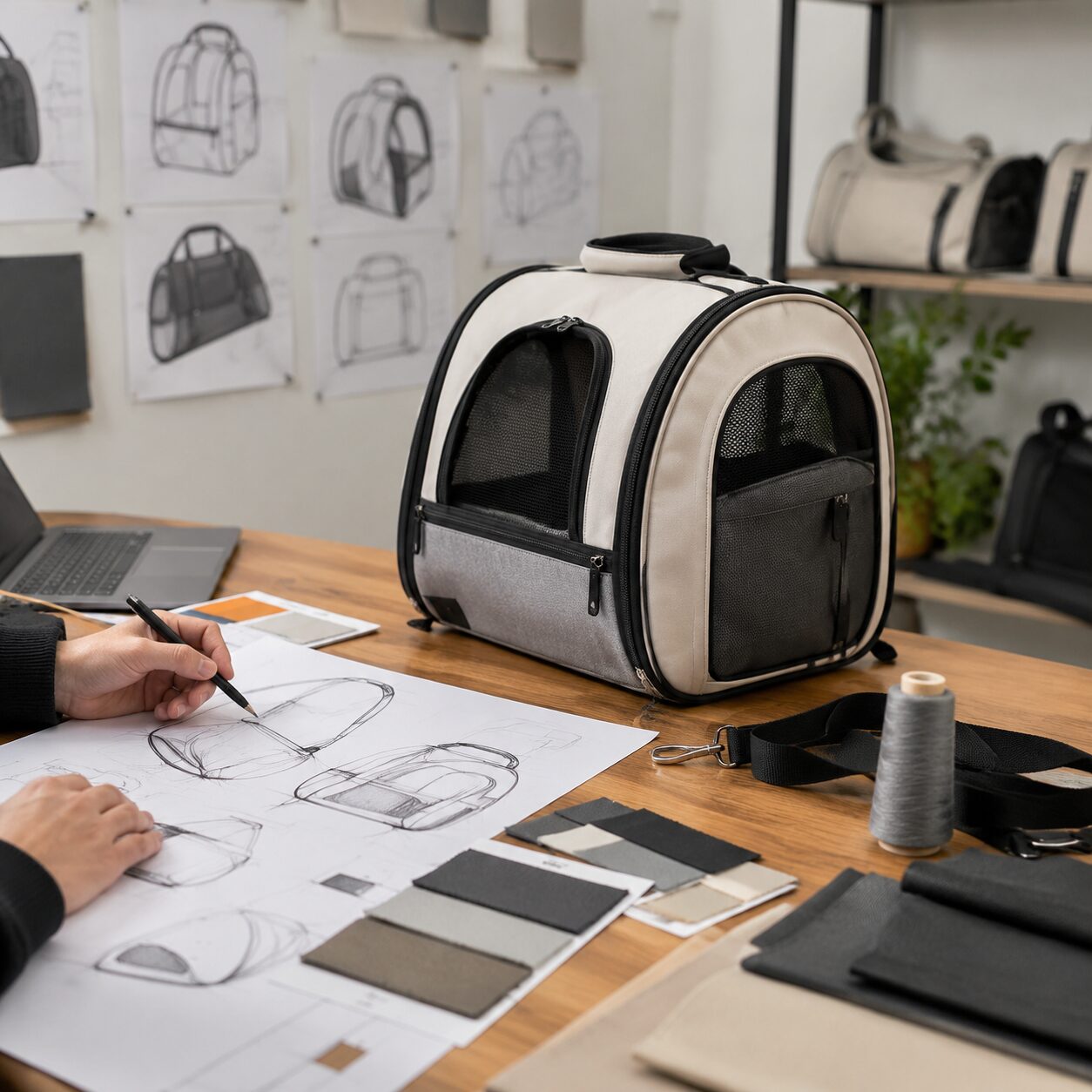
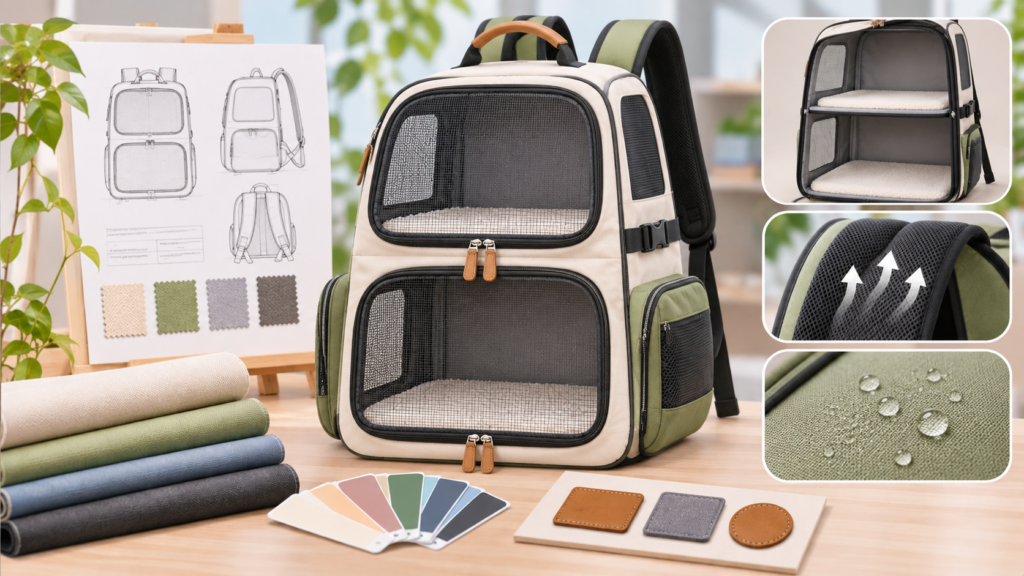
At Aimazing Bag, our OEM/ODM development process can support adjustments to the carrier’s materials, color combinations, interior construction, logo applications, and packaging.
Material and Color Customization
Brands may select polyester, nylon, Oxford fabric, RPET, or other suitable materials according to their product positioning.
For an outdoor-oriented collection, abrasion-resistant materials and easy-clean surfaces may be priorities.
For a lifestyle collection, coordinated colors and subtle branding may be more important, provided the materials meet functional requirements.
Functional Customization
Possible development options include:
- Removable washable bottom pads.
- Adjustable interior divider systems.
- Different mesh placements and opening structures.
- Reinforced handles and shoulder straps.
- Additional external storage pockets.
- Secure zipper configurations.
Each proposed change should be evaluated for its effect on weight, durability, manufacturing time, and usable interior space.
Logo and Private-Label Packaging
Branding options include embroidered logos, woven labels, rubber patches, branded zipper pulls, and customized hangtags.
A stylish cat knapsack product line may benefit from consistent fabric colors, matching hardware, and coordinated retail packaging rather than numerous decorative accessories.
You can explore our Custom Pet Carrier Bag Collection for available material, branding, and construction options.
For a detailed overview of how buyers can move from a product concept to a production-ready specification, see our Pet Bag Customization Process.
7. Are You Comparing Suppliers Based on Price or Actual Product Specifications?
Two suppliers may quote significantly different prices for products that appear almost identical in photographs.
However, the quotation may not cover the same materials, reinforcement methods, interior construction, or inspection requirements.
For a breathable pet carrier backpack, a lower quotation could reflect a different mesh specification, fewer reinforced areas, or a simpler structural design.
These differences may not be obvious until buyers examine the physical samples.
A reliable supplier comparison should therefore include:
| Evaluation Factor | What B2B Buyers Should Check |
|---|---|
| Usable interior space | Finished internal dimensions with pads installed |
| Material specification | Fabric type, coating, thickness, and mesh construction |
| Load-bearing structure | Base support, strap reinforcement, and test conditions |
| Zipper and openings | Closure security, access size, and smooth operation |
| Carrying comfort | Strap adjustment, pressure distribution, and stability |
| OEM customization | Supported materials, branding methods, and modifications |
| Bulk consistency | Approved reference sample and inspection criteria |
| Packaging | Folded dimensions, carton quantity, and retail presentation |
For a 2 cat carrier backpack, the quotation should also identify the intended combined load and the construction used to support it.
Without these details, comparing unit prices alone may lead to incorrect sourcing decisions.
A useful manufacturing partner does more than provide a competitive quotation. It helps buyers understand why a design costs more or less and which modifications are necessary.
Our article on Supply Chain Stability and Pet Bag Manufacturing explores additional considerations when choosing a long-term production partner.
8. What Would a Practical Wholesale Development Project Look Like?
The Buyer’s Challenge
Taking a Canadian pet supplies brand as an example, we launched a new type of pet carrier designed specifically for households with two small cats.
The company plans an initial order of 300 units, with the possibility of larger repeat orders if the product performs well in its retail channels.
Its initial design brief includes a large mesh front panel, lightweight fabric, a removable interior cushion, and a simple embroidered logo.
The purchasing team has received quotations from several manufacturers, but the quotations are difficult to compare because the suppliers have proposed different internal structures.
One proposal uses a basic soft bottom panel, while another includes additional reinforcement. Both products look similar in the drawings.
How a Development-Focused Manufacturer Could Respond
Rather than immediately recommending the lowest-cost construction, a development team could help the buyer clarify the intended use and required specifications.
The first step would be to define the two cats’ target dimensions, total design load, and appropriate interior configuration.
During sample development, the team could review several potential improvements:
1. Bottom reinforcement
Replace the basic flexible base with a removable support panel to reduce bending during lifting.
2. Ventilation arrangement
Reposition part of the mesh area so that ventilation does not depend entirely on a surface that may be obstructed.
3. Strap attachment
Add reinforcement around stress points and adjust the carrying system for more balanced weight distribution.
4. Interior maintenance
Use a removable, washable cushion and easy-clean lining to simplify product care.
5. Packaging optimization
Review how the carrier can be packed without damaging structural components or creating unnecessary shipping volume.
What the Buyer Could Gain
The key advantage would not simply be receiving a revised sample.
It would be having a clearer, documented product specification before committing to bulk production.
The brand could compare construction options, understand the costs of each improvement, and evaluate the sample against agreed requirements.
It could also use consistent specifications when preparing retail descriptions, packaging instructions, and future repeat orders.
This scenario illustrates the difference between manufacturing a design exactly as submitted and helping a buyer identify potential problems before production.
9. What Should Buyers Confirm Before Starting Bulk Manufacturing?
The transition from an approved prototype to a consistent production run is one of the most important stages of OEM/ODM development.
Before confirming a double cat carrier backpack order, buyers should make sure that the intended two-cat capacity has been evaluated against the product’s actual dimensions, tested construction, and clearly defined usage conditions.
Confirm the Approved Sample
The final sample should establish the reference for material specifications, colors, stitching, zippers, mesh placement, and structural details.
Any changes made after sample approval should be documented before production begins.
Establish Appropriate Performance Checks
Depending on the product design, useful checks may include:
- Load testing under defined conditions.
- Strap attachment and seam-strength evaluation.
- Zipper operation and closure security.
- Bottom-panel stability.
- Mesh attachment durability.
- Inspection of interior contact surfaces.
- Finished dimensions and workmanship consistency.
A successful laboratory or factory test is not a substitute for evaluating whether the carrier is appropriate for the individual animals and intended journey.
Plan Sampling and Production Schedules
At Aimazing Bag, we support both OEM and ODM pet carrier development for international brands, wholesalers, distributors, and retailers.
Our Custom Pet Bag Sampling Guide explains our approach to turning design concepts into physical samples.
Our standard custom pet bag MOQ can start from 100 pieces, while sampling time is commonly around 3–5 days for suitable projects. More complex structures, specialized materials, and additional revisions may require longer development periods.
Before production, buyers should confirm the final lead time, agreed inspection requirements, packaging details, and shipment arrangements.
Is Your Brand Ready to Develop a Two-Cat Carrier?
Developing a carrier for two cats requires more than increasing its overall size. The most important decisions involve usable space, appropriate ventilation, stable construction, animal compatibility, and realistic product positioning.
For brands and distributors, these details also influence sourcing costs, product consistency, and the quality of information provided to retail customers.
Aimazing Bag supports custom pet carrier development from initial design review to sampling and bulk manufacturing. Whether you are modifying an existing style or developing a new private-label collection, our team can help review materials, structural options, branding, and production requirements.
Contact Aimazing Bag to discuss your design brief, target quantity, and customization requirements.