Making a custom printed dog harness look good on a screen is easy. Making that same pattern survive dirt, sun, abrasive fur, and a 70-pound dog pulling at full sprint is where most brands run into trouble. Cheap prints peel, colors crack when stretched, and bad heat presses can secretly ruin the strength of the webbing. If you’re building a pet gear line that actually lasts, you have to understand how different printing methods—like sublimation, heat transfer, and screen printing—work on heavy-duty fabrics. Here is a straightforward breakdown of how to get sharp, durable graphics without compromising your gear’s safety or your profit margins.
1. Industrial Graphics: Engineering High-Durability Custom Printed Dog Harness Lines
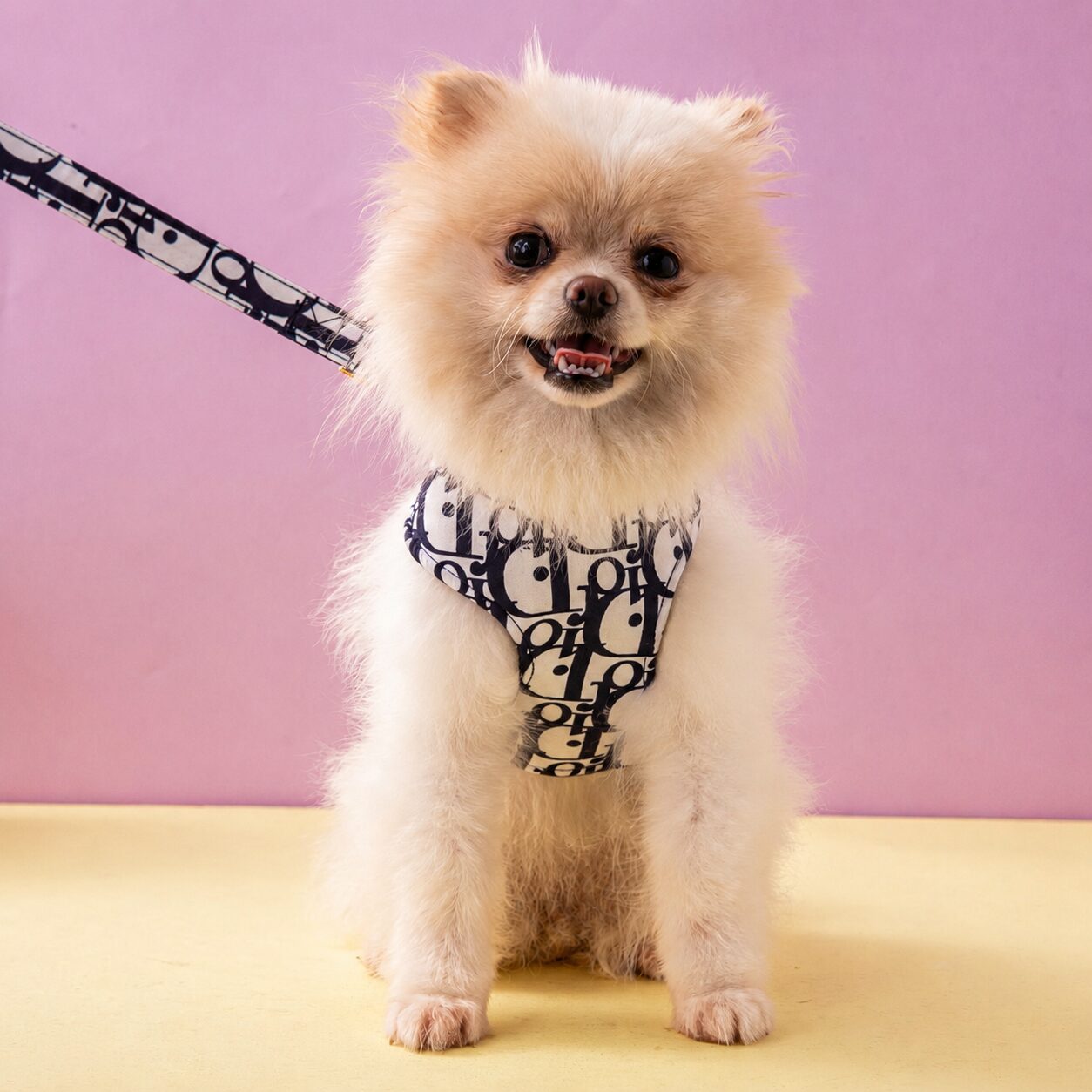
Turning a great visual design into a tough, everyday dog harness takes real factory capability. A proper custom printed dog harness needs tight tension control, high-heat bonding, and reinforced multi-needle stitching—not a generic workshop where graphics slip out of alignment and ink rubs off after two weeks. Working with an experienced OEM gives you access to digital sublimation, high-pressure heat transfer, and automated bar-tack sewing that keep your seams strong under hard pulling. Automated cutting and positioning keep multi-panel prints aligned down to the millimeter, so your gear looks sharp on the retail shelf and holds up without returns or field failures.
- Pattern Mechanical Stability: Specialized structural engineering prevents pattern distortion and graphical misalignment during high-tension canine pulling excursions.
- Industrial Registration Control: Automated optical systems ensure exact millimeter-accurate graphical placement across complex multi-panel utility gear runs.
- OEM Value: Advanced soft-goods engineering transforms basic synthetic webbing into high-performance commercial assets for growing wholesale distributors.
2. Molecular Dye Penetration: Sourcing a Sublimated Dog Harness Range
Dye-sublimation mechanics and continuous fiber fusion allow brands to ensure full-color patterns fuse directly into polyester fibers rather than sitting as a brittle surface layer when sourcing a sublimated dog harness requiring seamless continuous patterns for an all over print dog harness to prevent white creasing along complex seam intersections. Sourcing engineers utilize high-temperature industrial heat presses that convert disperse dyes directly into a gaseous state, forcing microscopic pigment particles deep into synthetic polymer molecular chains. This thermo-chemical bonding method guarantees absolute graphical permanence without compromising the underlying tear strength of the webbing.
- Molecular Fiber Fusion: Disperse dye gases penetrate polyester polymer chains permanently, eliminating surface cracking and fading under outdoor exposure.
- Seamless Pattern Continuity: Advanced vector mapping and precision pre-shrinking protocols eliminate white creasing along complex chassis seam intersections.
- Webbing Integrity Preservation: Low-temperature dwell optimization ensures thermal transfer cycles never degrade the core breaking strength of high-tensile carrier straps.
3. Surface-Bonded Precision: Manufacturing a Heat Transfer Dog Harness
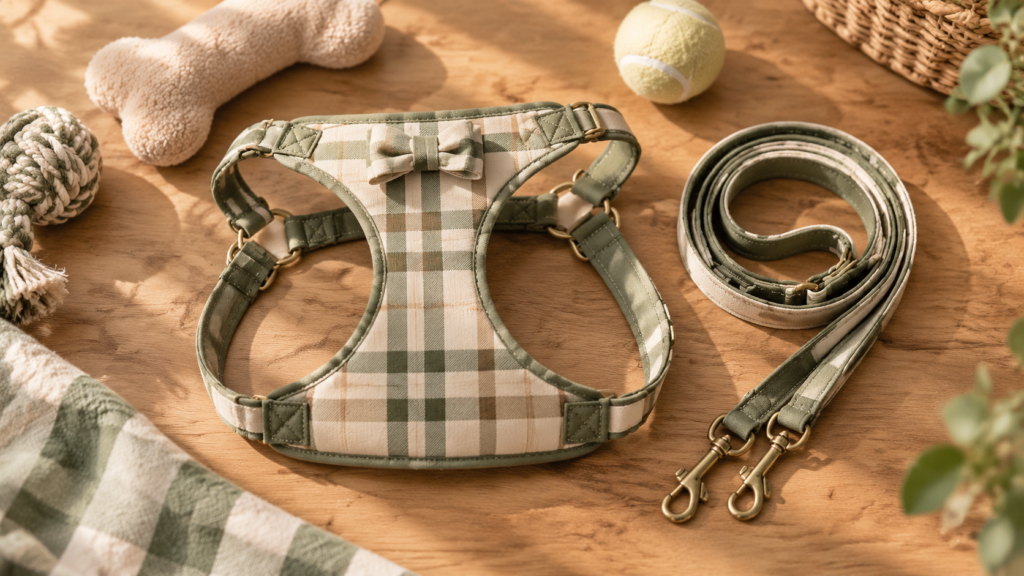
High-pressure thermal bonding and precision transfer films let manufacturers pull off complex multi-color artwork, fine gradients, and crisp typography without any messy ink bleeding. In addition, when producing a durable heat transfer dog harness, hitting strict edge-sealing and peel-resistance benchmarks is critical to ensure the graphics maintain structural adhesion under constant friction against canine fur and metal D-rings. To achieve this, sourcing teams specify polyurethane-based carrier films laminated with high-tack adhesive backings that cure under exact pneumatic pressure. Consequently, this advanced surface-bonded technology delivers razor-sharp corporate logos and tactile finishes, ultimately giving premium pet retail collections a distinct edge on store shelves.
| Bonding Component | Technical Specification | Operational Durability Function |
| Thermal Transfer Film | Polyurethane multi-layer carrier matrix | Delivers crisp typography and vivid multi-color artwork without ink bleeding. |
| Adhesive Backing | High-tack heat-activated polymer resin | Locks transfer graphics securely onto heavy-duty nylon webbing under pneumatic pressure. |
| Edge-Sealing Protection | Micro-melt thermal edge bonding | Prevents film delamination and abrasive lifting under constant mechanical friction. |
4. Heavy-Duty Industrial Ink: Sourcing a Screen Printed Dog Harness
Thick plastisol and eco-friendly water-based ink layering techniques achieve sharp, opaque corporate logos and raised tactile graphics on heavy-duty Oxford face fabrics when sourcing a professional screen printed dog harness requiring optimized wash-cycle resilience for a commercial printed pet harness catalog to prevent cracking and peeling under industrial washing cycles. Sourcing managers specify high-viscosity industrial screen inks cured through multi-stage infrared tunnel dryers. This robust printing methodology delivers exceptional tactile thickness and high-opacity visual depth on dark-colored tactical base textiles.
- High-Viscosity Ink Layering: Thick plastisol and water-based formulations build raised corporate graphics with superior opacity on dark Oxford face fabrics.
- Infrared Tunnel Curing: Multi-stage thermal drying cross-links polymer ink molecules completely, achieving maximum resistance against industrial washing cycles.
- Outdoor Weathering Defense: Specialized UV-inhibiting ink additives prevent solar bleaching and premature thermal degradation during prolonged outdoor utility usage.
5. Material Compatibility: Matching Industrial Print Methods to Webbing Substrates
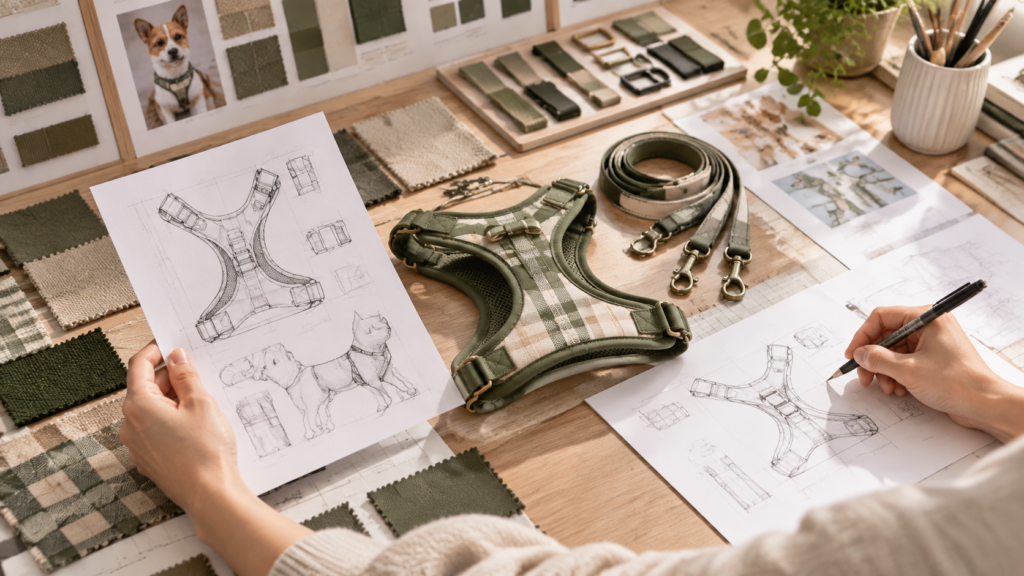
Navigating chemical limits and dye migration risks during bulk production is precisely why synthetic polyester excels under thermal sublimation, whereas heavy nylon demands specialized surface priming before it will take a print. As a result, sourcing teams have to carefully balance color vibrancy with high-tensile breaking strength, ensuring that heating processes never weaken the core webbings supporting active animal pull forces. Furthermore, before any raw webbing touches high-temperature production lines, sourcing engineers meticulously evaluate polymer surface energies and chemical affinity ratings. Ultimately, this rigorous compatibility analysis guarantees that your decorative graphics and the mechanical load-bearing safety of a heat transfer dog harness never compromise one another.
- Chemical Affinity Analysis: Polymer surface energy evaluations match specific printing inks to appropriate webbing substrates to eliminate delamination risks.
- Nylon Surface Priming: Specialized chemical pre-treatments prepare dense nylon carrier straps for high-adhesion thermal transfer and screen-printed applications.
- Tensile Strength Preservation: Controlled thermal dwell parameters ensure printing and curing cycles preserve 100% of core webbing breaking load capacity.
6. Rigorous Quality Control and Colorfastness Testing Standards
Executing destructive pull-force evaluations and cyclic load testing on reinforced webbings and printed anchor points guarantees zero-defect performance under high-tension canine pulls when confirming that pre-shipment colorfastness audits and UV degradation resistance trials resist fading and chemical breakdown prior to global container dispatch for every commercial custom printed dog harness manufactured under strict OEM protocols. Sourcing laboratories mount finished harness samples onto automated hydraulic test rigs simulating thousands of aggressive pulling cycles. Comprehensive pre-shipment auditing guarantees absolute product excellence and eliminates commercial liability risks worldwide.
- Hydraulic Pull-Force Evaluation: Automated test rigs simulate thousands of aggressive canine pulling cycles to verify reinforced webbing and anchor durability.
- Colorfastness and Crocking Audits: Standardized friction and laundering trials confirm printed graphics resist wet crocking, fading, and chemical breakdown.
- UV Degradation Resistance Trials: Accelerated weathering chambers expose finished harnesses to intense ultraviolet radiation to verify long-term exterior stability.
7. Sourcing Strategies and Customization Frameworks for Brand Growth
Dropping crisp digital tech packs with exact artwork coordinates, Pantone color codes, and material standards stops costly sample iterations dead in their tracks. On top of that, partnering directly with Aimazing Bag locks down long-term supply chain resilience, fixed material pricing, and predictable container delivery schedules for growing pet brands looking for an elite soft-goods original equipment manufacturer. Furthermore, Aimazing Bag combines low-minimum-order-quantity pilot flexibility with multi-stage quality audits and dedicated project management, thereby protecting your operating margins worldwide while aggressively supporting your retail expansion for any custom printed dog harness.