Pet owners increasingly want travel products that look stylish without making their cats uncomfortable. A beautiful carrier may attract attention online, but its real value becomes clear when someone places a cat inside, lifts the handles, and starts walking.
For pet brands, wholesalers, and distributors, this creates an important product development challenge. The bag needs to look attractive, provide enough room for the animal, and remain practical during everyday use. Small details such as ventilation, bottom support, and zipper placement can make a noticeable difference.
Understanding these details before manufacturing helps buyers develop better products, avoid unnecessary sample revisions, and make more informed sourcing decisions.
1. Understanding What Makes a Good Cat Tote
A custom cat tote bag should be designed around how people actually transport their cats, rather than simply copying the appearance of a regular handbag. Unlike an ordinary shopping tote, a pet carrier needs a stable interior, suitable ventilation, and a secure enclosure.
Different customers may also have different expectations. Some prefer a simple fabric carrier for short trips, while others want something that matches their everyday clothing. However, appearance should never come at the expense of the animal’s basic needs.
Before developing a new product, brands should answer three questions:
- Who will use it? Young urban pet owners, frequent travelers, or customers looking for occasional transport.
- Where will they use it? Short walking journeys, veterinary visits, or other situations where a secure carrier is appropriate.
- What size of cat is it intended for? Small kittens, average-sized adults, or larger breeds.
These answers help manufacturers choose the right materials, dimensions, and construction methods.
2. Choosing Materials That Balance Appearance and Durability
Material selection is one of the first steps in successful cat tote bag design. The fabric affects how the finished product looks, how much it weighs, and how easily customers can clean it.
A material that looks attractive in photographs may not perform well when exposed to scratching, moisture, or daily handling.
Cotton Canvas: Natural and Casual
Cotton canvas gives pet bags a relaxed appearance. It works well for lifestyle brands that prefer neutral colors, simple patterns, and a natural fabric texture.
However, canvas alone does not provide enough structural support for carrying an animal. Reinforced panels and suitable lining materials may be needed to help the bag maintain its shape.
Polyester and Oxford Fabric: Practical Everyday Options
Polyester and Oxford fabrics are commonly used for pet travel products because they are durable, relatively lightweight, and available in many colors.
Depending on the fabric construction and coating, they can also offer water resistance and easier surface cleaning.
For brands developing everyday carriers, these materials provide flexibility in appearance and production cost.
Nylon: Lightweight and Durable
Nylon is worth considering when product weight matters. Certain nylon fabrics offer good abrasion resistance and can be used in premium or lightweight product designs.
The final performance depends on the fabric specification, weave, coating, and manufacturing quality rather than the material name alone.
PU Leather: A Fashion-Focused Alternative
PU leather can give a carrier a more polished handbag appearance. It can be particularly useful for decorative panels, handles, or trim.
However, large coated panels may limit airflow and add weight. Manufacturers should consider where the material is placed rather than covering the entire carrier without considering ventilation.
Brands exploring different constructions can review our custom pet travel bag collection for examples of available fabrics and carrier structures.
3. Safety Features That Should Never Be Overlooked
A cat carrier must do more than hold the animal’s weight. It should also reduce the risk of accidental escape, provide adequate airflow, and remain stable during transportation.
Secure Openings and Closures
Cats can push against weak openings or move through surprisingly small gaps. An ordinary magnetic snap or loose drawstring is not a suitable primary closure for a transport carrier.
For enclosed designs, manufacturers should consider:
- Secure zippered openings that resist accidental separation.
- Reinforced seams around doors and mesh panels.
- Zipper pulls that cannot be easily opened by movement inside the bag.
- Openings large enough for comfortable entry but fully secured during transportation.
These details need to be checked on a physical sample, not simply assumed from the product drawing.

Proper Ventilation
Breathable fabric is not the same as adequate ventilation.
A carrier should have appropriately positioned ventilation openings that allow air to circulate around the animal. Mesh panels on multiple sides can help, provided they are not blocked by the wearer’s body, pockets, or decorative fabric.
According to Cats Protection’s carrier guidance, a suitable carrier should be well ventilated, with openings on at least two sides.
Brands should also consider that some cats feel more comfortable when they have a degree of visual privacy. The goal is to balance airflow, visibility, and a protected resting space.
A Stable Bottom and Supported Shape
Soft-sided products can lose their shape when lifted. If the bottom bends too much, the cat may struggle to maintain a comfortable position.
A removable reinforced base panel, a secure internal pad, and suitable support around the main compartment can improve stability.
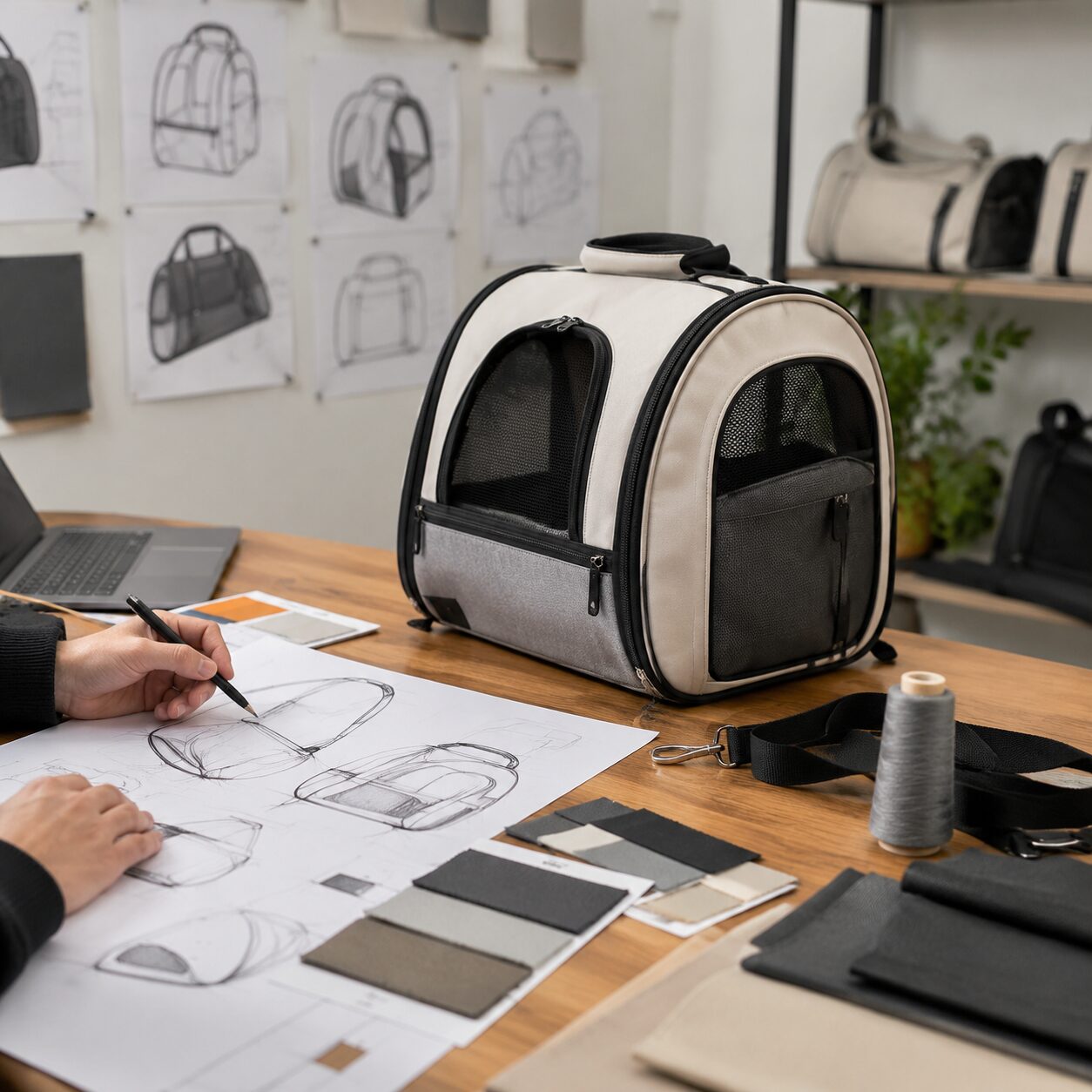
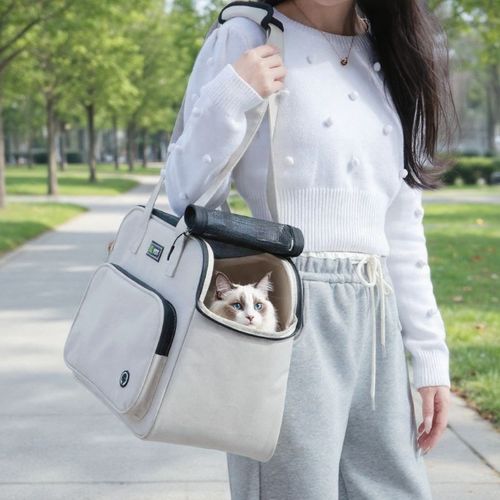
For inspiration, our Color-Block Mesh Pet Carry Tote demonstrates features such as a mesh upper panel, reinforced handles, and a structured bottom. These are useful starting points for a new development brief, although cat-specific suitability must still be checked.
It is also important to understand the limitations of soft carriers. For journeys where impact protection and secure vehicle transport are priorities, a sturdy hard-sided carrier may be preferable.
4. Getting the Size and Comfort Right
When developing a custom cat tote bag, external dimensions are only part of the sizing process. The usable interior space is more important.
A thick padded lining, reinforced frame, or bulky bottom cushion can reduce the actual room available to the cat.
The finished design should give the intended animal enough space to stand naturally, turn around, and lie down comfortably.
Start With the Cat, Not the Bag
Brands should establish a realistic target size range before finalizing the pattern.
Important measurements include the animal’s body length, standing height, and width. A carrier should not be made unnecessarily small simply to achieve a fashionable silhouette.
The PDSA’s cat carrier advice also emphasizes sufficient interior space, ventilation, and secure construction.
Make the Interior Comfortable
A removable padded mat can provide a softer resting surface and simplify cleaning. It should fit securely rather than slide or bunch up inside the carrier.
The lining should also be checked for rough seams, exposed hardware, and hard edges that might contact the animal.
Consider the Person Carrying It
A comfortable interior is only half of the design.
If the shoulder straps are too narrow or the bag hangs unevenly, the owner may find it uncomfortable to carry. Poor weight distribution can also cause the compartment to tilt.
Wider straps, reinforced attachment points, and suitable handle lengths can improve the carrying experience, provided the structure remains stable under the intended load.
5. Special Considerations for Smaller Cats
Developing a kitten tote bag requires more than simply reducing the size of an adult carrier.
Young cats can be especially small and active, which makes enclosure design and the size of potential escape gaps important. A closure that works for a larger animal may leave too much space around a smaller one.
Manufacturers should carefully examine mesh openings, zipper junctions, and the shape of the main entrance.
Avoid Oversized Interiors
A carrier that is much too large can allow a small animal to slide around during movement.
Suitable dimensions and a supportive, nonslip resting surface can help keep the interior more stable.
For a kitten tote bag, buyers should also think about how quickly the intended pet may outgrow the product. A useful size range should be based on animal measurements, not just an age label.
Brands should avoid claiming that one compact design is suitable for every kitten. Appropriate sizing and secure containment always depend on the individual animal.
6. Creating an Attractive Product Without Sacrificing Function
A cute cat tote bag can stand out through colors, textures, and simple decorative details. However, successful pet brands should treat visual appeal as one part of the product rather than its only selling point.
A clean shape, coordinated materials, and subtle branding can create a distinctive product without adding unnecessary accessories.
Keep the Design Simple
For a cute cat tote bag, details such as contrast stitching, soft color combinations, or a small embroidered logo can create a recognizable appearance.
Avoid loose decorative pieces, exposed sharp hardware, or embellishments that a cat could bite or swallow.
Our Contrast-Trim Pet Companion Tote provides an example of how contrasting fabrics, structured panels, and coordinated accessories can create a lifestyle-oriented look. Its construction should be adapted with secure enclosure and ventilation features before being developed specifically as a cat transport carrier.
Add Branding That Fits the Product
A personalized cat purse may appeal to customers who want an accessory that feels different from standard pet travel equipment.
Customization options can include embroidered names, woven labels, branded zipper pulls, and selected color combinations.
However, decoration should not interfere with functional areas such as mesh windows, handles, or main openings.
Think About Retail Positioning
For premium brands, a personalized cat purse can be part of a coordinated travel collection.
Matching accessories, branded packaging, and consistent materials may help create a stronger product identity.
Before choosing these options, buyers should consider the additional production costs and whether the target customers are willing to pay for them.
A simple, well-made product can sometimes be more valuable than an expensive design with unnecessary features.
7. Buyer Development Example: Improving a Fashion-Style Carrier
Take, for example, a small British pet-product brand—a client of ours—that is planning to launch a high-end fabric tote bag designed for cats. Their initial concept features a soft canvas exterior, long shoulder straps, minimalist branding, and an elegant, rectangular silhouette.
The brand is mainly focused on appearance and wants the product to fit naturally into its lifestyle collection.
During sample planning, several potential problems are identified:
- The soft bottom may bend under the intended carrying weight.
- The shoulder straps may cause the compartment to tilt when lifted.
- The proposed small mesh window may not provide sufficient ventilation.
- The top opening needs a secure closure rather than an exposed opening.

How a Manufacturing Partner Could Improve the Design
Instead of simply producing the original drawing, an experienced OEM manufacturer would review these problems with the buyer before approving the final construction.
The development team could recommend a reinforced removable base, better-positioned strap attachment points, additional ventilation, and a fully enclosed zippered top.
A washable interior pad could also be added to make daily maintenance easier.
The original exterior colors and logo placement could remain largely unchanged, preserving the brand’s intended appearance.
What the Buyer Gains
This approach helps the brand identify potential problems before placing a bulk order.
It also provides clearer specifications for sample testing, costing, and future production.
The important difference is that the manufacturer contributes practical development suggestions rather than only following the initial drawing.
For B2B customers, that kind of collaboration can be valuable when bringing a new product to market.
8. Turning a Design Concept Into a Production-Ready Product
A successful cat tote bag design needs to work beyond a single attractive prototype. Every material, structural detail, and manufacturing requirement should be clear enough to reproduce consistently.
This is especially important for brands planning repeat orders or selling through multiple distribution channels.
Step 1: Confirm the Product Requirements
Before sampling, buyers should provide the intended use, target cat size, preferred materials, approximate dimensions, brand positioning, and budget range.
Reference photographs and sketches are helpful, but important details should also be written down.
Step 2: Develop a Functional Sample
At Aimazing Bag, we support pet brands with OEM/ODM product development, material selection, structural adjustments, and branding customization.
Our standard sampling service is 3–5 days, depending on the confirmed design and material availability.
Sampling gives buyers the opportunity to examine the product in person before moving toward bulk production.
Step 3: Evaluate the Sample Under Realistic Conditions
Before approving a custom cat tote bag for production, buyers should examine more than stitching appearance and fabric color.
A practical sample review should include:
- Fit: Does the intended animal have enough usable interior space?
- Ventilation: Are the openings appropriately positioned and unobstructed?
- Stability: Does the base remain supportive when the carrier is lifted?
- Closures: Are the zippers and other access points secure?
- Comfort: Do the straps and interior padding work as intended?
- Cleaning: Can the pad and interior surfaces be cleaned properly?
- Durability: Have the load-bearing seams, mesh, and hardware been checked?
Manufacturers should agree on the required tests and acceptance criteria before bulk production begins.
Step 4: Confirm Production Details
Once the sample is approved, the buyer and manufacturer should agree on the final specifications.
These may include fabric references, colors, component dimensions, stitching requirements, labeling, packaging, and production tolerances.
Having an approved reference sample helps both sides understand what the finished order should look like.
For a detailed overview, see our pet bag customization process.
Step 5: Prepare for Future Orders
Brands should also consider whether the design can be reproduced reliably as demand grows.
Materials that are difficult to source, overly complicated decorative features, and unclear assembly instructions can create problems during repeat production.
A manufacturing partner should help buyers understand these issues early, allowing them to balance product appearance, production practicality, and cost.
For more sourcing advice, read our Pet Carrier Bag Supplier: 12 Questions for B2B Buyers.
9. Common Questions From Pet Brands
Can a Fashion-Style Tote Be Used as a Cat Carrier?
It depends on the construction and intended use.
An ordinary open-top handbag is not automatically suitable for transporting a cat. A purpose-designed carrier needs secure containment, adequate ventilation, sufficient space, and reliable structural support.
Buyers should have the finished product evaluated for the intended situation rather than relying on appearance alone.
Are Soft-Sided Carriers Suitable for Every Journey?
No. Soft-sided carriers can be convenient in certain situations, but they generally provide less impact protection than sturdy rigid carriers.
Veterinary guidance often favors strong, easy-to-clean carriers, particularly for secure transportation.
What Should Brands Send to an OEM Manufacturer?
A good starting point is a reference image or drawing, target dimensions, expected pet size, preferred materials, branding requirements, estimated order quantity, and intended market.
The manufacturer can then help identify missing specifications and suggest improvements before sampling.
Can a Manufacturer Customize Both Appearance and Structure?
Yes. Depending on the project’s requirements, OEM/ODM development can involve adjusting dimensions, fabrics, mesh placement, internal padding, handles, closures, logos, and packaging.
Structural changes should be evaluated through sampling rather than treated as purely cosmetic modifications.
Conclusion
Developing a custom cat tote bag means finding the right balance between appearance, safety, comfort, and manufacturing practicality.
For pet brands and wholesalers, the best starting point is not simply choosing a popular style. It is understanding how the product will be used, what the intended animal needs, and which details must be confirmed before production.
At Aimazing Bag, we work with B2B customers as an OEM/ODM development and manufacturing partner. From early design discussions and material selection to sampling and bulk production, our goal is to help brands turn practical product ideas into well-made pet travel solutions.
Have a new pet carrier project in mind? Contact our team to discuss your design, customization requirements, and production plans.