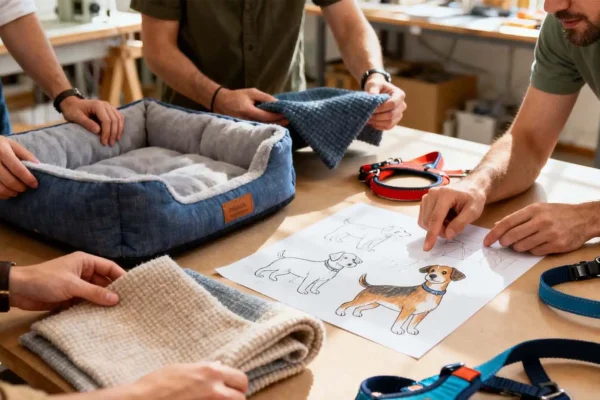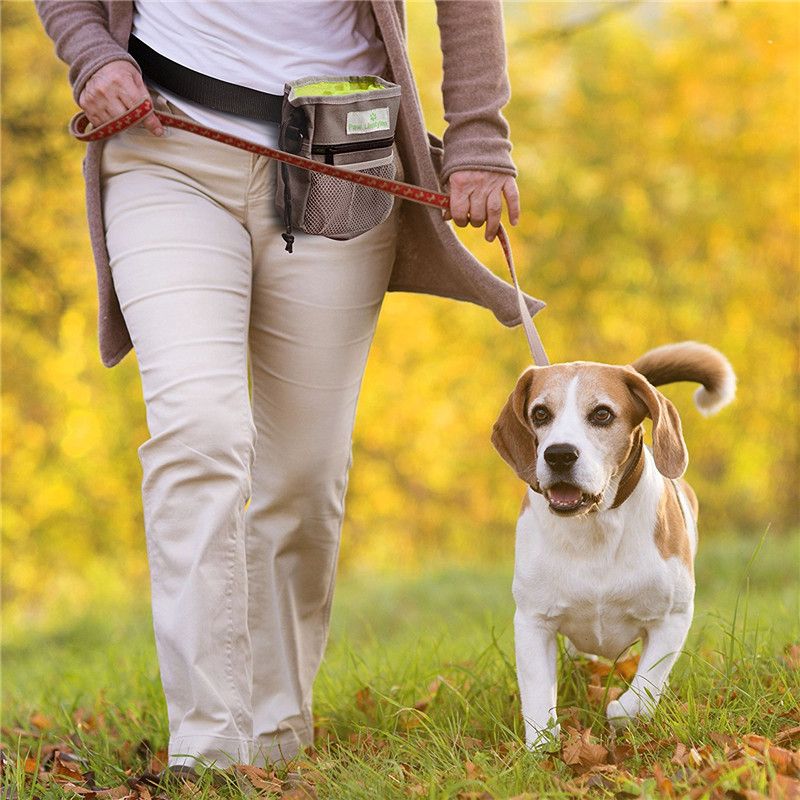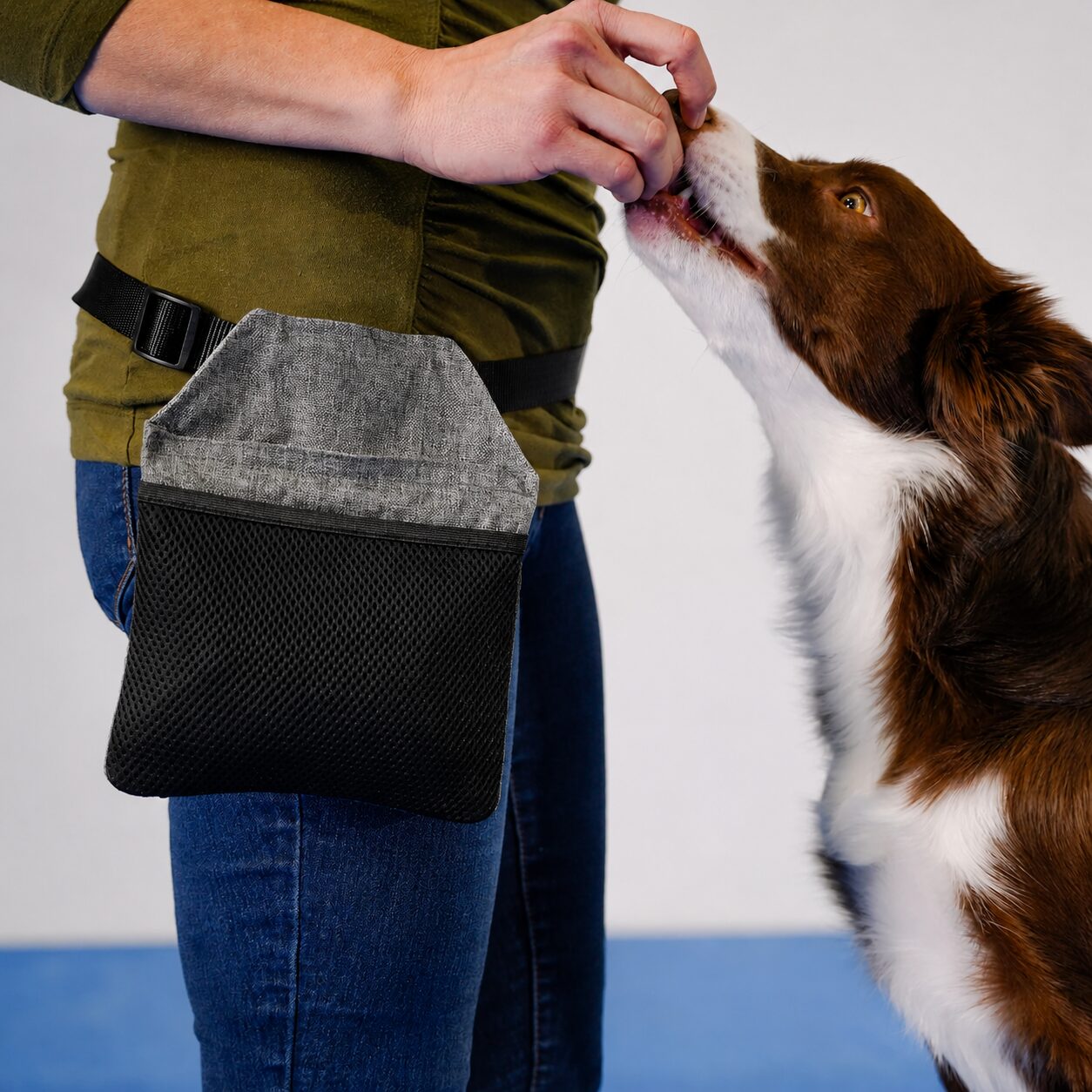
Strong dogs need more than larger versions of standard walking equipment. Their greater pulling force, broader chests, and different body proportions create specific challenges for harness design. Stronger materials may improve durability, but poorly positioned straps or oversized padding can still cause discomfort and restrict movement.
For pet brands, wholesalers, and private-label buyers, successful product development means balancing structural strength, ergonomic comfort, accurate sizing, and consistent manufacturing quality. Understanding these factors before production helps create dependable walking equipment that meets customer expectations and supports long-term brand growth.
1. Why Large Dogs Require Different Harness Engineering
Designing a personalized harness for large dogs requires more than increasing the dimensions of an existing pattern. Large dogs generate substantial pulling forces, particularly during sudden movements, directional changes, or outdoor activities. The harness must distribute these forces through an appropriate webbing structure rather than concentrating tension around narrow fabric connections.
Understanding Different Body Structures
Unlike a generic large breed dog harness, an ergonomically developed product considers differences in chest depth, neck circumference, shoulder width, and body length. A German Shepherd and a Labrador Retriever may have similar body weights but significantly different proportions, affecting how the harness sits during walking and movement.
For brands developing a custom large dog harness, the initial design should establish a clear relationship between chest panels, shoulder clearance, adjustment points, and leash attachments. These structural decisions influence whether the product remains stable without creating unnecessary pressure around the dog’s body.
Three Structural Priorities
- Balanced pressure distribution: Direct tension through the chest and supporting webbing rather than the throat.
- Stable positioning: Prevent excessive rotation, slipping, or backward movement during walking.
- Natural mobility: Allow the front legs and shoulders to move without unnecessary restriction.
For reference, the Adjustable Comfort Control Dog Harness Vest demonstrates how padding, adjustable webbing, and integrated control features can be incorporated into a customizable walking harness.
2. Structural Strength: Reinforcing the Areas That Matter
Material thickness alone does not determine harness strength. Load-bearing performance depends on the complete structure, including webbing, stitching, metal rings, buckles, and the positioning of connection points.
Load-Bearing Webbing and Stitching
Using reinforced dog harness straps allows manufacturers to strengthen critical tension paths without unnecessarily increasing the weight of the entire product. High-tenacity nylon or polyester webbing can be used as the primary load-bearing component, while outer panels provide support, appearance, and additional protection.
A heavy duty personalized harness should incorporate suitable reinforcement techniques around leash attachment points, strap intersections, and control handles. Box-X stitching, bar-tacking, or other validated reinforcement patterns can improve structural reliability when matched with appropriate materials and production specifications.
Critical Areas to Reinforce
| Component | Recommended design consideration |
|---|---|
| Leash attachment | Metal D-ring secured to structural webbing |
| Shoulder connections | Reinforced seams with controlled stitch placement |
| Chest straps | Durable webbing with sufficient adjustment |
| Buckles | Secure locking and appropriate load capacity |
| Top handle | Anchored to the primary load-bearing structure |
| Adjustment sliders | Resistance to unwanted strap movement |
Avoiding Common Structural Failures
One frequent development mistake is attaching a metal ring directly to a decorative fabric panel without sufficient underlying reinforcement. During sudden pulling, the surrounding seam can become the weakest point even when the metal ring itself remains intact.
Another problem involves overcomplicated designs with too many seams and hardware transitions. Every additional connection creates a potential failure point that should be evaluated during prototype testing.
For material comparisons, see our Custom Dog Harness Materials Guide, which explains the applications of nylon, mesh, padding, and other commonly used harness fabrics.
3. Comfort Engineering: Strength Without Restricted Movement
Designing a personalized harness for large dogs also involves protecting sensitive contact areas during repeated movement. Excessively rigid panels, narrow underarm spacing, or poorly positioned seams may cause rubbing even when the harness appears properly adjusted.
Shoulder Clearance and Chest Positioning
A well-designed harness should allow the dog’s front legs to extend naturally. The chest panel should sit securely without pressing into the throat, while the girth strap should remain clear of the armpits and avoid excessive contact with moving joints.
The American Kennel Club’s harness fitting guidance emphasizes the importance of unrestricted shoulder movement, suitable strap positioning, and checking for pressure or rubbing.
Choosing Appropriate Padding
Padding should improve contact comfort without trapping excessive heat or adding unnecessary bulk.
- Breathable air mesh: Suitable for ventilation-focused everyday walking products.
- Neoprene padding: Provides flexible cushioning around selected contact areas.
- EVA foam: Offers structured support where additional shaping is needed.
- Soft polyester lining: Creates a smooth contact surface and supports practical maintenance.
Padding thickness should be determined by the specific product design. More padding does not automatically produce greater comfort, particularly when it changes how the harness fits around the chest.
Front-Clip Versus Back-Clip Designs
Back-clip attachment systems are commonly used for regular walking, while front-clip configurations can help handlers redirect dogs during leash training. Dual-clip arrangements provide additional handling options.
However, attachment placement must not compromise fit or movement. A harness alone cannot replace appropriate training, and no attachment configuration should be described as completely eliminating pulling.

4. Sizing Development: Why Body Measurements Matter More Than Weight
Body weight is useful for describing the target customer group, but it should not serve as the only measurement used to determine harness size.
Key Measurements for Product Development
A professional sizing specification should include the following dimensions:
| Measurement | Purpose |
|---|---|
| Neck circumference | Determines the neck opening and adjustment range |
| Chest girth | Establishes the main body fit |
| Chest depth | Influences front-panel geometry |
| Back length | Supports correct strap positioning |
| Chest strap spacing | Helps maintain underarm clearance |
| Adjustment allowance | Accommodates differences within each size |
A large breed dog harness should also undergo size grading based on body proportions rather than a uniform percentage increase across all components. Increasing chest circumference without adjusting the neck opening or chest-panel length may create poor fits in larger sizes.
Developing a Practical Size Chart
Consider a dog with an 82 cm chest circumference and a 52 cm neck circumference. The appropriate size should be selected from a verified adjustment range that accommodates both measurements while maintaining correct panel positioning.
Manufacturers should validate the chart using actual fitting samples instead of relying only on theoretical garment measurements.
Common Sizing Mistakes
- Using dog weight as the sole sizing reference.
- Assuming all large breeds have similar chest proportions.
- Providing large adjustment ranges without checking strap stability.
- Ignoring the changes caused by padding thickness.
- Using one prototype to approve an entire size range.
The RSPCA’s harness fitting recommendations provide additional guidance on checking fit and avoiding excessive tightness.
For B2B buyers, accurate size charts are particularly important because poorly fitted products can lead to customer returns, negative reviews, and additional after-sales costs.
5. Personalization and Product Differentiation for Pet Brands
Developing a custom large dog harness gives brands opportunities to differentiate their collections beyond standard colors and basic logo placement. Functional customization can improve the product experience while creating a more recognizable brand identity.
Available Customization Options
| Feature | OEM/ODM options |
|---|---|
| Branding | Embroidery, woven labels, rubber patches |
| Identification | Removable name patches or personalized text panels |
| Materials | Nylon, polyester, Oxford fabric, mesh |
| Colors | Brand-specific fabric and webbing combinations |
| Structure | Adjustable panels, handles, attachment points |
| Visibility | Reflective piping, strips, or stitching |
| Packaging | Private-label hang tags, inserts, retail packaging |
When working with a big dog harness manufacturer, buyers should evaluate whether personalization affects structural performance. Embroidery placed directly across a load-bearing strap, for example, may interfere with the strap’s original construction. Decorative elements should be positioned where they do not weaken critical connections.
Designing a Coordinated Product Collection
Brands can also develop matching leashes, collars, and walking accessories using consistent colors, materials, and visual details.
This allows distributors and retailers to create coordinated product collections rather than selling disconnected individual accessories.
Our article on Dog Personalized Harness Ideas explores additional branding approaches for wholesale pet accessory collections.
6. Testing Requirements Before Bulk Production
Before approving a personalized harness for large dogs, buyers should establish measurable performance requirements rather than relying exclusively on appearance or subjective descriptions such as “strong” and “premium.”
Structural Testing
Testing reinforced dog harness straps requires evaluating webbing tensile performance, seam strength, and the behavior of connection points under defined loads. Each component should be tested individually where appropriate, followed by an assessment of the assembled product.
A suitable evaluation plan includes:
- Webbing tensile testing: Check material performance under controlled pulling conditions.
- Seam strength testing: Evaluate stitched intersections and reinforcement areas.
- Buckle retention testing: Examine fastening stability and unintended release.
- Attachment-point testing: Assess D-rings and their supporting connections.
- Adjustment stability: Confirm that straps do not slip excessively under repeated tension.
- Wear and abrasion checks: Examine contact areas after simulated or practical use.
Test loads, acceptance limits, and methods should be defined for the intended product application. They should not be assumed solely from the dog’s body weight.
Comfort and Fit Verification
Laboratory testing cannot fully replace practical fitting evaluations. Prototype samples should be checked on dogs representing different body proportions within the intended size range.
Buyers should observe walking, turning, sitting, and normal movement while checking for rubbing, slipping, or restricted shoulder motion.
Bulk Production Consistency
A strong prototype is only valuable if the approved construction can be reproduced consistently.
Production documentation should identify critical dimensions, material specifications, stitch patterns, hardware components, and acceptable tolerances. These requirements should remain consistent during material procurement, sewing, assembly, and final inspection.
7. B2B Development Scenario: Improving a Large-Dog Harness Collection

The Buyer’s Challenge
Consider a UK-based outdoor pet accessories brand preparing to introduce a premium harness collection for Labrador Retrievers, German Shepherds, and similarly sized dogs.
The buyer has received an attractive quotation from a supplier offering a standard vest-style design with customized colors and a branded logo.
However, the initial product specification contains several weaknesses:
- The size chart relies primarily on dog weight.
- The leash attachment is sewn into a limited fabric area.
- The underarm padding is too close to the front legs.
- The supplier cannot clearly explain the construction of the reinforced stitching.
The buyer needs more than an affordable product. The goal is to create a collection that can be sold confidently through retail and online channels.
An Engineering-Led Development Approach
The revised brief focuses on a heavy duty personalized harness with a stronger webbing load path, carefully positioned contact panels, and an adjustment system capable of accommodating different chest shapes.
Instead of simply increasing material thickness, the engineering team would propose three targeted changes.
First: Improve the load-bearing structure.
Extend the primary webbing beneath the leash attachment and reinforce the relevant junctions. The attachment should be secured by the structural system rather than relying solely on the outer shell.
Second: Refine ergonomic fit.
Adjust the chest-panel profile, increase clearance around the underarm region, and review the placement of the girth straps. The resulting prototype should be evaluated on different body types.
Third: Standardize production specifications.
Define the approved webbing, hardware, stitching layout, and dimensional tolerances before preparing bulk-production instructions.
Comparing Two Sourcing Approaches
| Standard catalog sourcing | Engineering-led OEM development |
|---|---|
| Existing pattern with logo changes | Structure reviewed against intended use |
| Generalized size chart | Measurements and fitting ranges validated |
| Material strength assumed | Critical components tested |
| Sample approved by appearance | Sample approved by fit and performance |
| Limited technical documentation | Approved specifications for repeat orders |
Expected Business Value
In this scenario, an engineering-led approach would give the buyer a clearer basis for selecting suppliers and approving production.
Potential benefits include fewer avoidable sizing problems, better control of structural quality, more consistent repeat orders, and a stronger technical explanation for the product’s retail positioning.
These are intended development outcomes, not measured commercial results from an actual project.
The main lesson for buyers is that effective OEM collaboration should identify product weaknesses before a large production commitment, rather than treating the sample as a simple confirmation of appearance.
8. From Design Brief to Bulk Production: Working With an OEM Partner
Working with a big dog harness manufacturer involves more than comparing unit prices. Buyers should assess the supplier’s ability to translate functional requirements into repeatable manufacturing instructions and provide practical assistance during product development.
A Practical Four-Stage Workflow
1. Requirement and Specification Review
Confirm target dog sizes, intended use, structural features, fabric choices, branding requirements, and planned sales markets.
2. Prototype Development
Prepare patterns, select materials and hardware, construct samples, and evaluate important design details.
3. Sample Validation and Approval
Review fit, dimensions, stitching, attachments, logo placement, and required performance tests. Record necessary revisions before approving the final specification.
4. Bulk Production and Delivery
Use approved samples and documented requirements to guide manufacturing, inspection, packaging, and shipping.
For a more detailed explanation, visit our OEM/ODM Customization Process.
How Aimazing Supports Pet Brands
Aimazing Bag provides OEM/ODM manufacturing support for international pet brands, wholesalers, and distributors. Our pet harness manufacturing solutions cover structural customization, materials, colors, branding, sampling, and bulk production.
Our sampling service typically supports prototype development in 3–5 days, depending on the design and material requirements. Our team can also assist buyers in refining patterns, selecting suitable hardware, and preparing production specifications.
A well-developed personalized harness for large dogs should combine structural reliability, comfortable movement, accurate sizing, and brand-specific design. These qualities are established through deliberate product development, not simply by choosing heavier fabric or adding more reinforcement.
For B2B buyers, the most valuable manufacturing partner is one that can identify design risks early, explain practical solutions, and maintain approved specifications as order quantities grow.
Planning a new large-dog harness collection?
Share your design sketches, reference products, target sizes, or technical requirements with Aimazing Bag. Our OEM/ODM team can help turn your concept into a practical manufacturing project for your brand.