A no-pull harness may look simple from the outside, but its performance depends heavily on how force is redirected through the chest, webbing, hardware and attachment points. For pet brands and sourcing teams, decisions such as front-ring position, Y-shaped chest geometry, strap movement and reinforcement structure can directly affect steering response, comfort and long-term durability.
These details become even more important when moving from a prototype to commercial production. A design that performs well in a single sample must also maintain consistent sizing, tension distribution and hardware positioning across hundreds or thousands of units. This guide examines the key engineering and OEM considerations behind front-clip and dual-clip harness development, from biomechanical force control and anatomical fit to material selection, customization and production consistency.
1. Biomechanical Redirection: Why Designing a Custom No Pull Dog Harness Demands Advanced Front-Clip Geometry
Front-clip redirection forces disrupt forward momentum without putting undue pressure on the canine trachea by translating chest-steering physics into structured soft-goods anchorage inside every professional custom no pull dog harness, which also incorporates a high-performance dual clip dog harness. Sourcing managers evaluate these tension architectures against consumer demands for humane training tools that stop pulling without causing soft-tissue injury. Modern original equipment manufacturers deploy multi-layer high-tensile nylon webbing arrays that anchor the front D-ring directly to the sternum plate. This advanced mechanical integration ensures that lateral pulling forces rotate the animal toward the handler while keeping sensitive respiratory areas completely free from restriction.
- Chest-Steering Physics: Front-mounted attachment points leverage leverage mechanics to redirect forward momentum into a turning motion.
- Tracheal Protection: Sternum-anchored webbing arrays eliminate choking hazards associated with traditional back-clip walking accessories.
- Lateral Force Distribution: Multi-layer fabric engineering absorbs sudden lunging impulses without distorting the overall harness chassis.
2. Identity and Control: Sourcing a Personalized No-Pull Dog Harness
Balancing aesthetic brand customization with high-stress tension distribution across the chest plate involves integrating custom embroidered nameplates and reflective branding into active anti-pull chassis designs for any commercial personalized no pull dog harness, supported by rigorous engineering for a professional custom no pull dog harness. Sourcing factories weave high-density thread panels directly into the front chest reinforcement zone without compromising the underlying structural strength. This meticulous craftsmanship allows pet brands to showcase custom names and service credentials while maintaining heavy-duty training utility.
- Direct-Embroidery Integration: High-density stitching embeds custom brand names permanently into the primary load-bearing webbing.
- Reflective Branding Elements: Integrated 3M reflective threads enhance nighttime visibility without weakening fabric tensile ratings.
- Tension-Balanced Placement: Name panels sit safely outside high-stress pull zones to prevent embroidery thread distortion.

3. Precision Front-Clip Architecture: Manufacturing a Front Clip Dog Harness Custom
Forward-facing D-ring placement and sliding strap mechanics ensure seamless steering by preventing webbing from binding or twisting when the animal pulls or changes direction abruptly inside every commercial front clip dog harness custom, paired with a verified custom no pull dog harness. Sourcing designers engineer floating front O-rings and sliding strap bridges that adjust dynamically to the animal’s shoulder movements. This fluid mechanical motion eliminates strap friction and ensures immediate redirection responsiveness during obedience training sessions.
- Floating O-Ring Mechanics: Sliding strap bridges adjust smoothly to shifting animal body angles during directional changes.
- Anti-Binding Webbing Alignment: Fluid hardware movement prevents straps from twisting or pinching sensitive flank skin areas.
- Immediate Steering Response: Forward D-ring positioning translates hand movements into instant front-end rotation.
4. Supply Chain Sourcing: Partnering with a No-Pull Harness Manufacturer
Evaluating factory technical capabilities, component sourcing, and batch consistency is what global procurement managers must verify when auditing a qualified no pull harness manufacturer, while inspecting a standard personalized no pull dog harness. Unreliable suppliers often substitute low-grade webbing or substandard metal hardware to cut production costs, introducing severe product liability risks. Qualified OEM partners maintain transparent supply chains, certified raw material testing reports, and rigorous in-house quality assurance labs.
- Component Sourcing Transparency: Verified suppliers utilize certified high-denier nylon and corrosion-resistant hardware components.
- Batch Consistency Audits: Standardized production protocols ensure every manufactured unit matches approved master golden samples.
- Global Procurement Assurance: Professional manufacturing audits eliminate supply chain volatility for international retail brands.
5. Engineering Anti-Pull Efficacy: Sourcing an Anti Pull Dog Harness Design
Ensuring pulling pressure is absorbed by the skeletal sternum rather than sensitive soft tissue or shoulder joints requires optimal chest-plate load dispersion and Y-shaped frontal harness geometry within any advanced anti pull dog harness design, combined with a custom front clip dog harness custom. Poorly designed harnesses cross over the soft shoulders, restricting natural gait movement and causing chronic muscle fatigue. Sourcing engineers construct anatomical Y-front panels that clear the shoulder blades entirely while directing tractive loads safely across the broad sternum bone.
- Anatomical Y-Front Geometry: Frontal strap configurations keep shoulder joints completely free for unhindered leg extension.
- Sternal Load Dispersion: Broad chest plates absorb pulling forces safely across the rigid sternum bone structure.
- Gait Preservation: Ergonomic panel shaping eliminates friction and unnatural rubbing during running and walking.
6. Dual-Clip Versatility: Engineering a Dual Clip Dog Harness System
Integrating front steering rings with traditional rear leash attachment points provides handlers with flexible control options for both urban training walks and casual open-field excursions inside every commercial dual clip dog harness, backed by a reliable no pull harness manufacturer. Sourcing designers construct multi-anchor webbing configurations that allow users to transition instantly between front-steering anti-pull modes and standard rear-attachment walking setups. This functional versatility meets diverse consumer demands in a single retail SKU.
- Multi-Mode Flexibility: Seamless hardware switching accommodates active obedience training and relaxed leisure walking.
- Versatile Sizing Formats: Dual attachment rings distribute tractive loads efficiently across varying canine body types.
- Consumer Value Enhancement: All-in-one functionality reduces the need for pet owners to purchase multiple specialized harnesses.
7. Collaborative OEM Execution: Transforming Custom Designs into Commercial Production
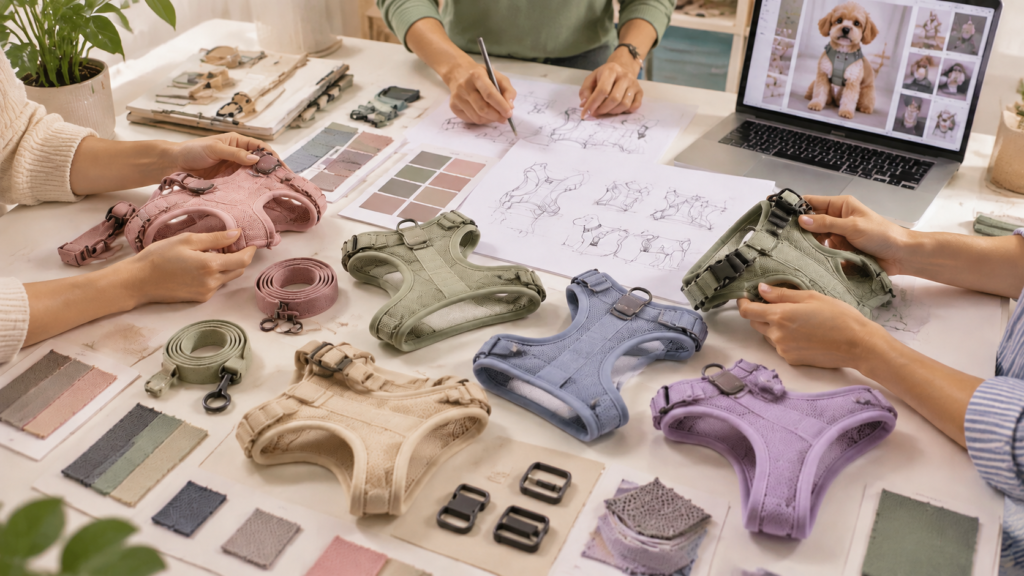
Establishing clear digital tech packs for consistent batch manufacturing defines exact dimensions, hardware grades, and color codes to eliminate costly sample iterations across custom programs for any proprietary anti pull dog harness design, while direct collaboration with Aimazing Bag secures long-term supply chain resilience. Vague product specs lead straight to massive headaches, rejected factory samples, and missed retail launch windows when you are trying to scale up a custom no pull dog harness. To lock down zero-defect production, sourcing teams work hand-in-hand with manufacturing specialists to hash out exact digital vector blueprints that map out every single millimeter of material layering and hardware placement before a single stitch gets sewn.