1. The Summer Struggle: Why “Heat Trap” Designs Are Failing Pets
Thermal regulation is a critical engineering challenge in modern dog bag design. Traditional carriers often neglect the physics of heat dissipation, turning an enclosed space into a dangerous heat trap during peak summer conditions. When a carrier lacks intentional airflow architecture, stagnant heat accumulates rapidly, causing severe thermal stress. Recognizing common pet bag comfort issues is the first step toward effective product development. Brands must move beyond visual appeal and analyze how internal air pressure and stagnant heat affect the pet’s biological state. An engineered carrier must function as a thermal management system, utilizing passive and active airflow to keep the pet safe during transit.
Thermal Accumulation: Enclosed volumes without exhaust pathways retain body heat, creating dangerous spikes.
Acoustic and Mechanical Stress: Poorly designed structures cause vibrations that, combined with heat, amplify pet anxiety.
Stagnant Airflow: Traditional mesh placement often fails to facilitate a complete cross-breeze, leaving internal air pockets trapped.
Material Retention: Synthetic linings without moisture-wicking properties trap perspiration, further increasing internal humidity and temperature.
| Thermal Factor | Impact on Pet | Engineering Mitigation |
| Radiant Heat | Surface overheating | Thermal-reflective liners |
| Air Stagnation | CO2/Heat buildup | Active ventilation zones |
| Humidity | Respiratory distress | Moisture-wicking base layers |
2. Material Mastery: Choosing the Best Materials for Pet Carrier Bags
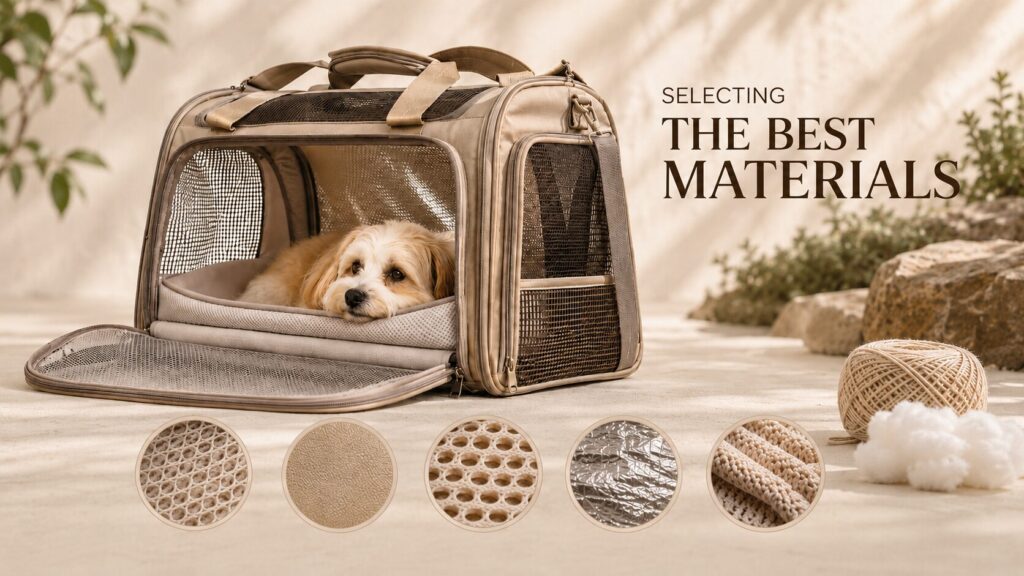
Selecting the best materials for pet carrier bags is a decision that dictates both safety and thermal performance. We prioritize textiles that combine high-tensile strength with superior breathability. The best materials for pet carrier bags include moisture-wicking base layers that keep the pet dry, combined with 3D spacer meshes that facilitate air movement across the pet’s body. Effective dog bag design avoids heavy, non-porous synthetics that cause heat buildup a common pet carrier safety design and pet bag comfort issues failure.
Moisture-Wicking Liners: Pull humidity away from the pet’s skin.
Thermal-Reflective Liners: Block external heat to maintain stable internal temps.
High-Tenacity Mesh: Ensures durability while maximizing airflow (CFM) for safety.
As a bulk pet carrier bag manufacturer and custom dog carrier bag factory, we prioritize these best materials for pet carrier bags to ensure every unit balances structural integrity with pet comfort.
3. Redefining Dog Bag Design: The Science of Airflow
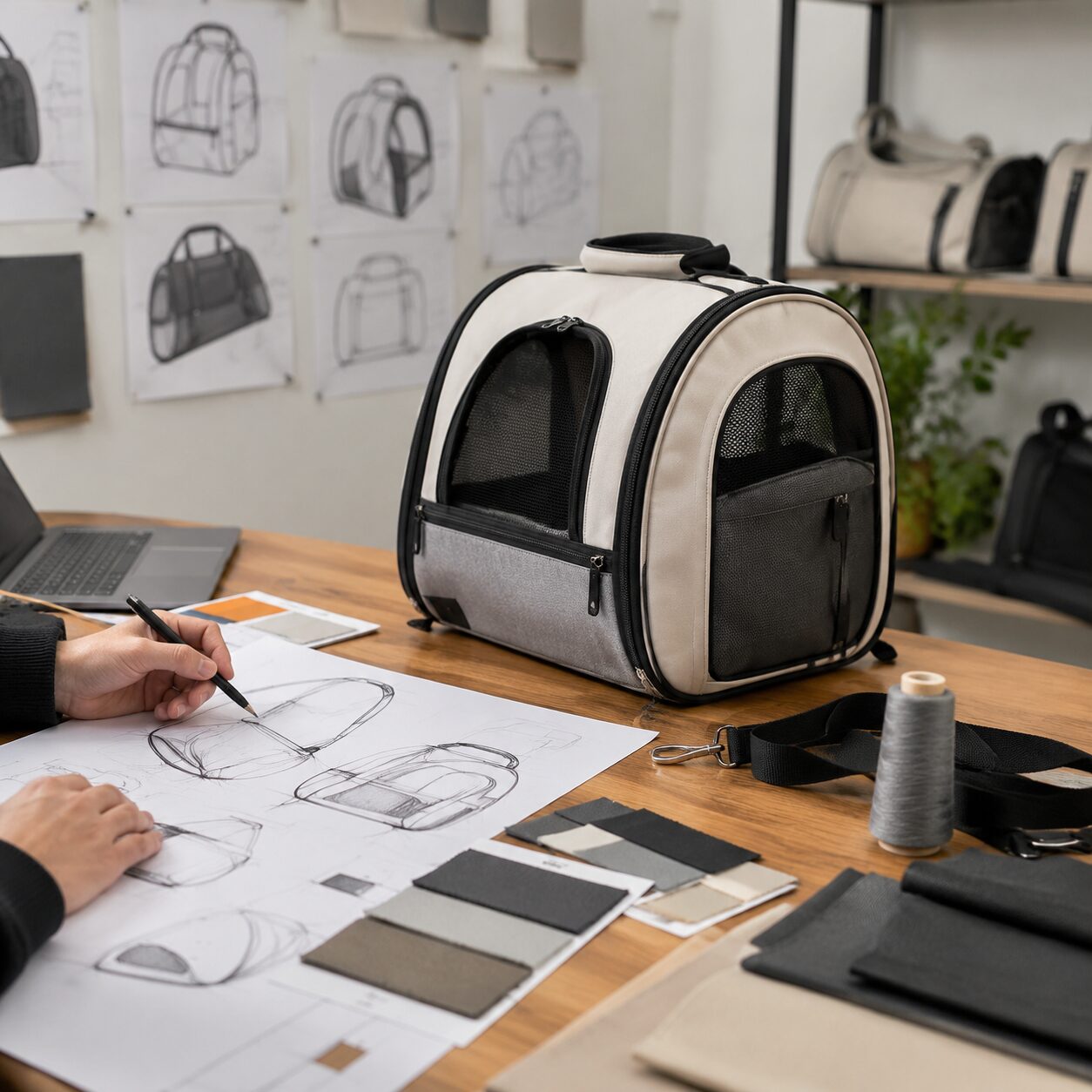
Modern dog bag design transcends basic structure by applying principles of fluid dynamics to pet transport. By creating dedicated ventilation pathways, we allow for the continuous displacement of hot, carbon dioxide-heavy air with cooler, oxygenated air. A professional dog bag design incorporates structural geometry that forces air to cycle through the carrier using the pet’s natural movement. This passive cooling current is the most reliable way to maintain a safe micro-environment.
Aerodynamic Pathways: Strategically placed mesh panels ensure air enters low and exits high, utilizing the chimney effect for heat removal.
Structural Geometry: We shape the interior volume to eliminate “dead air” corners where heat and moisture accumulate.
Velocity Control: Design must balance high airflow with pet security, ensuring structural mesh cannot be easily compromised.
4. Safety First: Integrating Pet Carrier Safety Design Standards
Every pet carrier safety design must account for both biological comfort and mechanical security. It is not enough to keep a dog cool if the enclosure cannot withstand impact. Our standards for pet carrier safety design integrate impact-resistant frames with escape-proof closure systems. We ensure the pet remains secured even during sudden vehicle stops or transit turbulence.
Escape-Proof Hardware: Utilizing reinforced locking zippers and secondary tether points.
Impact Resistance: Integrating lightweight, semi-rigid skeletons that absorb kinetic energy during accidental drops.
Toxicity-Free Build: Prioritizing food-grade, non-toxic materials for all internal surfaces to prevent health risks.
5. Scaling Your Line: Partnering with a Custom Dog Carrier Bag Factory
A custom dog carrier bag factory acts as the engineering brain behind your product line. Aimazing Bag specializes in translating biological airflow needs into mass-produced, high-quality gear. By partnering with a custom dog carrier bag factory, brands gain access to thermal simulation data and manufacturing techniques that ensure every unit produced meets high standards.
Customization Advantages: Adapting airflow zones to match the anatomical needs of different dog breeds.
Engineering Scalability: Utilizing standardized modules while maintaining the flexibility to customize aesthetic and performance features.
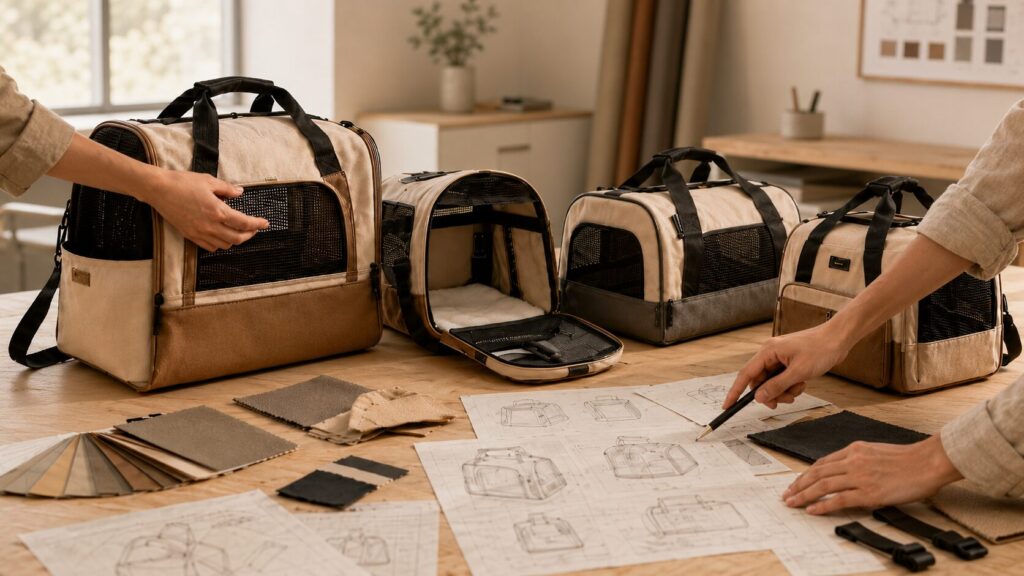
6. Reliable Supply: Selecting a Bulk Pet Carrier Bag Manufacturer
Consistency is the mark of a reliable bulk pet carrier bag manufacturer. When a brand scales its operations, the QA/QC protocols of the custom dog carrier bag factory become the brand’s reputation insurance. We employ strict quality gates throughout the production process to ensure the first and ten-thousandth bag perform identically under thermal stress.
QA/QC Protocols: Rigorous stress-testing of structural mesh and load-bearing hardware.
Consistency: Digitized production ensures identical thermal performance across global shipments.
7. Conclusion: The Future of Thermally-Optimized Pet Travel
Thermal-optimized design represents the next frontier in the pet industry. Brands that adopt scientifically-backed aerodynamics and material science will lead the market. Partnering with Aimazing Bag allows you to integrate these standards into your products, redefining the expectations of pet owners everywhere.