1. The Strategic Necessity of a Dog Harness Factory Audit: Safeguarding Brand Reputation and Scale
Executing a comprehensive dog harness factory audit prevents catastrophic pull-failure incidents before shipping containers leave the manufacturing floor. Brand developers must evaluate soft-goods suppliers thoroughly to eliminate the severe financial and legal liabilities associated with defective pet gear. Unverified manufacturing partners often compromise on webbing denier and thread tension, leading to sudden strap ruptures during active canine use. A rigorous pre-contract evaluation identifies these structural vulnerabilities immediately, protecting brand equity and ensuring absolute pet safety across global retail markets. Establishing an objective baseline during a dog harness factory audit eliminates production bottlenecks and secures predictable manufacturing output.
- Risk Mitigation: Comprehensive factory audits eliminate catastrophic strap pull-failure risks before global container loading commences.
- Objective Baselines: Pre-contract evaluations establish verifiable performance metrics to prevent unexpected production bottlenecks and delays.
- Liability Defense: Rigorous supplier appraisals protect emerging pet brands from severe legal and financial product liability claims.
2. Harness Sewing Factory Infrastructure: Assessing Machinery and Floor Efficiency
Inspecting computer-controlled pattern tackers and heavy-duty sewing equipment verifies whether a professional harness sewing factory can handle complex canine gear construction. Automated bar-tack machines apply high-tension multi-stitch box patterns that distribute pull stress evenly across load-bearing webbing intersections. Industrial multi-needle stitching lines and synchronized edge-binding machinery ensure that reflective piping and padded mesh panels align with millimeter precision. Evaluating workflow optimization and work-in-progress management determines how efficiently a harness sewing factory moves materials from cutting tables to final packaging stations. Factory floors utilizing streamlined assembly layouts minimize transit times between sewing cells and prevent component contamination.
- Pattern Tackers: Computer-controlled bar-tack machines deliver high-tension multi-stitch patterns for superior joint strength.
- Workflow Efficiency: Optimized assembly layouts eliminate floor bottlenecks and maintain steady production momentum.
- Component Control: Rigorous work-in-progress tracking prevents material loss and ensures clean component staging across workstations.
3. Deploying a Rigorous Dog Harness Factory Checklist for Pre-Order Appraisals
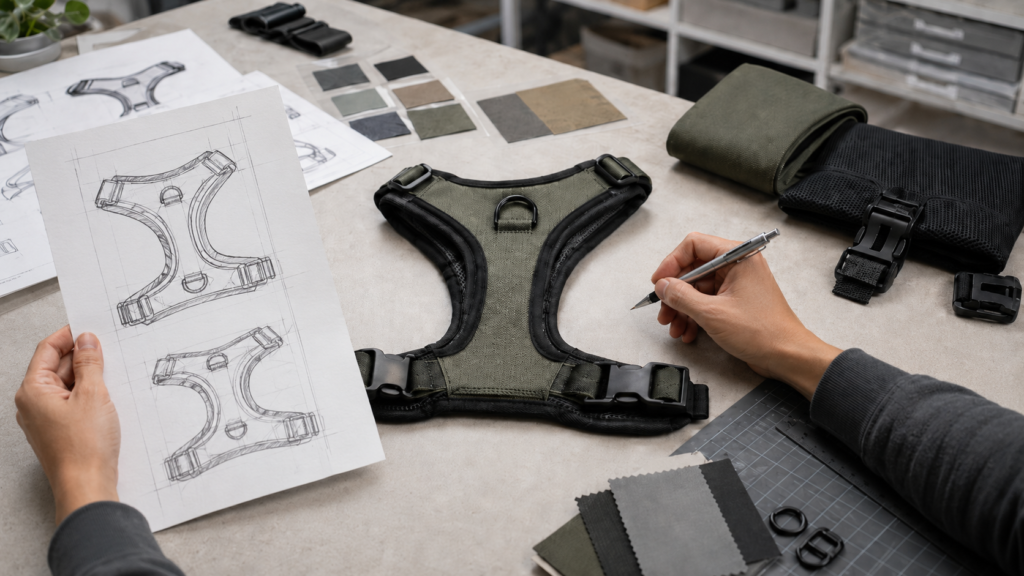
Utilizing a detailed dog harness factory checklist structures physical verification protocols from initial laser-cutting stages down to final carton packing. Auditors must examine automated laser-cutting arrays to ensure fabric panels maintain exact dimensional accuracy without frayed edges. Hardware sorting stations require verification to confirm that zinc-alloy or aluminum D-rings are free from micro-fractures and surface oxidation. Implementing a standardized dog harness factory audit protocol ensures zero tolerance for structural defects across every manufactured batch. Verifying material traceability and raw component warehousing ensures that eco-friendly claims and non-toxic material certifications remain completely verifiable.
| Inspection Stage | Verification Protocol | Quality Assurance Objective |
| Material Cutting | Laser-cut dimensional audit | Eliminate frayed edges and sizing drift |
| Hardware Staging | Salt-spray corrosion test | Verify D-ring and buckle durability |
| Finished Packing | Needle-detection screening | Prevent stray metal contamination |
4. Evaluating the Pet Harness Production Audit: Capacity, Labor, and Scalability
Analyzing shift efficiency and cross-training programs during a pet harness production audit determines whether a factory can scale output dynamically. Flexible manufacturing floors train sewing operators across multiple workstations to eliminate single-point-of-failure bottlenecks during seasonal retail surges. Evaluating labor retention rates and shift management practices reveals the supplier’s true capacity to absorb sudden volume increases without compromising stitch density. Uncovering hidden off-site stitching units during a thorough pet harness production audit protects ethical sourcing claims and brand reputation. Unverified sub-contracting operations often bypass international labor standards and utilize unauthorized low-quality raw materials.
- Shift Efficiency: Cross-trained sewing operators prevent assembly line bottlenecks during high-volume seasonal retail surges.
- Labor Compliance: Thorough production audits uncover hidden sub-contractors to protect ethical sourcing claims.
- Scalable Output: Verified labor structures guarantee stable manufacturing throughput for expanding brand inventories.
5. Quality Assurance Systems: Verifying a Robust Dog Harness Quality System
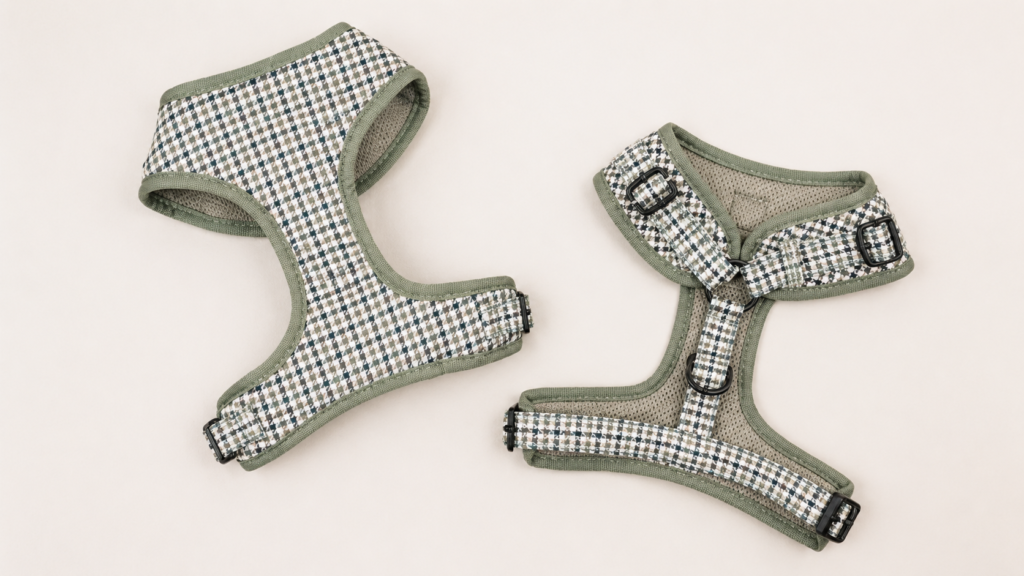
Inspecting how floor supervisors execute root-cause analysis when minor stitching defects appear verifies the effectiveness of a dog harness quality system. Establishing strict in-line acceptance quality limit inspection milestones ensures that production errors are corrected immediately at the sewing station. Quality control technicians monitor tension calibration and stitch density continuously during active manufacturing runs to prevent batch-wide rejections. Reviewing internal laboratory testing records confirms that strap anchor points withstand extreme dynamic canine pulling forces within a certified dog harness quality system. Destructive tensile testing machines apply continuous mechanical load until webbing or plastic buckles fail, recording exact breaking force thresholds.
- In-Line AQL: Milestone inspections catch minor stitching flaws early and trigger immediate corrective adjustments.
- Tensile Testing: Destructive load assays verify that strap anchor points exceed extreme canine pulling limits.
- Hardware Fatigue: Simulated cycle testing ensures plastic buckles and metal D-rings endure long-term wear.
6. Finalizing On-Site Verification Through Strategic Harness Supplier Inspection
Establishing clear boundaries between internal factory quality checks and independent inspector sign-offs is vital during a comprehensive harness supplier inspection. Pre-shipment audit protocols require random sampling from sealed master cartons in accordance with international sampling standards. Independent third-party inspection teams verify dimensions, tensile strength, and packaging integrity before authorizing final container release. Partnering directly with an established soft-goods OEM like Aimazing Bag guarantees transparent auditing standards, zero-defect manufacturing, and predictable global delivery schedules during a final harness supplier inspection. Aimazing Bag integrates rigorous pre-shipment inspections, advanced computerized cutting, and dedicated tensile testing laboratories directly into every production workflow.
- Pre-Shipment Audits: Random carton sampling validates finished product quality against approved golden samples.
- Third-Party Coordination: Independent inspector sign-offs provide an objective guarantee of commercial readiness.
- OEM Partnership: Collaborating with Aimazing Bag secures zero-defect manufacturing and long-term supply chain resilience.
7. Building Long-Term OEM Partnerships: From Factory Audit to Scalable Mass Production
Turning your initial audit findings into a binding corrective action plan locks in real, ongoing quality improvements with your manufacturing partner. When brand directors team up with factory engineers right after a dog harness factory audit, they can knock out minor line inefficiencies before they become real problems. Setting up shared performance benchmarks and regular review cycles builds a culture of true accountability and top-tier manufacturing standards. Locking in multi-season batch consistency protects your brand equity and sets you up for smooth, predictable inventory scaling as retail growth takes off. Having a fully vetted supplier relationship also secures stable raw material pricing, locked-in production capacity, and way smoother container shipping timelines.